N S W E
Wildlife Expeditions

Wildlife of
Karelija

A lake-and-taiga stronghold where Russia meets Finland, Karelia offers classic boreal wildlife-brown bears, forest birds, and otters-across a wilderness of waters.
25 Species
172,400 km² Land Area
Overview

About Karelija

The Republic of Karelia is a water-rich part of northwestern Russia, made of boreal taiga, many lakes, rivers, and peatlands. This forest-and-water landscape supports Fennoscandian wildlife: large mammals in wide conifer forests, and fish, waterfowl, and semi-aquatic species along shorelines and wetlands. Old-growth spruce and pine forests, mixed stands with birch and aspen, and broad mires are key habitats. Mires act as bird breeding places and help keep water clean. Lake and river corridors are migration routes and feeding hotspots for raptors, waders, and waterfowl. The area keeps a full food chain, with large carnivores and ungulates linked across forests and wetlands. Compared with nearby lands, Karelia has more freshwater and a boreal belt that continues into Finland, giving a feeling of Fennoscandian wildlife in a wide Russian wilderness.

Physical Features

Geography

Karelia has boreal taiga, glacial lowlands, and many lakes, rivers, and peatlands. Large conifer forests support moose, brown bear, and wolf. Wetlands and bogs hold breeding waterfowl and cranes. The White Sea coast and big lake shores form marine, brackish, and freshwater shore habitats for fish, seals, and migratory birds. Border and ridge areas keep long forest-wetland corridors.

172,400 km² Land Area
About the 20th-25th largest federal subject in Russia by area (a relatively large region within European Russia). Size Rank
Russia Country
Federal_subject Type
Elevation Range

Sea level (White Sea) to ~576 m (Nuorunen, highest point in Karelia)

Coastline

White Sea coastline (with bays/inlets and coastal wetlands), plus very extensive freshwater 'coastline' along Lakes Ladoga and Onega that strongly influences aquatic and shoreline habitats.

Key Landscapes

Boreal taiga forests (spruce-pine-birch), forming large habitat blocks for forest wildlife Major lake systems and shorelines: Lake Ladoga and Lake Onega (plus thousands of smaller lakes) Extensive wetlands, peat bogs, and fens that support waterbirds and act as carbon-rich ecosystems Glacial landforms: morainic ridges, eskers, rocky outcrops, and thin-soil bedrock landscapes influencing forest structure and productivity Low uplands and ridge zones (e.g., West Karelian Upland / Maanselkä-related highlands) adding cooler, wind-exposed habitats River networks and rapids (e.g., Kem, Vyg, Suna, Shuya and tributaries) that structure fish habitats and riparian corridors for mammals and birds, including salmonid rivers in the White Sea basin where present
Parks & Reserves

Protected Areas

The Republic of Karelia's protected-area system includes federal areas like national parks and strict nature reserves, plus many regional sanctuaries. They protect boreal taiga forests, lakes and rivers, mire (peatland) systems, and coastal habitats along Lakes Ladoga and Onega and the White Sea, supporting species of northern forest and wetland ecosystems.

Protected Coverage

~12-13% of Karelia's land area (approximate; varies by how regional reserves and buffer zones are counted)

National Parks & Preserves

Paanajärvi National Park

~1,045 km²

One of the best-preserved borderland taiga landscapes in Karelia, protecting old-growth spruce-pine forests, rugged uplands, clear rivers, and large lake shores that support intact predator-prey systems and strong populations of boreal forest birds.

Brown bear Wolverine Eurasian lynx Moose Western capercaillie

Vodlozersky National Park (Karelia/Arkhangelsk)

~4,686 km² (park spans Karelia and Arkhangelsk Oblast)

A vast wilderness of old-growth conifer forest, lake archipelagos, and peatlands; notable for high-quality habitat for wide-ranging mammals and for nesting/foraging areas for large raptors and waterbirds across the Vodlozero basin.

Brown bear Gray wolf Eurasian lynx White-tailed eagle Whooper swan

Kalevalsky National Park

~744 km² (order-of-magnitude; commonly cited in the ~700-750 km² range)

Large, relatively roadless northern taiga and mire complexes near the Finnish border; important for conserving forest connectivity and wetlands used by boreal waterfowl, while also supporting secretive carnivores and old-growth birds.

Wild forest reindeer Brown bear Gray wolf Black-throated diver Western capercaillie

Ladoga Skerries National Park

~1,220 km² (approx.; includes extensive water area)

A globally significant skerries archipelago and shoreline mosaic on Lake Ladoga, combining rocky islands, bays, and coastal forests; a top site for viewing waterbirds and for conserving the endemic Ladoga ringed seal.

Ladoga ringed seal White-tailed eagle Osprey Black guillemot Common merganser

State & Provincial Parks

Tolvojärvi Landscape Reserve / Wildlife Sanctuary

~400-420 km² (approximate range commonly reported for the reserve complex)

Regional forest-lake-bog mosaic with relatively low fragmentation; valuable for maintaining habitat for large mammals and for breeding forest grouse and raptors in the southern/central taiga zone.

Moose Brown bear Eurasian lynx Western capercaillie Black woodpecker

Kizhi Skerries Landscape Reserve / Wildlife Sanctuary

~500-600 km² (approx.; skerries reserve with substantial water area)

Lake Onega skerries and coastal habitats important for nesting waterbirds and raptors; protects island shoreline ecosystems that function as feeding and staging areas during migration.

White-tailed eagle Osprey Whooper swan Red-breasted merganser Eurasian otter

Valaam Archipelago Landscape Reserve / Wildlife Sanctuary

~200-300 km² (approx.; archipelago-focused, includes water area)

Island forests and cliffs on Lake Ladoga that provide refugia for breeding seabird-like lake birds and raptors; also important nearshore habitat for the Ladoga ringed seal.

Ladoga ringed seal White-tailed eagle Osprey Black-throated diver Eurasian otter

Wildlife Refuges

Kostomuksha State Nature Reserve

~490 km² (core reserve; excludes broader adjacent protected zones)

Strictly protected northern taiga and lake landscapes forming a major cross-border conservation unit with Finland; renowned for intact boreal food webs and strongholds for wide-ranging carnivores and wild forest reindeer.

Wild forest reindeer Wolverine Brown bear Gray wolf Golden eagle

Kivach State Nature Reserve

~108 km² (approx.)

One of Russia's oldest strict reserves, protecting mature taiga forests and the Suna River system; a classic site for observing boreal forest birds and signs of beaver and other forest mammals.

European beaver Moose Black woodpecker Western capercaillie Eurasian otter

Kem-Ludy State Nature Sanctuary (Wildlife Sanctuary)

~300-400 km² (approx.; includes marine waters)

White Sea island and coastal habitats important for seabird colonies and marine mammals; notable for breeding/nesting concentrations and coastal haul-out/foraging areas.

Ringed seal Gray seal Common eider Black guillemot White-tailed eagle

Olonetsky State Nature Sanctuary (Wildlife Sanctuary)

~250-300 km² (approx.)

Wetland-deltaic habitats near the Lake Ladoga lowlands that function as a major staging and breeding area for migratory waterfowl and swans, with high spring/autumn bird concentrations.

Whooper swan Bean goose Greater white-fronted goose Common crane White-tailed eagle

Wilderness Areas

  • Northern border taiga roadless belt along the Finland frontier (Kalevala-Kostomuksha region)
  • Vodlozero lake-forest-mire wilderness complexes in eastern/southeastern Karelia (outside main road corridors)
  • White Sea coastal islands and outer skerries with limited access and minimal infrastructure
  • Upper Kem River and adjacent bog/old-growth mosaics (remote river corridor landscapes)
  • West Karelian Uplands backcountry forests and mires (rugged terrain with sparse road network)
Animals

Wildlife

The Republic of Karelia sits in the boreal (taiga) belt of northwest Russia, shaped by vast conifer forests, peatlands, and a dense network of lakes and rivers (notably the Ladoga-Onega region). Its wildlife is characteristically Fennoscandian-Russian: large forest mammals (moose, bears, large carnivores), rich wetland and lake birdlife (divers/loons, swans, raptors), and cold-water fish communities (salmonids, whitefish) tied to clean rivers and oligotrophic lakes. The overall experience is "northern forest and water" biodiversity-best in large intact forest blocks and big-lake shorelines, with many species shared with neighboring Finland.

~55-65 species Mammals
~260-290 species (many migratory; fewer breed) Birds
~4-6 species Reptiles
~5-7 species Amphibians
~55-75 species (including salmonids, coregonids/whitefish, pike, perch) Fish
Examples

Iconic Species

Moose
Moose Karelia is classic moose country-dense taiga interspersed with marshes and lake edges provides prime habitat, and moose are among the most emblematic large mammals visitors hope to spot (often at dawn/dusk near wetlands and forest roads).
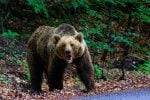
Brown Bear
Brown Bear A flagship taiga predator and scavenger; Karelia's extensive forests and berry-rich habitats support notable bear presence, with the best chances near remote forest areas and protected territories.
Eurasian Lynx
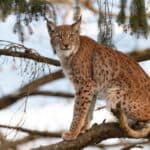
Eurasian Lynx A defining boreal carnivore that indicates intact forest ecosystems; rarely seen but strongly associated with Karelia's deep conifer woods and healthy hare/ungulate prey base.
Wolverine
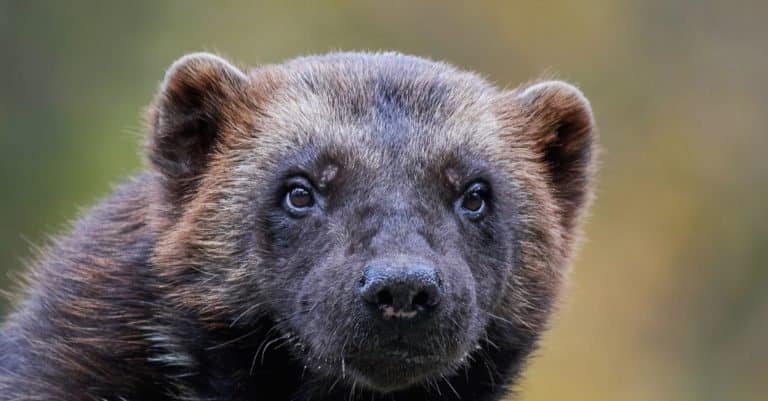
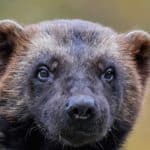
Wolverine One of the most sought-after northern mammals; Karelia lies within the broader Fennoscandian-northwest Russian range where wolverines persist in large, quiet forest landscapes.
Grey Wolf
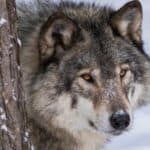
Grey Wolf A keystone predator of the taiga; present across much of Karelia with numbers that fluctuate regionally, shaping ungulate behavior and often detected by tracks and howling rather than sightings.
Western Capercaillie An iconic taiga grouse of mature conifer forests; its spring displays and reliance on large forest tracts make it a signature bird of Karelian wilderness.
Black-throated Diver (Black-throated Loon) A hallmark species of northern lakes-its haunting calls and breeding on quiet, fish-rich waters make it one of the most characteristic birds of Karelia's lake districts.
Whooper Swan A celebrated northern swan that breeds on lakes and wetlands; Karelia's mosaic of shallow bays, marshes, and quiet lakes provides strong habitat for breeding and staging birds.
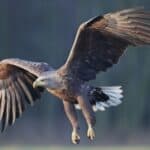
White-tailed Eagle
White-tailed Eagle A top predator and scavenger strongly tied to large lakes and fish-rich shorelines (including the Ladoga-Onega region), increasingly encountered where human disturbance is low.
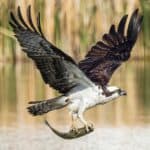
Osprey
Osprey A charismatic fish-eating raptor commonly associated with Karelia's countless lakes; nests on tall trees near open water and is one of the most visible large raptors for visitors.

Endemic & Rare Species

Ladoga Ringed Seal

Pusa hispida ladogensis

Endemic freshwater subspecies; threatened/vulnerable due to small range, bycatch risk, and loss of stable ice/snow breeding conditions

A globally unique seal confined to Lake Ladoga; Karelia's Ladoga shorelines and ice conditions are crucial for its breeding and long-term persistence.

Wild Forest Reindeer

Rangifer tarandus fennicus

Regionally rare in northwest Russia; sensitive to disturbance and habitat fragmentation

A distinctive forest-adapted reindeer of the Fennoscandian taiga; Karelia is near the western edge of suitable habitat, and any local populations are conservation-significant in a heavily managed forest zone.

Siberian Flying Squirrel

Pteromys volans

Locally scarce/patchy; dependent on mature mixed forests with cavities

A flagship old-forest mammal of the boreal zone; its presence highlights remaining mature spruce-deciduous stands and connectivity across the Karelian landscape.

White-backed Woodpecker

Dendrocopos leucotos

Rare and localized; strongly tied to old, deadwood-rich deciduous/mixed forests

An indicator of high-quality, structurally complex forests; scarce where intensive forestry reduces large deciduous trees and deadwood.

Freshwater Pearl Mussel

Margaritifera margaritifera

Endangered/declining across much of its range; sensitive to water pollution and river alteration

Found in clean, cold rivers (often linked to salmonid hosts); Karelia's relatively intact rivers can be important refuges where recruitment still occurs.

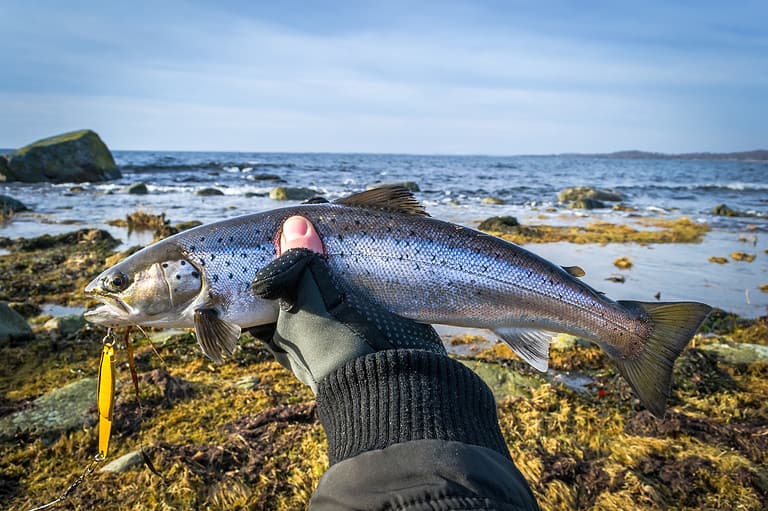
Atlantic Salmon (wild river populations)

Salmo salar

Regionally vulnerable/declining in many rivers due to barriers, overharvest, and habitat change

A defining species of northern rivers; Karelia's salmon rivers (and connected lake-river systems) are important for preserving wild genetic diversity and sustaining healthy river ecosystems.

Notable Populations

  • Lake Ladoga's Ladoga ringed seal population (a unique landlocked seal subspecies)
  • High-quality taiga bird communities (e.g., capercaillie and boreal owls) where large forest tracts remain intact
  • Important breeding and staging habitat for northern waterbirds (swans, divers/loons, ducks) across the lake-and-wetland network
  • Strong lake-associated raptor presence (notably osprey and white-tailed eagle) in remote shoreline and island habitats
  • Regionally significant large-carnivore assemblage (brown bear, wolf, lynx, wolverine) characteristic of the Fennoscandian-northwest Russian forest zone

Recent Changes

  • Recovery and increased visibility of some raptors (notably white-tailed eagle and osprey) compared with late-20th-century lows, supported by legal protection and improving prey bases in many areas
  • Ongoing pressure and localized declines in old-forest specialists (e.g., capercaillie/other forest grouse, white-backed woodpecker) where logging, road expansion, and fragmentation reduce mature forest structure
  • Climate-driven risks increasing for ice-dependent breeding of the Ladoga ringed seal (less stable ice/snow cover), alongside continuing bycatch/entanglement concerns
  • Wild Atlantic salmon trends remain mixed but often negative in impacted rivers (barriers, illegal harvest, habitat degradation); restoration and enforcement efforts are increasingly important
  • Large carnivore numbers (wolf, bear) fluctuate with prey availability and management/hunting pressure; local distributions shift with expanding road access and human activity
Visit

Wildlife Viewing

Karelia is taiga: conifer forests, rivers, Ladoga and Onega lakes, and White Sea coast. Good for boreal birds (owls, grouse, loons, raptors) and mammals — moose, brown bear, wolf, lynx — often seen by tracks or hides. See Ladoga ringed seal. Parks like Paanajärvi and Vodlozero offer trails, boats and guides. Travel is remote with midnight sun and deep winter snow.

Best Seasons

Winter (Dec-Mar)

Best for tracking and photography in snow (moose, hare, fox; occasional wolf/lynx signs), quiet forest soundscapes, and reliable winter atmosphere. Guided ski/snowshoe routes and snowmobile transfers can reach remote taiga and frozen-lake shorelines. Short daylight but excellent "fresh track" conditions after snowfall.

Spring (Apr-May)

Peak bird season: migratory waves on lakes and wetlands, grouse lekking (capercaillie/black grouse), returning raptors, and active beavers as ice breaks. Conditions can be muddy with variable ice; some areas have seasonal access limits to protect nesting sites.

Summer (Jun-Aug)

Longest days and easiest logistics for multi-day trips. Prime for canoe/kayak wildlife watching on lake-and-river networks (beaver, otter, waterbirds, osprey), coastal birding on the White Sea, and boat-based seal chances in the Ladoga skerries. Insect season (mosquitoes/blackflies) can be intense-head nets and repellent are essential.

Autumn (Sep-Nov)

Crisp visibility, fewer insects, strong colors, and excellent bird movement (migrating waterfowl and forest birds). Moose rut activity peaks early autumn; bears may be active feeding before winter. Weather turns quickly; first snow can arrive in the north by late autumn.

Top Wildlife Experiences

  • Ladoga ringed seal search by boat in Ladoga Skerries National Park (base in/near Sortavala): slow cruising among skerries and haul-out rocks with a guide who knows safe approach distances and seasonal patterns.
  • White Sea coastal birding and island day-trip (Kem/Belomorsk area to nearby islands such as the Kuzova archipelago): seabirds, coastal waders, terns, and dramatic migration periods in spring and autumn.
  • Taiga bear-watching from a purpose-built hide (typically arranged through local wildlife guides operating near remote forest zones such as the Kostomuksha/Kalevala area or along the Vodlozero taiga): dusk-to-dark sessions focused on ethical, low-disturbance viewing and photography.
  • Canoe safari in Vodlozero National Park: multi-day paddling between quiet bays and river mouths to spot beaver lodges, otter sign, nesting osprey, cranes, and forest edges used by moose.
  • Old-growth forest wildlife walk in Kivach Nature Reserve (near Kondopoga): an accessible, guided introduction to Karelian taiga-woodpeckers, crossbills, boreal tits, and chances of seeing tracks and signs of larger mammals.
  • Backcountry hike in Paanajarvi National Park (near the Finnish border): dramatic ridge-and-lake scenery with boreal birds (including owls in the right season), reindeer presence in the north, and excellent opportunities to read tracks along sandbars and muddy shorelines.
  • Autumn moose-focused drives and dawn watches along quiet forest roads and lake margins around the Onega/Ladoga hinterlands: best done with a local guide who knows safe pull-offs and recent sightings, pairing observation with track interpretation.

Wildlife Watching Types

Seal watching (Ladoga ringed seal; White Sea seals seasonally depending on ice and local conditions) Birding hotspots (taiga passerines, woodpeckers, owls; wetlands for cranes and waterfowl; coastal seabirds on the White Sea) Raptor and owl watching (spring and late summer/fall are often best for activity and visibility) Bear watching from hides (ethical, controlled setups; typically evening sessions) Moose viewing and rut-season observation (best early autumn; also common by tracks year-round) Mammal tracking by ski/snowshoe (winter sign for wolf/lynx and other mammals, with very low disturbance) Canoe/kayak wildlife watching (beaver, otter, waterbirds, osprey along lake-and-river networks) Wildlife photography trips (skerries, wetlands, old-growth forest, winter minimal foliage, long summer light)

Guided Options

  • National Park ranger-led hikes/boat routes: Paanajarvi National Park and Vodlozero National Park visitor centers can arrange guided routes, permit guidance, and seasonal restrictions updates.
  • Nature reserve excursions with strict access rules: Kivach Nature Reserve and Kostomuksha Nature Reserve offer structured visits (often only on designated trails/with guides), ideal for serious birding and forest ecology interpretation.
  • Ladoga Skerries guided boat tours (seal-and-bird focused): small-boat operators based around Sortavala/Valaam-direction routes; ask specifically for low-noise approaches and wildlife-safe distances.
  • White Sea birding and island logistics with local guides (Kem/Belomorsk): guides help time tides/weather, choose the best migration viewpoints, and navigate protected-island etiquette.
  • Specialized bear/forest mammal photo hides run by local wildlife photographers: typically multi-evening packages with briefing on safety, scent/noise control, and ethical viewing.
  • Winter tracking safaris (ski/snowshoe) led by local naturalists: focused on reading sign (tracks, scat, feeding marks) rather than pursuing animals, often combined with forest-bird identification.
Habitats

Ecosystems

The Republic of Karelia is in the Fennoscandian-Russian taiga zone. Boreal conifer forests mix with one of Europe’s densest networks of lakes and rivers. Large peatlands—raised bogs, string fens and riparian marshes—make up much of the area. Plants and animals are typical of northern boreal systems: spruce-pine taiga, birch/aspen succession forests, and mire complexes.

Biomes

Boreal Forest (Taiga)

Vast taiga landscapes dominated by Scots pine and Norway spruce, with frequent birch and aspen stands from natural disturbance and forestry; supports large boreal mammals and old-growth fragments.

Dominant biome across most of Karelia (roughly ~60-75% of land area as forest/taiga).

Freshwater

Exceptionally lake-rich region (e.g., Lake Onega and Lake Ladoga margins, thousands of smaller lakes) plus major river corridors that structure fish, waterbird, and riparian communities.

Widespread; lakes and rivers are pervasive across the republic (roughly ~10-20% as open water depending on area/accounting).

Wetland

Large mire and peatland systems (raised bogs and string fens), waterlogged spruce mires, and floodplain wetlands important for carbon storage and breeding waterbirds.

Extensive and scattered throughout, especially in lowlands and along drainage networks (commonly ~10-25% in many landscapes).

Marine

Cold brackish-to-marine coastal ecosystems along the White Sea, including bays, islands, tidal flats, and nearshore benthic habitats influenced by seasonal ice.

Limited to the White Sea coastline and adjacent waters (small fraction of total area).

Tundra

Forest-tundra-like conditions and open, windswept heaths/peatlands occur locally in the far north and on exposed uplands, but true tundra is not extensive within Karelia compared to neighboring Arctic regions.

Localized patches in the northernmost and most exposed areas (minor coverage).

Temperate Forest

Southern and southwestern Karelia includes more mixed (hemiboreal) elements, with higher proportions of deciduous trees (birch, aspen, alder; locally lime in favorable microsites) mixed with conifers.

Limited to the southern fringe and milder lake-influenced areas (minor to small share).

Habitats

Forest

Broad taiga matrix ranging from managed production forests to protected old-growth fragments with complex structure and deadwood.

Coniferous Forest

Pine-dominated dry uplands and spruce-dominated mesic sites; key habitats for boreal birds, large carnivores, and lichens/mosses.

Deciduous Forest

Birch and aspen stands common after fire/harvest; alder-rich sites occur along wetter soils and streams, especially in the south.

Woodland

Open pine woodlands on sandy or rocky substrates, often with lichen ground layers and fire-influenced structure.

Bog

Raised bogs with peat moss (Sphagnum), dwarf shrubs, and scattered stunted pines; important for peat accumulation and specialized flora.

Marsh

Nutrient-richer shore and floodplain marshes around lake margins and slow rivers, supporting reeds/sedges and breeding waterfowl.

Swamp

Forested wetlands including spruce mires and alder swamps in poorly drained depressions and along small watercourses.

Wetland

Large mire (peatland) complexes, including patterned fens (string fens), plus riparian wetlands that form a mosaic with the republic's many lakes and surrounding boreal forests.

Lake

Major lakes (Onega; Ladoga margin) and innumerable smaller lakes with rocky shores, islands, and shallow vegetated bays.

River/Stream

River networks connecting lake basins; includes fast-flowing reaches/rapids and slower meandering sections with riparian habitat.

Pond

Small kettle ponds and beaver-influenced waters are common in forested and mire landscapes, adding fine-scale habitat diversity.

Coastal

White Sea coastal zones with islands, lagoons, and sheltered bays; strong seasonal ice influence and brackish gradients near river mouths.

Beach

Sandy and gravel beaches occur locally along large lakes and parts of the White Sea coast, often backed by pine forest.

Rocky Shore

Granite/gneiss outcrops and rocky lake/sea shores are widespread, creating wave-washed littoral zones and cliffy headlands in places.

Seabed/Benthic

Nearshore benthic habitats in the White Sea including soft sediments and rocky bottoms supporting cold-water invertebrate communities.

Open Ocean

Offshore White Sea waters (still relatively enclosed) supporting marine fish, seabirds, and seasonal productivity under ice regimes.

Cliff/Rocky Outcrop

Localized bedrock bluffs and steep rocky slopes along some lake shores and river valleys, with crevice flora and nesting sites for birds.

Agricultural/Farmland

Small-scale fields and hay meadows concentrated in southern settled areas and along major transport corridors; interspersed with forest.

Urban

Urban habitats around Petrozavodsk and other towns, with green belts and waterfront interfaces affecting local biodiversity.

Suburban

Dacha and peri-urban mosaics of gardens, secondary woodland, and lakeshore development, especially near major lakes and towns.

Ecoregions

Scandinavian and Russian Taiga (WWF) Sarmatic Mixed Forests (WWF; southern fringe influence) Barents Sea / White Sea marine ecoregion (WWF Marine realm; White Sea coastal waters)
Protection

Conservation

Primary Threats

  • Industrial timber harvesting is a dominant land-use pressure in Karelia's managed forests. Clear-cuts, drainage and road networks fragment taiga landscapes, reduce old-growth structure (deadwood, multi-layer canopy), and degrade habitat for old-forest specialists (e.g., forest reindeer, some raptors, wood-dependent species) while increasing edge effects and human access for poaching and disturbance.
  • Beyond logging, habitat loss occurs through shoreline construction around major lakes, expansion of settlements and tourism facilities, conversion and draining of peatlands, and localized industrial footprints (pulp/paper, quarry sites). This is especially consequential in lake-and-wetland mosaics where small area losses can sever migration corridors and breeding sites.
  • Forest roads, upgraded highways, power lines, and hydropower-related infrastructure increase fragmentation and collision/roadkill risk, open remote areas to unregulated harvest, and alter river continuity and sediment regimes. Linear infrastructure also creates barriers for wide-ranging mammals in winter and spring thaw periods.
  • Karelia's quarrying and mining (e.g., stone/aggregates and metal-ore related activities in parts of the republic) create localized but intense impacts: habitat removal, dust/noise, increased truck traffic, and risks of runoff affecting nearby streams and lakes. Even smaller quarries can be significant when placed near headwaters or high-value forest habitats.
  • Water quality pressures are most acute near industrial and urban centers (notably pulp-and-paper and associated wastewater discharges historically in parts of Karelia). Nutrient loading, organic effluents, and industrial contaminants can degrade lake littoral zones and river reaches, affecting benthic communities, salmonid spawning habitats, and nearshore biodiversity.
  • Warming and changed rain and snow are altering ice and snow on lakes, rivers, and wetlands. Shorter, unstable ice seasons hurt species that need ice, such as the Ladoga ringed seal, and can change when fish spawn and migrate.
  • Fishing pressure in major lakes and river systems (legal and illegal) can deplete vulnerable populations of high-value species (notably Atlantic salmon in White Sea basin rivers and other salmonids), reduce size/age structure, and increase bycatch/entanglement risks for non-target aquatic fauna.
  • Karelia has strong traditions of hunting, and while regulated hunting is part of management, enforcement challenges and access via forest roads can increase illegal take and disturbance. Pressure is most relevant for large mammals (e.g., moose and carnivores) and for sensitive species in remote areas during breeding seasons.
  • Non-native or range-expanding species (notably American mink in aquatic systems, and raccoon dog in parts of NW Russia) compete with native fauna and can increase predation pressure on ground-nesting birds and small mammals, affecting wetland and shoreline nesting assemblages. Aquatic invasions can also spread via connected lake-river networks and boating.
  • River regulation (including hydropower and associated flow alterations where present in catchments), peatland drainage, and shoreline engineering modify natural hydrology and sediment transport. These changes reduce habitat complexity needed for salmonid spawning/rearing and can simplify wetland mosaics critical for waterbirds and amphibians.
  • Nature tourism growth (e.g., in Ladoga Skerries and lake districts), motorized recreation, boating, and increased visitation to remote areas can disturb breeding birds and denning sites, and can disrupt ringed seal haul-out/breeding areas if activity concentrates near sensitive shorelines and ice edges.
  • Cumulative extraction of timber, fish, and other wild resources (berries/mushrooms generally low-impact but locally intensive) can reduce ecosystem resilience, particularly when combined with fragmentation and climate stress. Depletion effects are most pronounced where harvest is concentrated near accessible roads and settlements.
Fun Facts

Did You Know?

Karelia has sea-run fish in a land-of-lakes setting: Atlantic salmon still spawn in rivers flowing to the White Sea, while nearby lake systems also host lake-adapted salmonid forms-showing two very different salmon life strategies within one region.

The Ladoga ringed seal's closest relatives live in Arctic sea-ice, yet this Karelian population breeds on lake ice and uses pressure-ridges and snowdrifts on frozen Lake Ladoga as its nursery-an Arctic lifestyle transplanted to an inland lake.

Siberian flying squirrels occur in Karelia's old spruce-dominated forests: they do not truly fly, but can glide tens of meters between trees using a skin membrane, and are mostly active at night-so they are present but easily missed.

In winter, Karelia's lakes become wildlife highways: wolves and lynx routinely travel across frozen lake surfaces to move between forest blocks and islands, which is why track surveys often find long, straight travel lines over the ice.

Some of Karelia's most productive wildlife habitat is created by disturbance, not "untouched" forest-post-fire and windthrow areas quickly become prime feeding and display sites for species like capercaillie, hazel grouse, and moose browsing on vigorous regrowth.

Karelia's taiga holds the Western capercaillie, widely regarded as the world's largest grouse-males can exceed 4-5 kg, making its courtship displays among the biggest bird spectacles of the boreal forest.

Karelia's forests support moose, the world's largest living deer species-prime adults can stand about 2 m at the shoulder and carry enormous palmate antlers.

Wolverines occur in Karelia's wildest tracts (especially near large protected areas); the species is the world's largest member of the weasel family, a rarely seen record-holder among carnivores in many regions.

Along Karelia's shores of Lake Ladoga-Europe's largest lake-lives the Ladoga ringed seal, one of the very few truly freshwater seal populations on Earth (a marine seal lineage living entirely inland).

Eurasian beavers in Karelia are the largest native rodents in Europe; a single animal can reach about 25-30 kg and can transform entire valley wetlands by damming and flooding forested streams.

Thank you for reading! Have some feedback for us?