N S W E
Wildlife Expeditions

Wildlife of
Kurskaja oblast'

Russia's forest-steppe crossroads where ancient oak woods, chalky river valleys, and rich chernozem fields meet-supporting a distinctive mix of woodland and open-country wildlife.
2 Species
29,997 km² Land Area
Overview

About Kurskaja oblast'

Kursk Oblast is in southwest Russia on the East European Plain. The forest-steppe mix brings together broadleaf forests and open grasslands, so species from both places live here. Rich chernozem soils support much farming, but pockets of natural habitat—oak and lime forests, shelterbelts, and ravine woodlands—still give refuge and corridors for mammals, forest birds, and birds of prey. Open fields and steppe-like grasslands are good for soaring birds and wide-ranging mammals. River valleys, especially along the Seim and Psyol, add wetlands, oxbows, and floodplain meadows that increase biodiversity and host frogs, songbirds, and water species. These river corridors also guide spring and autumn migrants. The patchwork of farms, forest islands, gullies, and floodplains lets visitors see woodland and open-country species in one trip.

Physical Features

Geography

Kursk Oblast is on the East European Plain at the forest-steppe edge. Patches of broadleaf woods, meadow-steppe, and large chernozem farms make a broken habitat mix. Rivers with riparian forests, floodplain meadows and oxbows, ravines, oak-linden woods, and steppe grass help wildlife, which gathers on less plowed slopes, forest tracts and wet lowlands.

29,997 km² Land Area
Mid-to-small sized within Russia; roughly in the bottom third of federal subjects by land area Size Rank
Russia Country
Oblast Type
Elevation Range

~140-288 m (low-relief uplands and river valleys creating modest but meaningful habitat gradients)

Coastline

None (landlocked); no marine coastline-aquatic habitats are primarily rivers, floodplains, and small reservoirs/ponds

Key Landscapes

East European Plain (broad lowland plain underpinning widespread agriculture and open-habitat fauna) Central Russian Upland / rolling forest-steppe hills (adds slope refugia, ravines, and habitat heterogeneity) Seim River basin (major floodplain corridor with riparian woods, wetlands, and meadow complexes) Psel River basin (southern drainage with riparian habitats and floodplain biodiversity) Tuskar, Svapa and other tributary valleys (dense network of small river corridors linking habitats) Ravines, gullies, and dry valleys (erosion features that retain shrubs/woodland and steppe remnants, important as refuges and movement routes)
Parks & Reserves

Protected Areas

Protected Coverage

~2-3% of the oblast (approx.; heavily influenced by many small regional sites plus the federal reserve core areas).

National Parks & Preserves

Central Black Earth State Nature Biosphere Reserve (Tsentralno-Chernozemny Zapovednik) - Streletskaya Steppe cluster

≈2,000 ha (cluster; reserve consists of multiple clusters)

Flagship forest-steppe and feather-grass steppe site protecting classic, undisturbed chernozem soils and a rich steppe bird community; one of the best places in the region to see intact steppe habitats.

European roe deer (Capreolus capreolus) Wild boar (Sus scrofa) Red fox (Vulpes vulpes) Montagu's harrier (Circus pygargus) Corncrake (Crex crex)

Central Black Earth State Nature Biosphere Reserve (Tsentralno-Chernozemny Zapovednik) - Kazatskaya Steppe cluster

≈1,500-1,700 ha (cluster)

Large steppe remnant with high grassland biodiversity; valuable for steppe raptors and ground-nesting birds and as a reference site for steppe restoration in agricultural landscapes.

European hare (Lepus europaeus) European badger (Meles meles) Steppe polecat (Mustela eversmanii) Eurasian skylark (Alauda arvensis) Common quail (Coturnix coturnix)

Central Black Earth State Nature Biosphere Reserve - Zorinsky cluster

≈400-500 ha (cluster)

Mosaic of forest-steppe with woodland edges and open grasslands that support mixed communities of forest and steppe fauna; important as a refugium for biodiversity in an intensively farmed region.

Eurasian sparrowhawk (Accipiter nisus) Great spotted woodpecker (Dendrocopos major) European roe deer (Capreolus capreolus) Red fox (Vulpes vulpes) European badger (Meles meles)

Central Black Earth State Nature Biosphere Reserve (Tsentralno-Chernozemny Zapovednik) - Barkalovka cluster

≈400-600 ha (cluster)

Smaller but high-value patch of steppe and edge habitats; contributes disproportionately to plant and insect diversity and supports breeding birds in open-country habitats.

Brown hare (Lepus europaeus) Common kestrel (Falco tinnunculus) Whinchat (Saxicola rubetra) Corn bunting (Emberiza calandra) European polecat (Mustela putorius)

Central Black Earth State Nature Biosphere Reserve (Tsentralno-Chernozemny Zapovednik) - Bukreevy Barmy cluster

≈200-300 ha (cluster)

Compact forest-steppe/steppe tract protecting rare steppe flora and providing cover and foraging habitat for mammals and raptors; notable for conserving small, vulnerable steppe remnants.

European roe deer (Capreolus capreolus) Wild boar (Sus scrofa) Common buzzard (Buteo buteo) Eurasian hobby (Falco subbuteo) Grey partridge (Perdix perdix)

State & Provincial Parks

Seym River floodplain protected landscapes (regional protected-area network)

Several sites totaling on the order of tens to hundreds of km² (varies by designated tract)

Broad floodplain meadows, oxbows, and riparian woods along the Seym River that function as key breeding/stopover habitat for waterbirds and marsh species in the forest-steppe zone.

Grey heron (Ardea cinerea) Common crane (Grus grus) Eurasian beaver (Castor fiber) Northern goshawk (Accipiter gentilis) European otter (Lutra lutra)

Psel River valley protected landscapes (regional protected-area network)

Multiple tracts; typically small-to-medium protected parcels

River-valley grasslands and riparian forests supporting diverse passerines and raptors; important for maintaining connectivity between woodland patches and wet meadows.

White stork (Ciconia ciconia) Eurasian hobby (Falco subbuteo) Corncrake (Crex crex) Eurasian beaver (Castor fiber) European roe deer (Capreolus capreolus)

Oak and broadleaf forest monuments of nature (regional protected-area network)

Many small sites (often tens to hundreds of hectares each)

Remnant broadleaf/oak stands and old-growth-like groves conserved as nature monuments; valuable for cavity-nesting birds and woodland biodiversity within a largely cultivated landscape.

Black woodpecker (Dryocopus martius) Middle spotted woodpecker (Dendrocoptes medius) Eurasian nuthatch (Sitta europaea) European badger (Meles meles) Hazel dormouse (Muscardinus avellanarius)

Wildlife Refuges

Regional wildlife sanctuaries for steppe remnants (various named tracts)

Typically small-to-medium sites; sizes vary widely by tract

Hunting-restricted sanctuaries focused on conserving steppe fragments and associated fauna (ground-nesting birds, small mammals, and raptors) outside the federal reserve clusters.

Montagu's harrier (Circus pygargus) Common quail (Coturnix coturnix) European hare (Lepus europaeus) Red fox (Vulpes vulpes) Grey partridge (Perdix perdix)

Wetland and meadow wildlife sanctuaries in river lowlands (Seym/Psel/Tuskar basins)

Often tens to hundreds of hectares per site; some larger floodplain sectors

Seasonally flooded meadows, marsh edges, and oxbow-lake systems managed to protect waterbirds and amphibians and to maintain floodplain ecological functions.

Common crane (Grus grus) Snipe (Gallinago gallinago) Marsh harrier (Circus aeruginosus) European otter (Lutra lutra) Eurasian beaver (Castor fiber)

Forest-edge and game-fauna wildlife sanctuaries (mixed woodland/agricultural mosaics)

Variable; generally small-to-medium managed areas

Sanctuaries intended to stabilize populations of large mammals and woodland birds in the forest-steppe mosaic, complementing strict protection in the strict nature reserve.

Wild boar (Sus scrofa) European roe deer (Capreolus capreolus) European badger (Meles meles) Northern goshawk (Accipiter gentilis) Tawny owl (Strix aluco)

Wilderness Areas

  • Core steppe and forest-steppe tracts inside the Central Black Earth Biosphere Reserve clusters (roadless, strictly protected cores)
  • Seym River floodplain meanders with oxbow lakes and riparian woods (best remaining semi-wild river corridor)
  • Psel River valley meadow-riparian mosaics (low road density in some stretches; good bird habitat)
  • Isolated broadleaf (oak-lime-maple) forest blocks on watersheds and ravines, including old grove nature-monument sites
  • Chalky and ravine-cut slopes with steppe vegetation remnants (locally roadless, high plant/insect diversity)
Animals

Wildlife

Kursk Oblast sits in Russia's forest-steppe belt on the East European Plain, where broadleaf forests (oak, linden, maple), meadow-steppe remnants, and river valleys (notably the Seim and Psel basins) meet a heavily farmed chernozem landscape. Wildlife diversity is shaped by this mosaic: edge- and farmland-tolerant species are common, while the most distinctive experiences come from protected steppe-and-forest patches (e.g., the Central Black Earth Nature Reserve) and wetland corridors that support raptors, storks, beavers, and a suite of meadow/steppe birds.
≈60-75 species (including a rich bat community) Mammals
≈240-290 species recorded (with strong spring/autumn migration) Birds
≈6-8 species Reptiles
≈9-11 species Amphibians
≈40-60 species in rivers, oxbows, and reservoirs Fish
Examples

Iconic Species

European Roe Deer A signature large herbivore of the forest-steppe; frequently encountered along woodland edges, shelterbelts, and riverine thickets, especially at dawn and dusk.
Wild Boar
Wild Boar A conspicuous and culturally familiar game species in oak forests and riparian cover; rooting signs are common where forests and fields meet.
Eurasian Beaver
Eurasian Beaver A keystone river-valley species; dams, lodges, and gnawed trees are among the most visible wildlife signs along quiet tributaries and oxbows.
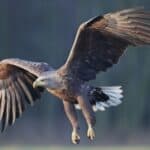
White-tailed Eagle
White-tailed Eagle A flagship raptor of large rivers and reservoirs; increasingly noted in many parts of European Russia and a highlight for birdwatchers in river valleys.
Black Stork A shy forest-and-river specialist that favors secluded wetlands; its presence signals relatively intact riparian woods and low-disturbance nesting areas.
Eurasian Crane A characteristic voice of marshy meadows and wet depressions in the forest-steppe; seen during breeding and migration in suitable valleys and boggy patches.
European Badger A classic broadleaf-forest mammal; setts occur on well-drained slopes and forest edges, and the species is an emblem of Kursk's woodland fragments.
Eurasian Otter A top aquatic predator of cleaner river sections and backwaters; tracks and spraints are a key sign in quieter, fish-rich stretches.
Great Bustard An emblematic steppe bird now tied to the last open steppe-like landscapes and low-intensity farmland; any sighting is notable and memorable.

Endemic & Rare Species

Russian Desman

Desmana moschata

Endangered globally (IUCN); rare and declining in much of its range

A unique semi-aquatic insectivore of slow rivers, oxbows, and marshy banks; Kursk's river valleys lie within the broader historical range, and surviving pockets are conservation priorities.

Great Bustard

Otis tarda

Vulnerable globally (IUCN); locally rare due to habitat loss and disturbance

Represents the vanishing steppe component of the forest-steppe region; persists only where open habitats remain large and disturbance is managed.

Black Stork

Ciconia nigra

Uncommon breeder; sensitive to disturbance and loss of old riparian forest

Depends on secluded mature forests near wetlands; important as an indicator of intact riverine woodland corridors.

White-tailed Eagle

Haliaeetus albicilla

Protected in Russia; recovering in many regions but still sensitive to disturbance and poisoning

Kursk's reservoirs and larger rivers provide feeding and nesting potential; its return/expansion is a key conservation story for large raptors.

European Mink

Mustela lutreola

Critically Endangered globally (IUCN); extremely rare/possibly extirpated in many areas

Historically tied to wetland corridors; where it still occurs, it competes with/has been displaced by the invasive American mink, making any confirmed records conservation-relevant.

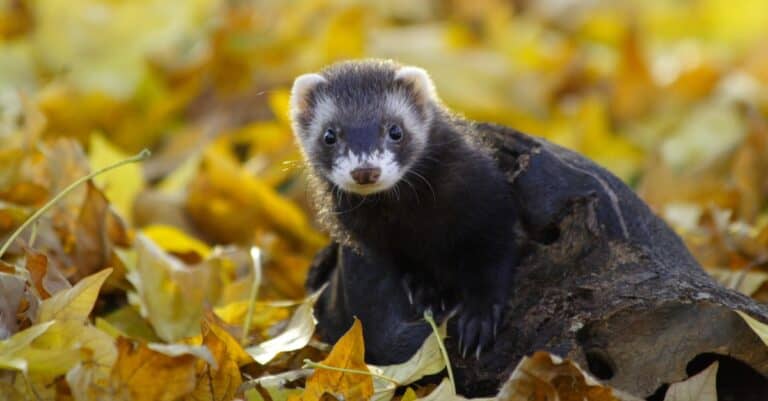
Steppe Polecat

Mustela eversmanii

Locally uncommon; associated with open steppe/farmland mosaics

A characteristic predator of open habitats; reflects the remaining steppe-like elements of Kursk's landscape and healthy small-mammal communities.

Lesser Spotted Eagle

Clanga pomarina

Regionally uncommon; dependent on mature forest near open foraging grounds

A forest-steppe raptor that benefits from a mosaic of woodland for nesting and meadows/fields for hunting; vulnerable to forest fragmentation and disturbance.

Notable Populations

  • Central Black Earth Nature Reserve (Kursk section) protects some of the best-preserved meadow-steppe and broadleaf-forest fragments in the Central Russian Upland region, supporting a high concentration of steppe and forest-steppe indicator species.
  • River-valley corridors (e.g., Seim/Psel systems and associated wetlands) form an important regional network for breeding and migrating waterbirds and raptors, including nationally protected species such as black stork and white-tailed eagle.
  • Steppe relict patches and low-intensity agricultural mosaics can hold regionally significant assemblages of open-country birds (larks, harriers, quail, corncrake in damp meadows), making the oblast notable for forest-steppe avifauna in a heavily cultivated zone.

Recent Changes

  • Eurasian beaver has broadly recovered across European Russia over recent decades; in Kursk this is reflected in increasing signs and local re-colonization of suitable tributaries and wetlands.
  • Wild boar numbers in many regions (including southwest Russia) have shown sharp fluctuations in the last decade due to African swine fever control measures and disease impacts, altering predator-prey and hunting dynamics.
  • Large raptors such as white-tailed eagle have expanded/rebounded in parts of European Russia with improved protection and changing land use; sightings and breeding attempts have become more frequent in suitable river/reservoir landscapes.
  • Open-steppe specialists (notably great bustard and some steppe raptors/ground-nesters) have generally declined or become more localized due to agricultural intensification, disturbance, and loss of large contiguous open habitats.
  • Ongoing pressure on small wetlands and oxbow lakes (drainage, channel modification, pollution) continues to affect wetland-dependent species; otter and desman persistence is closely linked to maintaining high-quality river-valley habitats.
Visit

Wildlife Viewing

Kursk Oblast has a forest-steppe mix: broadleaf woods (oak, linden, maple), meadows, farm edges, and river valleys with wetlands. These habitats support roe deer, wild boar, fox, hare, many birds (raptors, woodpeckers, owls, waterbirds) and seasonal migrants. The Central Chernozem Nature Reserve (V.V. Alekhin) protects surviving steppe and forest on rich chernozem soils.

Best Seasons

Spring (late March-May)

Peak bird activity: migrants return, songbirds are vocal in broadleaf forests, and raptors patrol field margins. River valleys swell with meltwater, drawing ducks and waders. Best time for dawn choruses, lekking/territorial displays, and fresh tracks of mammals along muddy roads and forest edges.

Summer (June-August)

Lush, insect-rich season-excellent for butterflies, dragonflies, and wildflower-steppe scenes in protected areas. Woodland birds breed; mammals are crepuscular (best at sunrise/sunset). Wetlands and oxbows hold herons and reedbed species. Heat and high vegetation can make large mammals harder to spot midday.

Autumn (September-November)

Migration and big-sky raptor watching over open landscapes; cranes and geese may appear during passage depending on year and local sites. Deciduous forests turn color, visibility improves as leaves drop, and mammals are more active-good odds for roe deer and wild boar on field edges at dusk.

Winter (December-early March)

Snow reveals tracks and makes wildlife tracking highly productive. Forest birds concentrate at feeding areas; chances for owls increase. Rivers partially freeze, concentrating waterfowl where open water remains. Clear, cold days can be superb for photography, though access depends on road conditions.

Top Wildlife Experiences

  • Book a visit to the Central Chernozem Nature Reserve (V.V. Alekhin Central Chernozem Reserve) to explore protected steppe and broadleaf forest plots with a reserve guide-focus on raptor scanning over open steppe edges and birding forest interiors.
  • Sunrise birding and listening walk in broadleaf forests near the reserve buffer zone: target woodpeckers, thrushes, warblers (in season), and owls at first light.
  • Evening field-edge mammal watch in the forest-steppe belt (quiet roadside or farm-track pull-offs away from settlements): scan for roe deer, fox, and wild boar moving from cover to feeding areas at dusk.
  • River-valley wetland day along major valleys (e.g., near wider floodplain sections and oxbow lakes): look for herons, ducks, grebes, and reedbed birds; best in spring and early autumn.
  • Winter tracking excursion in mixed forest and shelterbelts: follow fresh snow tracks to identify fox, hare, roe deer, and boar activity; pair with photography of tracks and sign.
  • Butterfly and pollinator photography outing in mid-summer on flower-rich meadows and steppe fragments (where access is permitted): combine macro photography with landscape views of the forest-steppe.
  • Raptor watching from elevated viewpoints or open ridgelines over agricultural plains during autumn passage: scan for buzzards, kestrels, harriers, and other birds of prey using thermals over fields.

Wildlife Watching Types

Forest-steppe birding (songbirds, woodpeckers, owls) Raptor watching over agricultural plains and steppe edges Wetland and river-valley birding (waterfowl, herons, reedbed species) Mammal watching at dawn/dusk (roe deer, wild boar, fox, hare) Winter wildlife tracking and sign identification in snow Insect and wildflower viewing (butterflies, dragonflies; peak summer) Nature photography (landscape + macro + wildlife)

Guided Options

  • Central Chernozem Nature Reserve (V.V. Alekhin Central Chernozem Reserve) guided routes/interpretive programs-arrange in advance; access in strict reserves is typically controlled and best done with official staff or permitted guides.
  • Local naturalist-led birding days focused on river valleys and forest-steppe edges (often organized through regional ecotourism operators or nature education centers)-ask specifically for dawn starts and migration-season itineraries.
  • University/biology-station style field excursions (seasonal) that may be open to visitors or small groups by request-useful for steppe flora/insect-focused trips in summer.
  • Photography-oriented wildlife walks with local guides (small group or private), emphasizing raptors, mammals at dusk, and winter tracking-confirm hides/vehicle use and ethical distances in advance.
Habitats

Ecosystems

Kursk Oblast is in southwestern European Russia on the East European Plain. It is mostly forest-steppe: a patchwork of cropland on fertile chernozem soil, with broadleaf woodlands, meadow-steppe remnants, and river valleys like the Seym basin. Natural habitats remain in protected areas, ravines (balka systems), floodplains, and less farmable uplands.

Biomes

Temperate Grassland

Forest-steppe and meadow-steppe vegetation on chernozem soils, now largely converted to cropland but still present as steppe-meadow fragments, field margins, and protected plots (often on slopes, ravines, and less-plowable ground).

Historically widespread; today mostly fragmented remnants amid extensive agriculture (small to moderate natural cover).

Temperate Forest

Temperate broadleaf forests (oak-dominated with associated lime, maple, ash, birch) occur as patches on interfluves, in ravines, and along parts of river terraces; many stands are secondary or managed.

Patchy; a minority of the oblast, concentrated in woodland tracts and dissected terrain (overall low to moderate).

Freshwater

River networks and associated floodplain waters (oxbows, backwaters), with the Seym and its tributaries shaping major ecological corridors; ponds and small reservoirs are common in agricultural landscapes.

Widespread linear presence along valleys; small area proportion but ecologically significant.

Wetland

Floodplain wetlands, seasonally inundated meadows, marshy backwaters, and peat-poor lowland wetlands occur along major rivers and in depressions; many have been drained or regulated but persist locally.

Localized, mainly in river floodplains and low-lying basins (small overall area).

Habitats

Agricultural/Farmland

Extensive arable fields on chernozems (grain, sugar beet, sunflower and other crops), forming the dominant land cover; shelterbelts and field margins provide secondary habitat value.

Grassland

Meadow-steppe and dry grasslands in remnants on slopes, ravines, and protected parcels; floristically rich where intact, reflecting classic forest-steppe composition.

Steppe

Steppe-like communities occur as small fragments and on drier, well-drained sites; often embedded within agricultural matrices and vulnerable to plowing and succession.

Deciduous Forest

Oak-lime and mixed broadleaf stands in ravines and on terraces; includes coppice/secondary forests and managed stands, with spring ephemerals typical of East European broadleaf forests.

Woodland

Open woodland and forest edges (including shelterbelts and transitional forest-steppe ecotones) are common and important for connectivity between larger forest patches.

River/Stream

Riverine habitats centered on the Seym and tributaries, with riparian vegetation, meanders, and floodplain dynamics supporting high local biodiversity.

Wetland

Floodplain wetlands and wet meadows, including marshy backwaters and seasonally waterlogged depressions; key for amphibians, waterbirds, and nutrient cycling.

Marsh

Localized reed/sedge marshes in oxbows, backwaters, and low-energy river sections; often small but productive.

Pond

Farm ponds, small impoundments, and village reservoirs are common; they provide aquatic habitat in otherwise dry agricultural landscapes.

Urban

Urban/industrial areas (e.g., Kursk city) with green spaces, ruderal habitats, and river-adjacent development influencing local waterways and habitat fragmentation.

Suburban

Peri-urban settlements with mixed gardens, smallholdings, and patches of semi-natural vegetation, often along transport corridors and river valleys.

Ecoregions

East European forest steppe (WWF)
Protection

Conservation

Primary Threats

  • The forest-steppe landscape is heavily converted to arable land (grain, sunflower, sugar beet). Remaining native steppe patches and meadow-steppe river terraces are small and isolated; field consolidation and removal of grassy margins reduce nesting/foraging habitat for steppe birds and pollinators.
  • Ongoing loss and degradation of ravine oakwoods, floodplain meadows, and steppe fragments occurs through plowing of marginal lands, quarry expansion, and conversion of natural grasslands to improved pasture/hayfields, further fragmenting habitats around key river valleys and protected area buffers.
  • Open-pit iron ore extraction and associated infrastructure/tailings in the Kursk Magnetic Anomaly area (around industrial hubs such as Zheleznogorsk) cause direct habitat removal, dust deposition on vegetation, hydrological changes, and barriers to wildlife movement.
  • Runoff of nitrogen and phosphorus from intensive farming causes eutrophication and sedimentation in small rivers and ponds. Pesticides harm invertebrates and farmland birds. Industrial emissions and mine dust damage air and soil. Kursk NPP and energy sites need strict water and soil monitoring.
  • Channel straightening, bank reinforcement, small damming, drainage/melioration, and floodplain regulation simplify river habitats, reducing wetlands and oxbows important for species like the Russian desman and for floodplain biodiversity.
  • Road density and expanding logistics networks increase wildlife mortality, fragment forest and steppe remnants, and intensify edge effects. Linear infrastructure can cut across ravines and river corridors that serve as movement routes for mammals and as nesting areas for raptors.
  • More frequent summer heatwaves and drought stress forest-steppe ecosystems, raise wildfire risk in grasslands and forest edges, and can reduce water levels in small rivers/oxbows-compounding impacts on floodplain-dependent species and increasing instability of steppe plant communities.
  • Legal hunting pressure combined with illegal take affects ungulates and carnivores, and incidental shooting/disturbance can impact protected raptors. Spring disturbance in open habitats can reduce breeding success of ground-nesting birds.
  • High use of riverbanks, forest edges, and steppe fragments for recreation, fishing, mushroom/berry collection, and off-road driving leads to trampling, litter, fire ignition, and repeated disturbance near nests and dens-especially outside strict reserve boundaries.
  • Local overharvest in rivers and reservoirs, plus illegal gear, can simplify fish communities and reduce prey availability for piscivorous birds and mammals; this is amplified where water quality is already stressed by runoff and altered flows.
  • American mink (Neovison vison) competes with and preys upon native semi-aquatic fauna and is a major factor in the decline of European mink. Invasive plants along roadsides and disturbed floodplains (e.g., Sosnowsky's hogweed in parts of European Russia) can locally displace native meadow and riparian vegetation.
  • Rabies cycles in wild carnivores and African swine fever risks in wild boar create management pressures that can lead to intensified control actions and disturbance; disease events also affect public tolerance for wildlife near settlements.
Fun Facts

Did You Know?

From the road, much of Kursk Oblast looks like continuous agriculture, yet within kilometers you can step into untouched feather-grass meadow-steppe inside the Alekhin Reserve-showing how tiny unploughed remnants can harbor distinctly different insect-and-bird communities than surrounding fields.

Here the forest-steppe can change from forest to steppe in short distances: in one day you can go from oak-linden woodland in ravines and river valleys to open-steppe on uplands, because chernozem relief and moisture change quickly.

What looks like "dead, burnt grass" in mid-to-late summer steppe is often seasonal dormancy rather than degradation: many steppe plants in Kursk's meadow-steppe complete flowering early and then shut down during the hottest, driest weeks.

Small river valleys and wet gullies act as wildlife corridors through farmland: riparian strips along rivers such as the Seym create continuous cover that lets mammals and birds move between otherwise isolated forest patches.

Some of the most biodiverse parts of the region are the least visually dramatic: species richness can peak in low, flower-rich meadow-steppe and edge habitats (steppe-shrub-forest transitions) rather than in tall forests or uniform fields.

Kursk Oblast's Alekhin Central Chernozem State Nature Reserve (founded 1935) protects famous patches of virgin, never ploughed meadow-steppe on deep chernozem soil, a habitat now mostly turned into farmland across the East European Plain.

The Alekhin Reserve is a "reference standard" site for forest-steppe science: its permanent steppe plots have been used for continuous, decades-long monitoring of natural grassland dynamics in European Russia-one of the longest-running steppe observation series in the region.

Kursk Oblast sits on a major forest-steppe boundary, a meeting zone where small protected steppe patches keep steppe species near the northern edge of their range while nearby broadleaf forests hold typical woodland fauna.

The reserve is split into several isolated steppe tracts, including Streletskaya Steppe, so it gives a rare chance to compare similar virgin-steppe wildlife communities on the same soil after ploughing.

Thank you for reading! Have some feedback for us?