
Wildlife of
Ul'janovskaja oblast'
About Ul'janovskaja oblast'
Ulyanovsk Oblast sits in the Middle Volga, where forest meets steppe and wide river valleys cut through rolling uplands. This transition zone creates many habitats—wooded patches, grasslands, and waterside mosaics—that support large mammals and many migratory birds. The Volga River is the region’s ecological backbone. Its floodplains, backwaters, reedbeds, and wet meadows provide places for waterfowl and other migratory birds to breed, feed, and rest, and they support beavers, muskrats, and fish-eating predators. Away from the main channel, oak and birch groves, ravines, and clearings give shelter and food to deer and small carnivores, and make edge habitat for songbirds and raptors. Because the river shapes so much of the land, wildlife viewing often centers on the Volga’s waters and islands, while nearby fields and gullies offer a quick change to steppe and forest species.
Geography
Ulyanovsk Oblast lies in the Middle Volga region where the Volga River and its main tributaries, the Sura and Sviyaga, cut through forest-steppe plains and the Volga Upland. River valleys, floodplains, reservoirs, and upland steppe and woodland patches form many habitats that support waterbirds and migratory birds, grassland species, and mixed deciduous forest animals.
Elevation Range
Approximately 45-350 m (low floodplains and reservoir shores up to upland ridges)
Coastline
No ocean coastline; extensive inland shorelines along the Volga River, especially the Kuybyshev Reservoir.
Key Landscapes
Protected Areas
Ulyanovsk Oblast's protected areas center on the Volga River's right-bank uplands and floodplains (Volga, Sviyaga, Sura), plus forest-steppe and steppe patches. Main priorities are river wetlands for migratory waterbirds and raptors, mixed broadleaf forests and ravines for mammals and birds, and remaining steppe and chalk slopes. Most protection comes from regional zakazniks and nature monuments.
≈6-8% of the oblast (protected areas of all categories; approximate, varies by accounting method and boundary updates).
National Parks & Preserves
Sengileevskie Gory National Park
≈43,000-44,000 ha (≈430-440 km²)The flagship federal protected area in the oblast, safeguarding the dramatic Volga right-bank escarpment, ravine forests and riverine habitats. It is notable for raptor viewing over the Volga, breeding forest birds in hard-to-access gullies, and a strong river-upland habitat gradient that concentrates wildlife in a compact area.
State & Provincial Parks
Starokulatkinsky Regional State Nature Reserve (Zakaznik)
Regional protected area; size varies by zoning in sources (typically on the order of tens of thousands of hectares).Forest-steppe and steppe fragments with gullies and dry slopes that retain pockets of steppe biodiversity. It's one of the better places in the oblast to look for open-country raptors and steppe-associated mammals where intact habitat remains.
Cheremshansky Regional State Nature Reserve (Zakaznik)
Regional protected area; typically several hundred km² class depending on boundary definition.A river-valley and floodplain complex valued for wet meadows, backwaters and riparian woods. It is especially important during spring/autumn migration when concentrations of waterfowl and fish-eating birds use the river corridor.
Undory-Volga Right Bank Protected Landscape (regional OOPT cluster around Undory)
Small-to-medium parcels forming a protected cluster; individual sites are usually from tens to thousands of hectares.A set of regional protected sites (often managed as nature monuments/zakaznik parcels) on the Volga's right bank with spring-fed ravines, wooded slopes and shoreline habitats. Notable for breeding woodland birds, bat roosting sites in ravines, and strong wildlife visibility along the river edge.
Wildlife Refuges
Sura River Floodplain Zakaznik (Sura Floodplain / Sura Zakaznik - floodplain refuges)
Linear floodplain system; protected sections are typically tens of thousands of hectares combined (varies by designated parcels).Floodplain forests, oxbows and wet meadows along the Sura corridor. Important as a migratory 'stopover' and breeding area for wetland birds; also supports beaver/otter and spawning fish in backwaters.
Sviyaga River Valley Wetland Refuges (regional zakaznik/nature monument complexes)
Multiple small-to-medium protected parcels; cumulative area typically in the tens to low hundreds of km².Meanders, reedbeds, wet meadows and riparian shrubs/woods along the Sviyaga that hold high bird diversity close to the regional capital. Best for waterbirds, passerine migration and raptor foraging over open floodplain.
Volga Islands and Backwaters Spawning/Nesting Refuges (site network along the Volga)
Dispersed sites; individual islands/backwaters are small, but collectively ecologically significant across many km of river.A 'site-network' type of protection (fish spawning areas + bird nesting islands/backwaters) that helps maintain key ecological functions of the Volga: fish recruitment, colonial waterbird nesting, and raptor feeding grounds.
Wilderness Areas
- Volga right-bank escarpment and ravine-forest belt (the 'Sengiley Mountains' landscape): steep gullies with limited road access and high raptor/forest-bird value.
- Remote Sura floodplain hardwood forests and oxbow-lake complexes where access is mainly by seasonal tracks/boats.
- Sviyaga River meanders with broad wet meadows and reedbeds-best reached on foot via field roads; strong migration-season bird density.
- Trans-Volga (Zavolzhye) pine and mixed-forest tracts on sandy terraces with fewer settlements and longer roadless stretches.
- Southern forest-steppe ravines and steppe fragments (balkas) where intact grassland persists away from major roads.
Wildlife
Ulyanovsk Oblast sits in the Middle Volga forest-steppe belt, where broadleaf forests, pine stands, meadow-steppe slopes, floodplain meadows, oxbow lakes, and the Volga's vast reservoirs create a high-contrast mosaic of habitats. Wildlife here is defined by (1) big river and wetland biodiversity (fish, semi-aquatic mammals, breeding and migratory waterbirds), (2) forest-edge mammals typical of European Russia, and (3) steppe-associated species on open slopes and grasslands (notably in protected areas such as Sengiley Mountains National Park). Seasonal bird migration along the Volga is a major feature of the region's wildlife experience.
Iconic Species

Endemic & Rare Species
Notable Populations
- Volga River migration corridor: large seasonal movements of waterfowl, gulls, terns, raptors, and cranes concentrate along reservoirs, sandbars, and floodplain wetlands.
- Forest-steppe raptor assemblages: open slopes and river-valley mosaics support notable raptor diversity (e.g., kites, harriers, eagles) relative to much of the surrounding agricultural landscape.
- Floodplain wetland complexes (oxbows, backwaters, reedbeds) provide regionally important breeding and stopover habitat for wetland birds and nursery areas for fish.
- Sturgeon heritage of the Volga: historically nationally significant sturgeon runs (including sterlet and beluga) define the river's identity, even though populations are now much reduced.
Recent Changes
- Sturgeons (including sterlet and beluga): long-term declines from river regulation, loss of spawning access, illegal harvest, and habitat change; some areas see periodic stocking/restoration efforts in the wider Volga basin, but recovery remains challenging.
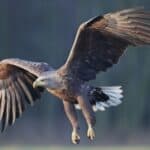
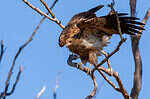
- White-tailed Eagle: broader European Russia trend of stabilization/increase in some regions due to protection and reduced persecution; local abundance can improve where disturbance is limited and fish resources remain adequate.
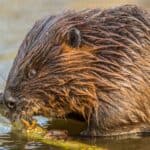
- Eurasian Beaver: continued recovery/expansion in many parts of European Russia, leading to more frequent signs along small rivers and floodplain channels.
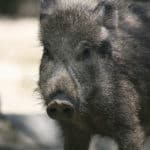
- Wild Boar: strong fluctuations in recent years in many Russian regions linked to African swine fever management and disease impacts, which can sharply reduce local densities.
- Wetland-dependent species (e.g., cranes, spotted eagles, amphibians): sensitive to floodplain alteration, shoreline development, and drought/low-water years; local occupancy can shift with hydrology and human disturbance.
- Steppe-fragment specialists: gradual pressure from plowing, succession/overgrowth of remaining steppe patches, and infrastructure can reduce habitat quality unless managed in protected areas (e.g., maintaining open steppe slopes).
Wildlife Viewing
Ulyanovsk Oblast offers classic Middle Volga wildlife viewing along the Volga River, its floodplains, oxbow lakes, wooded ravines, forest-steppe meadows, and farmland patches. Raptors, cranes, waterfowl, and mammals are common. Spring and autumn migrations are best for birds; summers bring rich wetland life and mammals at dawn and dusk. Travel is mostly on land, with some bird watching by boat.
Best Seasons
Spring (late March-May)
Peak migration on the Volga flyway: large movements of geese and ducks, early-arriving swans, and mixed passerine flocks in riverine woods. Raptors become conspicuous over forest-steppe (buzzards, harriers, kestrels). Amphibians breed in temporary ponds; beavers and muskrats are easier to spot as ice leaves the banks. Best time for "big day" birding with high species counts.
Summer (June-August)
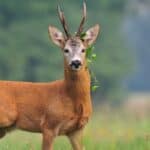
Breeding season: reedbed birds and marsh specialists vocal at dawn; herons and terns frequent backwaters. Forest edges and steppe meadows hold butterflies and dragonflies, with good chances for roe deer at sunrise/sunset. Boat outings are most comfortable; mosquitoes can be intense in wetlands-plan for protective clothing.
Autumn (September-early November)
Second migration peak: cranes and geese over fields and river corridors; concentrations of ducks on bays and oxbows. Forests show strong mixed tit and finch flocks, and raptors hunt along open slopes. Clear, cooler weather improves visibility for scanning the Volga and reservoir shorelines.
Winter (late November-March)
Quiet, moody wildlife tracking. Look for winter finches and woodland birds in conifers and riverine thickets. Follow hare, fox, and roe deer tracks in the snow. Where open water remains on the Volga, see wintering waterbirds. Otherwise stick to forest walks, feeding stations if present, and photos of tracks and frosted scenes.
Top Wildlife Experiences
- Volga floodplain birding day (Ulyanovsk riverfront → bays/backwaters outside the city): scan from embankments and quiet side roads for waterfowl, gulls/terns in summer, and migration flights in spring/autumn; add a short boat segment if conditions allow.
- Sunrise wetland loop for cranes and geese (agricultural fields bordering floodplains and low meadows along the Volga corridor): arrive pre-dawn, listen for calling flocks, then watch movement to feeding fields; best in September-October (and again in April).
- Riverine forest walk for woodpeckers and songbirds (riparian woods and ravines feeding into the Volga): slow, quiet pacing to pick up drumming woodpeckers, warblers in spring, and mixed flocks in autumn; excellent for photography in soft light.
- Beaver and muskrat evening watch (oxbow lakes/calm backwaters): position near gnawed willow stands and lodge/dam signs; most productive at dusk in spring-summer when banks are accessible and activity is high.
- Forest-steppe raptor scanning (open meadows, edges of wooded belts, and elevated viewpoints above the Volga): spend midday watching thermals for buzzards and harriers; in autumn, look for hunting activity over stubble fields.
- Butterflies and dragonflies of meadow-and-wetland mosaics (flower-rich steppe meadows near river terraces): a relaxed daytime naturalist walk in July; pair with birding for shrikes and larks on the edges.
- Winter track-and-bird walk (woodland edges and ravines): follow fresh tracks of fox/hare/roe deer, check berry-bearing shrubs for waxwings and finches, and search for owls at dusk where permitted/appropriate.
Wildlife Watching Types
Guided Options
- Local birding/nature guides based in Ulyanovsk: request customized day trips for Volga floodplains + forest-steppe raptor routes; ideal for migration timing and access to the best scanning points.
- University/education-center nature excursions (where available): inquire at local universities, museums, or nature education centers in Ulyanovsk for seasonal field trips focused on birds, wetlands, and ecology.
- Protected-area visitor programs (regional nature reserves and wildlife refuges if open to visitors): contact regional environmental authorities or visitor centers for permitted routes, observation points, and seasonal wildlife briefings.
- Boat operators offering nature-focused rides: hire small-boat trips with a clear wildlife aim (quiet approach, early/late timing) for waterfowl and heron/tern viewing-confirm safety, permits, and low-wake practices.
- Photography-guided walks: arrange local photographers/naturalists for sunrise riverine forest sessions and autumn migration flights; useful for finding beaver sign and best light angles along the Volga viewpoints.
Ecosystems
Ulyanovsk Oblast lies in the Middle Volga of European Russia and is dominated by a forest-steppe mosaic shaped by fertile chernozem soils, broad river valleys (Volga, Sviyaga, Sura), and extensive agricultural use. Biodiversity is concentrated in remaining broadleaf forests, steppe-like grasslands on uplands and slopes, and riverine floodplains with oxbows, reedbeds, and wetlands that support migratory waterbirds and riparian species.
Biomes
Forest-steppe and steppe-like grasslands on interfluves, south-facing slopes, and open uplands; many areas are now hayfields/pastures or converted to cropland, but remnant native grasslands persist in protected areas and along ravines.
Widespread in the forest-steppe mosaic; largest share in open/agricultural landscapes (roughly half of the oblast as open land, with smaller portions as semi-natural grassland remnants).
Broadleaf and mixed forests (oak, linden, maple, birch; with patches of pine/spruce in planted or naturally mixed stands) occurring on better-watered sites, ravines, and along river terraces.
Patchy but significant; concentrated in river-valley terraces, ravine networks, and protected tracts (roughly a quarter to a third of the land cover in a fragmented pattern).
Large river systems and reservoirs dominated by the Volga (including the Kuybyshev Reservoir reach), plus tributaries such as the Sviyaga and Sura, with backwaters, oxbow lakes, and floodplain channels.
Linear network throughout; major presence along the Volga corridor and tributary valleys (a few percent of area, but highly influential ecologically).
Floodplain marshes, wet meadows, reedbeds, and peat-influenced fens/bogs in lowlands and old river channels; important for amphibians, waders, and migratory waterfowl.
Scattered, mainly in major floodplains and depressions (small areal share-typically low single digits-but locally extensive in valley bottoms).
Habitats
Oak-linden and mixed broadleaf stands in ravines, on river terraces, and in protected tracts; key refugia for forest birds and understory flora.
Pine patches on sandy soils (often river-terrace related) and mixed stands where conifers occur with birch/aspen; includes planted forestry areas.
Open-canopy groves and shelterbelts forming transitions between forest and steppe/agricultural land; important for edge species.
Meadow-steppe remnants, dry slopes, and hay meadows; many sites persist on steep terrain, near gullies, and in reserves where plowing is limited.
Steppe-like communities on warmer, drier exposures and uplands; often fragmented and sensitive to conversion and overgrazing.
Shrubby ravine slopes and regenerating fallows (hawthorn, rose, willow thickets), especially along gullies and floodplain margins.
Volga mainstem and major tributaries (Sviyaga, Sura) with riparian belts, islands/backwaters, and seasonally flooded banks supporting nesting and stopover birds.
Oxbow lakes and reservoir bays/backwaters associated with the Volga and floodplains; critical for fish spawning and waterfowl.
Small farm and village ponds plus impoundments in tributary valleys; often used by amphibians and as local watering sites.
Floodplain wet meadows, reedbeds, and sedge fens; high productivity zones supporting invertebrates and bird foraging.
Reed- and cattail-dominated marshes in oxbows/backwaters and low-lying floodplain areas, especially along the Volga corridor.
Localized peat-influenced wetlands/fens in depressions and poorly drained areas; limited but ecologically distinctive.
River bluffs and steep valley sides (including loess and chalky/limestone exposures in places) that create nesting/denning microhabitats and steppe-like slope vegetation.
Extensive cropland on fertile soils (grain, oilseeds, fodder crops) dominating much of the forest-steppe; a major driver of habitat fragmentation.
Built-up areas centered on Ulyanovsk and other towns along transport and river corridors, with parks and riparian embankments providing limited green habitat.
Ecoregions
Conservation
Primary Threats
- In the forest-steppe, remaining steppe patches and meadow complexes are vulnerable to conversion, field enlargement, and drainage; this reduces nesting/foraging habitat for steppe and edge species and increases fragmentation of chalk-slope and ravine ecosystems typical of the right-bank Volga uplands.
- Loss and degradation occur through shoreline building along the Volga/Kuibyshev Reservoir, encroachment into floodplain meadows and small wetlands, and simplification of landscapes (hedgerow removal, reduced fallows) that previously supported migratory birds and small mammals.
- Regulated flow and water-level fluctuations associated with the Volga cascade (including the Kuibyshev Reservoir) alter spawning and nursery habitats for fish, change floodplain inundation patterns, and erode/reshape riverbanks-affecting riparian forests, reedbeds, and colonies of waterbirds.
- Nutrient runoff (fertilizers/manure) and sediment from fields increase eutrophication in bays and tributary mouths; urban/industrial effluents and stormwater around Ulyanovsk and other settlements add pressure on Volga and tributary water quality, impacting fish, amphibians, and wetland birds.
- Fishing pressure in the Volga/Kuibyshev Reservoir and tributaries (including illegal harvest) can depress stocks of valuable and vulnerable species; this is particularly significant for historically sturgeon-rich Volga systems and for sterlet populations that rely on suitable spawning substrates and flow regimes.
- Poaching and weak compliance in some areas affect waterfowl and other game species, and incidental take/disturbance can affect protected raptors and colonial birds in riparian habitats, especially during nesting and migration periods.
- Recreation, boating, shoreline vehicle access, and unregulated camping/fishing on Volga banks and reservoir islands disturb nesting waterbirds and raptors; repeated disturbance can cause nest abandonment and reduces breeding success in easily accessed riverine sites.
- Roads, new dacha/settlement expansion, and shoreline engineering fragment habitats and increase access for disturbance/poaching; powerlines and other linear infrastructure raise collision/electrocution risks for large raptors that hunt along open forest-steppe and river valleys.
- Although the oblast is not Russia's most forested region, localized logging and fuelwood pressure in riparian forests and oak/birch stands can reduce old-tree structure needed by cavity-nesters and nesting raptors, and can destabilize slopes on the Volga right bank.
- Sand and gravel extraction and quarrying (including chalk/limestone-related works on upland slopes where present) can damage unique steppe/chalk flora communities and increase sedimentation into nearby streams and reservoir coves.
- More frequent heat/drought periods and altered winter conditions can shift the forest-steppe balance, increase wildfire risk in dry grasslands, and change river/tributary hydrology (timing of floods/ice), affecting wetland availability for migratory birds and spawning conditions for fish.
- Non-native or range-expanding predators/competitors (notably American mink in many Volga regions) can pressure native semi-aquatic fauna (e.g., European mink where still present) and ground-nesting birds in riparian habitats; invasive aquatic species also contribute to food-web changes in reservoir ecosystems.
- Outbreak risk (e.g., avian influenza) is elevated where large numbers of migratory waterbirds concentrate on the Volga/Kuibyshev Reservoir; disease events can cause episodic mortality and trigger restrictions that complicate monitoring and management.
Did You Know?
The "mountains" of Sengileevskie Gory are not alpine at all: they're Volga Upland cliffs and ridges where sunny chalk/limestone slopes can host steppe-like communities right above riverine forests-two very different habitats stacked side by side.
Steep Volga banks and ravines provide natural "apartment blocks" for burrowing birds: colonies of sand martins and, in warm years, bee-eaters can nest in dense clusters where the soil is firm enough to hold tunnels.
In the forest-steppe of Ulyanovsk Oblast, you can encounter classic taiga/forest fauna (moose tracks, woodpeckers) surprisingly close to open-country species (larks, ground squirrels) because fields, oak groves, and meadow-steppe patches interlock at small scales.
Reservoir shorelines often look lifeless in midsummer, but after windy days they can become temporary feeding lines where fish fry and invertebrates are concentrated-drawing sudden bursts of bird activity (terns, gulls, herons) in very narrow strips of water.
Warm, still floodplain backwaters and oxbow lakes along Volga tributaries act like natural reptile incubators, letting the European pond turtle (Emys orbicularis) survive near the cooler edge of its Middle Volga range.
The shoreline of Ulyanovsk Oblast includes the Kuibyshev Reservoir-widely cited as Europe's largest reservoir by surface area-creating an "inland sea" of shallow bays and islands that function as prime habitat for fish, gulls/terns, and migrating waterfowl.
Ulyanovsk Oblast sits on the Volga-Europe's longest river-so its riverbanks and floodplains are part of the continent's biggest natural migration corridor for river- and wetland-associated wildlife.
The white-tailed eagle (Haliaeetus albicilla)-Europe's largest eagle-regularly uses the Volga/Kuibyshev Reservoir shore and islands for hunting and nesting territories in the region's riverine forests.
The European beaver (Castor fiber), the largest rodent in Europe, lives on the oblast's Volga tributaries (notably the Sviyaga and Sura systems), where its dams and canals can transform narrow streams into wetland chains.
Historically, the Middle Volga near present-day Ulyanovsk lay on the migration route of beluga sturgeon (Huso huso), one of the world's largest freshwater fishes-an animal that could outweigh a small car in exceptional cases.