N S W E
Wildlife Expeditions

Wildlife of
Primorskij kraj

Primorsky Krai is Russia's most iconic big-cat stronghold, where temperate forests meet the Sea of Japan and shelter Amur tigers and the rare Far Eastern leopard.
63 Species
165,900 km² Land Area
Overview

About Primorskij kraj

Primorsky Krai sits where Siberian cold, East Asian temperate forests, and the Sea of Japan meet, making a wildlife mix not found elsewhere in Russia. The land has mixed temperate forests rich in Korean pine and broadleaf trees, steep river valleys, and a long, island-dotted coast. This mix supports many large predators and diverse prey, from red deer and wild boar to smaller forest species. Key habitats include the Sikhote-Alin mountain forests and foothills, crucial refuges for big cats and healthy predator-prey relationships; floodplain and riparian corridors that serve as movement routes and winter feeding areas; and coastal wetlands and estuaries that host migratory birds on the East Asian-Australasian Flyway. Offshore waters and rocky shores add a marine side, with seabirds, seals, and seasonal whales, so visitors can shift from tracking forest carnivores to watching sea life in one trip.

Physical Features

Geography

Primorsky Krai has a strong coast-to-mountains change: a rugged Sea of Japan coast with bays, islands, and estuaries shifts inland to river valleys, wetlands, and the forested Sikhote-Alin ranges. Close habitat zones—coastal/marine, lowland floodplains and lake wetlands, and temperate and boreal mountain forests—support high biodiversity and animals like the Amur tiger and Far Eastern leopard.

165,900 km² Land Area
Mid-sized federal subject within Russia (roughly top third by area; much smaller than Siberia's largest regions) Size Rank
Russia Country
Federal_subject Type
Elevation Range

Sea level to ~1,933 m (highest peaks in the Sikhote-Alin), creating strong habitat and snow/temperature gradients over short distances

Coastline

Extensive coastline on the Sea of Japan (East Sea), centered on Peter the Great Gulf with many bays, headlands, estuaries, and offshore islands

Key Landscapes

Sea of Japan coastline (including Peter the Great Gulf) with rocky shores, sandy bays, sea cliffs, and numerous islands Sikhote-Alin mountain system: long, forested ridges and deep valleys forming major interior habitat and climatic gradients Ussuri and Razdolnaya (Suifen) river basins with floodplains, riparian forests, and migratory corridors Lake Khanka (Khanka/Xingkai) and surrounding wetlands-one of the largest freshwater wetland complexes in the Russian Far East Lowland plains and coastal terraces supporting mixed forests, meadows, and wetland mosaics important for ungulates and waterbirds Estuaries, lagoons, and river mouths along the coast that concentrate fish and bird life and link marine and freshwater food webs
Parks & Reserves

Protected Areas

Primorsky Krai has a key protected area network for temperate broadleaf-mixed forests and coastal and marine ecosystems in the Sea of Japan. Conservation focuses on rare big cats (Amur tiger and Far Eastern leopard), Sikhote-Alin taiga watersheds, and wetlands for migratory waterbirds, protected by parks, reserves, marine areas, and regional sanctuaries.

Protected Coverage

≈18-22% of land area under some form of protection (federal + regional PAs; estimates vary by how regional zakazniks and buffer zones are counted).

National Parks & Preserves

Land of the Leopard National Park

≈2,620 km² (≈262,000 ha)

The global stronghold for the Far Eastern leopard and a key landscape for Amur tiger recovery; high-quality Korean pine-broadleaf forests and rugged borderland terrain support exceptional ungulate prey and provide critical connectivity between leopard subpopulations.

Far Eastern leopard (Amur leopard) Amur tiger Sika deer Roe deer (Siberian roe deer) Ussuri wild boar

Bikin National Park

≈11,605 km² (≈1,160,500 ha)

Protects one of the largest remaining intact forest river basins in the Sikhote-Alin region-an important tiger landscape with extensive roadless valleys and old-growth Korean pine-broadleaf forest; also vital for salmonid rivers and Indigenous Udege/Nanai cultural landscapes.

Amur tiger Asiatic black bear Sable Blakiston's fish owl Siberian taimen (taimen)

Zov Tigra National Park (Call of the Tiger National Park)

≈830 km² (≈83,000 ha)

A flagship tiger-viewing and research landscape in the Sikhote-Alin foothills, protecting large tracts of mixed forest and mountain habitats that sustain high densities of ungulates and large carnivores.

Amur tiger Asiatic black bear Red deer (wapiti) Sika deer Eurasian lynx

Udege Legend National Park

≈1,000 km² (order-of-magnitude; zoning reported in sources varies by translation/administrative updates)

Mountain-forest and river-valley habitats in the Sikhote-Alin region supporting tigers, bears, and rich birdlife; valued for relatively low road density and for protecting key tributaries and forest corridors.

Amur tiger Brown bear Asiatic black bear Mandarin duck Sable

State & Provincial Parks

Verkhneussuriysky (Upper Ussuri) Regional Wildlife Sanctuary

Size varies by sanctuary boundaries/zoning; commonly on the order of hundreds of km² (check Krai PA registry for current figure).

Regional-level protection aimed at maintaining intact headwaters forests and wildlife movement corridors linking Sikhote-Alin habitats; important as complementary range for tiger, bear, and ungulate prey outside core federal parks.

Amur tiger Asiatic black bear Red deer (wapiti) Sika deer Hazel grouse

Prikhankaysky (Lake Khanka) Regional Wetland Sanctuaries (regional protected area network)

Multiple sites; individual areas range from small marsh complexes to large floodplains (consult Krai listings for exact areas).

A set of regional protected wetlands and floodplains around Lake Khanka that complement the federal Khankaisky Nature Reserve; outstanding for migration stopovers, breeding waterbirds, and wintering concentrations when conditions allow.

Red-crowned crane White-naped crane Oriental stork Swan goose Whooper swan

Coastal Seabird Colony Regional Protected Sites (Peter the Great Bay and Sea of Japan coast; regional monuments and wildlife sanctuaries)

Typically small (from <1 km² islets up to tens of km² of coastal complexes), varying by site.

Small-to-medium coastal protected sites focused on cliffs, islets, and haul-outs that support seabird breeding colonies and coastal pinniped resting areas; important for nearshore biodiversity and ecotourism around the warmer southern coast.

Steller's sea eagle Pelagic cormorant Black-tailed gull Spotted seal Sea otter (local occurrences along the wider region's coast)

Wildlife Refuges

Kedrovaya Pad State Nature Reserve

≈180 km² (≈18,000 ha)

Russia's oldest Far Eastern strict reserve and a cornerstone for Far Eastern leopard conservation; protects prime broadleaf-Korean pine forest and serves as a crucial source area and buffer alongside Land of the Leopard NP.

Far Eastern leopard Amur tiger Sika deer Ussuri wild boar Eurasian lynx

Sikhote-Alin State Nature Biosphere Reserve

≈4,016 km² (≈401,600 ha)

A vast, largely roadless taiga-and-mountain reserve (UNESCO Biosphere Reserve/World Heritage area components) protecting core Sikhote-Alin ecosystems; vital for tiger ecology, salmon-bearing rivers, and old-growth forest biodiversity.

Amur tiger Blakiston's fish owl Steller's sea eagle Asiatic black bear Sable

Khankaisky State Nature Reserve (Lake Khanka Nature Reserve)

≈400-450 km² (reported totals vary by cluster; includes multiple wetland sections)

Internationally important wetland complex on Lake Khanka for cranes, storks, geese, and migratory waterfowl; among the best places in the region for birdwatching and wetland conservation.

Red-crowned crane White-naped crane Oriental stork Swan goose Baikal teal (migratory)

Far Eastern Marine Biosphere Reserve (Far Eastern Marine Reserve)

≈630 km² (≈63,000 ha)

Russia's premier marine protected area in Peter the Great Bay, safeguarding kelp forests, rocky reefs, seagrass beds, and rich cold-temperate marine biodiversity; strong for marine wildlife viewing by boat in permitted zones.

Spotted seal Steller sea lion (occasional/nearby) Sea otter (regional coastal occurrences) Salmonids (migratory runs in connected waters) Diverse seabirds (including gulls and cormorants)

Wilderness Areas

  • Upper Bikin River basin and adjacent Sikhote-Alin ridgelines (some of the largest remaining roadless forest landscapes in the region, now anchored by Bikin National Park).
  • Remote interior of the Sikhote-Alin Range (north-central Primorye), including extensive unroaded watersheds adjoining Sikhote-Alin Biosphere Reserve and surrounding forestry frontiers.
  • Border-mountain forests of southwest Primorye (Land of the Leopard / Kedrovaya Pad landscape), where rugged terrain and restricted-access border zones have historically limited development.
  • Coastal cliff-and-cape stretches between Terney and Olga districts (pockets of hard-to-access shoreline with seabird habitat and limited road penetration).
Animals

Wildlife

Primorsky Krai is one of Eurasia's richest temperate wildlife regions, where Manchurian (Ussuri) broadleaf-conifer forests meet rugged Sikhote-Alin mountains, river valleys, wetlands, and the Sea of Japan coast. This mix of northern boreal elements and East Asian temperate fauna creates exceptional diversity, including globally famous big cats (Amur tiger and Far Eastern leopard), high raptor diversity along the coast, and a strong East Asian migratory-bird influence in wetlands and river plains.
~80-90 species (including terrestrial and coastal marine mammals) Mammals
~470-520 species recorded (very high due to migration along the coast and major river valleys) Birds
~10-12 species Reptiles
~10-12 species Amphibians
200+ freshwater species; 600-900+ species when coastal/marine fishes of the Sea of Japan are included Fish
Examples

Iconic Species

Amur tiger The flagship species of Primorye's Ussuri forests; Sikhote-Alin and adjoining protected areas support the world's largest remaining wild population of this tiger subspecies.
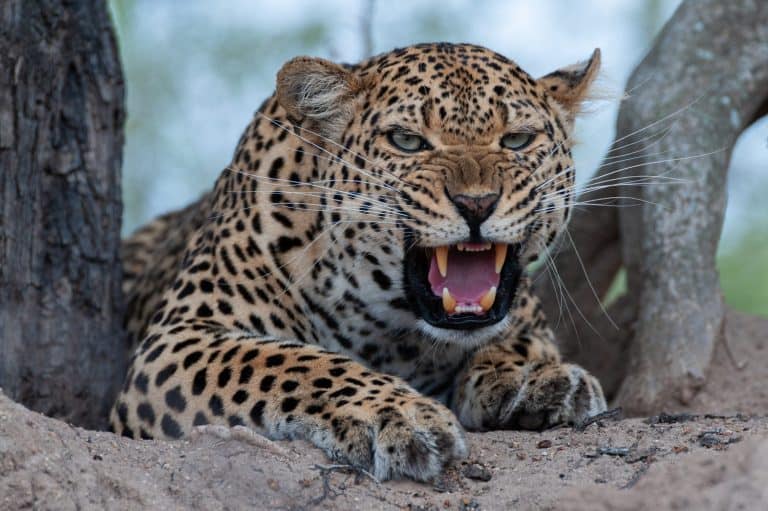
Far Eastern leopard (Amur leopard) One of the world's rarest big cats, centered in southwest Primorye; 'Land of the Leopard' landscapes are the core of its recovery and a top draw for wildlife tourism (mostly via tracks/camera-trap experiences).
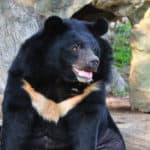
Asiatic black bear
Asiatic black bear A characteristic forest omnivore of mixed Korean pine-broadleaf forests; often associated with old-growth habitats that also support tigers and leopards.
Ussuri brown bear A prominent large mammal in mountain forests and river valleys; an emblematic predator-scavenger in the Sikhote-Alin ecosystem.
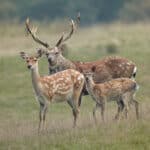
Sika deer
Sika deer A key prey species for Amur tigers and an iconic East Asian deer in forest edges and valleys; its abundance strongly influences big-cat distribution.
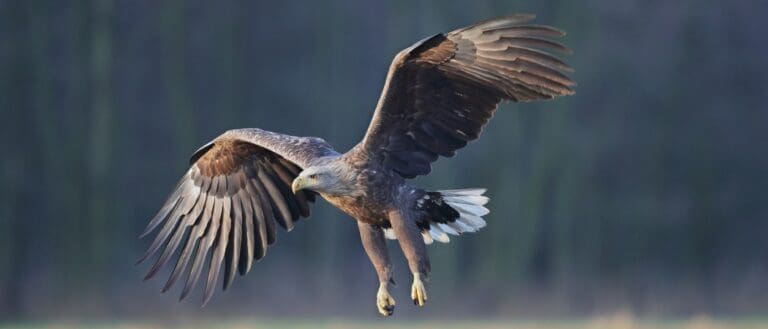
Steller's sea eagle A massive coastal raptor associated with the Sea of Japan shoreline, estuaries, and wintering areas; one of the most sought-after birds in the Russian Far East.
Blakiston's fish owl A legendary, habitat-sensitive owl of old-growth riparian forests; visitors come for a chance to detect it near salmon rivers (often by signs and specialized surveys).
Red-crowned crane An iconic wetland crane of East Asia; Primorye's river lowlands and marshes are important foraging and stopover areas, and locally for breeding in suitable wetlands.
Spotted seal A representative marine mammal of Primorye's coastal waters and bays of the Sea of Japan; frequently seen from shore/boats in season.

Endemic & Rare Species

Far Eastern leopard (Amur leopard)

Panthera pardus orientalis

Critically Endangered (IUCN); extremely small global population with its core in SW Primorsky Krai

Primorye holds the principal breeding habitat and the conservation 'source' population for this subspecies, making the region globally pivotal to its survival.

Amur tiger

Panthera tigris altaica

Endangered (IUCN); nationally protected in Russia

Primorye (with adjacent Khabarovsk Krai) forms the core range; prey base and anti-poaching work here drive the subspecies' global outlook.

Blakiston's fish owl

Bubo blakistoni

Endangered (IUCN); rare and highly localized

Dependent on intact riparian old-growth and healthy fish runs; its presence is a strong indicator of high-quality riverine forest ecosystems in Primorye.

Chinese merganser

Mergus squamatus

Endangered (IUCN)

A rare river specialist; Primorye's clean, forested rivers and nesting cavities are important for regional persistence and monitoring.

Red-crowned crane

Grus japonensis

Endangered (IUCN)

Wetland loss across East Asia makes Primorye's marshes and floodplains important for breeding attempts and migration staging within the flyway.

Steller's sea eagle

Haliaeetus pelagicus

Vulnerable (IUCN)

Primorye's coastal and estuarine habitats support feeding and seasonal concentrations; it's a key species for coastal conservation and ecotourism.

Long-tailed goral

Naemorhedus caudatus

Vulnerable (IUCN); rare in Russia and locally threatened

A cliff-and-forest ungulate with small, fragmented groups in the southern Russian Far East; sensitive to disturbance and habitat fragmentation.

Sakhalin taimen

Hucho perryi

Critically Endangered (IUCN)

One of the world's most threatened salmonids; Primorye's remaining suitable cold rivers and estuaries are important for any surviving populations and restoration potential.

Notable Populations

  • Core global stronghold for the Far Eastern leopard (Amur leopard) in southwest Primorsky Krai, centered on the Land of the Leopard landscape and adjacent border habitats.
  • Among the world's most important strongholds for the Amur tiger, with long-term research/monitoring centered in Sikhote-Alin and nearby protected areas.
  • High significance for East Asian migratory birds (East Asian-Australasian Flyway influence), with coastal wetlands and river lowlands supporting cranes, waterfowl, and raptors during migration.
  • Regionally significant coastal raptor presence, including Steller's sea eagle concentrations in suitable seasons along the Sea of Japan coast and estuaries.
  • Salmonid and river-forest systems that support rare specialists (e.g., fish owl, Chinese merganser) and are nationally important indicators of intact temperate riparian ecosystems.

Recent Changes

  • Far Eastern leopard numbers and range use have improved in the last decade due to strengthened protection, habitat management, and anti-poaching efforts (notably around Land of the Leopard National Park), with increasing cross-border use of habitat into Northeast China.
  • Amur tiger populations in parts of the Russian Far East have shown recovery/stabilization with sustained anti-poaching and prey management, alongside increased documentation of transboundary movements between Russia and China.
  • Ongoing pressures include habitat fragmentation from development/logging in some areas, which can reduce connectivity for wide-ranging species (tiger/leopard) and degrade old-growth riparian habitat needed by fish owl and mergansers.
  • Freshwater and coastal fish communities face growing stress in some watersheds from overharvest, bycatch, and habitat alteration, which can indirectly affect fish-dependent wildlife (e.g., fish owl) and rare salmonids such as taimen.
  • Wetland-dependent birds (e.g., cranes) continue to be sensitive to wetland drainage, disturbance, and changing hydrology; local protection and management of key marshes remain an active conservation focus.
Visit

Wildlife Viewing

Primorsky Krai is one of Northeast Asia’s richest wildlife areas, where the Sikhote‑Alin mountains and mixed temperate forests meet the Sea of Japan. Visitors can see Amur tigers and the critically endangered Far Eastern leopard, plus coastal wildlife, seabird colonies and marine life. Many sightings rely on tracking, camera‑trap hides and guides, so protected‑area access and guided trips are key.

Best Seasons

Winter (Dec-Mar)

Best for snow tracking and reading wildlife sign (tiger/leopard tracks, deer, fox, sable). Clear views in the mountains and reliable route access on frozen ground. Expect cold temperatures and wind along the coast; sightings often come as tracks, scrapes, scat, and occasional distant views. Great season for photography of snowy forest landscapes and for guided monitoring-style excursions.

Spring (Apr-May)

Bird migration ramps up along the Sea of Japan flyway; excellent for shorebirds, raptors, and forest songbirds. Forests 'wake up' and mammal activity increases, though mud can make travel slower. Good time for combining coastal birding with early-season hikes in Sikhote-Alin foothills.

Summer (Jun-Aug)

Peak hiking and boat conditions for islands, sea cliffs, and coastal reserves. Expect seabird colonies, marine mammals (seals/sea lions where present), and diverse butterflies/amphibians in forest streams. This is also prime time for multi-day treks and remote reserve visits; weather can be humid with rain and occasional fog on the coast.

Autumn (Sep-Nov)

Crisp weather, strong raptor movement, and dramatic forest color-excellent for photography and mixed coastal/forest itineraries. Salmon runs (where accessible) draw wildlife attention in river systems. Early snow at higher elevations late in the season can improve track visibility again while keeping conditions less extreme than mid-winter.

Top Wildlife Experiences

  • Join a conservation-focused snow-tracking excursion in Land of the Leopard National Park (southwest Primorye) to learn how rangers identify Far Eastern leopard and Amur tiger presence via tracks, scrapes, and camera-trap corridors (best: Dec-Mar).
  • Book a guided wildlife program in Sikhote-Alin Biosphere Reserve to explore old-growth temperate forest and coastal zones, focusing on ungulates, bears (sign), and forest birds along established routes (best: Jun-Sep; winter options vary).
  • Take a boat trip from Vladivostok to the Russky Island / Peter the Great Gulf area for seabird watching, coastal cliff scenery, and chances of spotting marine mammals during calm-weather windows (best: Jun-Sep).
  • Spend a dedicated birding day in coastal wetlands and estuaries around the Khanka Lake lowlands (including protected areas nearby) for migration spectacles-waterfowl, waders, and raptors-especially in spring and early autumn (best: Apr-May, Sep-Oct).
  • Hike forest and ridge trails in the Sikhote-Alin range foothills (e.g., accessible areas around Terney District depending on permits/logistics) to target forest specialties: woodpeckers, owls, hazel grouse, and mixed flocks, with frequent deer and boar sign (best: May-Oct).
  • Plan a multi-day 'camera-trap & ranger patrol' style experience (where offered via official programs) in or near protected areas to understand anti-poaching work, habitat protection, and how monitoring data supports tiger/leopard conservation (best: year-round; winter is most track-focused).
  • Combine coastal and forest biodiversity with a guided herpetology/nature walk in summer near streams and forest edges to look for amphibians, reptiles, and invertebrate diversity that thrives in Primorye's humid season (best: Jun-Aug).

Wildlife Watching Types

Big-cat conservation viewing (track-and-sign based, camera-trap interpretation, ranger-led routes) for Amur tiger and Far Eastern leopard Birding hotspots: coastal wetlands/estuaries, lake lowlands (Khanka region), forest birding in mixed temperate forests, seabird colonies on islands and sea cliffs Marine wildlife watching by boat: seabirds, pinnipeds and other marine fauna depending on location/season/conditions in the Sea of Japan Mammal tracking and spotlighting (where permitted) for deer, wild boar, fox, sable, and other forest mammals-often more reliable than big-cat visuals Photography-focused nature trips: winter track photography, autumn foliage + raptor movement, coastal cliffs and island seascapes Botany and forest ecology walks: old-growth temperate forest communities, lichen-rich zones, and coastal plant communities River-and-stream nature walks: salmonid streams (where accessible), amphibians, and riparian birdlife

Guided Options

  • Land of the Leopard National Park (official visitor programs): ranger-led routes and interpretation focused on Far Eastern leopard and Amur tiger habitat; access typically requires booking/permits and adherence to strict rules.
  • Sikhote-Alin Biosphere Reserve (official excursions): guided ecological trails, reserve interpretation centers, and multi-day itineraries (availability and routes vary by season and permitting).
  • Local nature/birding guides based in Vladivostok and southern Primorye: custom day trips to coastal wetlands, islands in Peter the Great Gulf, and migration watchpoints (best booked with clear target species and season).
  • Protected-area visitor centers and museum-style interpretation (where available) in key reserves/national parks: good for trip planning, current wildlife conditions, and responsible viewing guidance.
  • Conservation NGOs and research-linked outreach programs (periodic/seasonal): occasional citizen-science style activities (e.g., monitoring talks, camera-trap education) tied to tiger/leopard conservation-confirm current offerings and official authorization before booking.
Habitats

Ecosystems

Primorsky Krai covers the wet coasts of the Sea of Japan and the rugged Sikhote-Alin mountains, with a shift from maritime lowlands and river basins like the Ussuri and Lake Khanka to cool high forests and alpine zones. It has rich temperate broadleaf-mixed forests, many endemic species, Amur tiger and Far Eastern leopard, plus large wetlands and productive nearshore seas.

Biomes

Temperate Forest

Dominant biome: species-rich Manchurian-type broadleaf and mixed forests (oak, ash, elm, maple with Korean pine and other conifers), especially in lowlands and mid-elevations of Sikhote-Alin and the Ussuri/Khanka area.

Widespread; the primary terrestrial biome across most of the krai, especially central and southern areas.

Boreal Forest (Taiga)

Cooler, more conifer-dominated forests (spruce-fir, larch patches, and cold-tolerant mixed stands) occur toward the northern part of the krai and at higher elevations where winters are longer and colder.

Patchy to locally extensive in the north and upper mountain slopes/ridges; secondary to temperate mixed forest overall.

Alpine

High-elevation subalpine and alpine belts on Sikhote-Alin peaks: dwarf shrubs, krummholz, alpine meadows, scree and rocky summits above treeline.

Limited; confined to highest ridgelines and peaks.

Freshwater

Large river systems (notably the Ussuri and tributaries), Lake Khanka and associated floodplains provide diverse freshwater habitats, including backwaters and seasonal flood dynamics important for fish and waterbirds.

Common along major valleys and the Khanka lowland; locally extensive in floodplains.

Wetland

Extensive marshes, wet meadows, peatlands and floodplain wetlands-particularly around Lake Khanka and lowland river corridors-support migratory birds and amphibians and buffer seasonal floods.

Locally extensive in lowlands (Khanka basin and river floodplains); scattered elsewhere.

Marine

Sea of Japan (East Sea) coastal and shelf waters with strong seasonal temperature shifts; productive nearshore zones support kelp forests, rocky reefs, sandy bays, and important fisheries.

Continuous along the entire coastline; most marine area is continental shelf and nearshore waters, with deeper waters offshore.

Habitats

Forest

Extensive mixed broadleaf-conifer forests across lowlands and Sikhote-Alin foothills; core habitat for Amur tiger and Far Eastern leopard.

Deciduous Forest

Oak- and broadleaf-dominated stands (e.g., Mongolian oak) in warmer low elevations and southern exposures, often forming mast-producing habitat important for ungulates.

Coniferous Forest

Korean pine-broadleaf mixed forest and higher, cooler spruce-fir forests; includes old-growth patches in protected areas of Sikhote-Alin.

Woodland

Forest-meadow mosaics and open woodlands on river terraces, foothills, and some coastal zones influenced by wind, salt spray, or historical fire.

Shrubland

Coastal scrub and thickets, including successional shrubfields after disturbance and dwarf shrub communities near treeline.

Grassland

Wet meadows and open grassy floodplains, especially in the Lake Khanka basin and along river corridors; important for nesting and migrating birds.

Mountain

Sikhote-Alin ranges with steep gradients, deeply incised valleys, and elevational zonation from mixed forest to subalpine/alpine communities.

Cliff/Rocky Outcrop

Rock outcrops and sea cliffs provide nesting sites for seabirds and raptors and create specialized rock-vegetation niches.

River/Stream

Ussuri River system and numerous tributaries with braided sections, backwaters, and gravel bars; key for salmonids and other fish assemblages regionally.

Lake

Lake Khanka (Khanka Lake) and smaller lakes/oxbows; major wetland complex for waterfowl and fish spawning/nursery habitat.

Pond

Oxbow ponds and small floodplain waterbodies that expand/contract seasonally with monsoon-influenced rains.

Wetland

Floodplain wetlands, wet meadows, and reedbeds around Khanka and along lowland rivers; high productivity and bird diversity.

Swamp

Forested swamps and waterlogged lowlands, including alder- and willow-dominated areas in valley bottoms.

Marsh

Extensive reed and sedge marshes (notably near Lake Khanka and estuarine lowlands) supporting cranes, geese, and other migratory species.

Bog

Localized peat-forming wetlands in poorly drained depressions and cooler upland settings; generally patchy compared with more northerly regions.

Estuary

River mouths and brackish lagoons along the Sea of Japan coast, forming nutrient-rich transition zones for fish and migratory birds.

Coastal

A mix of bays, capes, lagoons, and lowland coastal plains under strong maritime influence (fog, storms, salt spray).

Beach

Sandy beaches in sheltered bays and barrier-spit settings, interspersed with rocky headlands.

Rocky Shore

Rocky headlands, boulder shores, and tidepools common along more exposed coastline; high invertebrate and algal diversity.

Kelp Forest

Nearshore macroalgal (kelp) communities on rocky substrates, providing nursery habitat for fish and invertebrates and buffering wave energy.

Open Ocean

Offshore pelagic waters of the Sea of Japan beyond nearshore reefs and bays, with seasonal productivity pulses.

Deep Sea

Deeper offshore basins beyond the shelf influence, supporting cold-water benthic and pelagic communities (less directly represented than shelf habitats but present seaward of the coast).

Seabed/Benthic

Continental shelf and slope sediments (sand/mud) and rocky reef bottoms that underpin fisheries and benthic food webs.

Urban

Urban coastal hubs (notably Vladivostok) with fragmented natural habitats and strong interface with marine/coastal ecosystems.

Suburban

Expanding peri-urban zones around major cities and transport corridors, often adjacent to forest edges and coastal wetlands.

Agricultural/Farmland

Cultivated lowlands and river valleys (notably around Lake Khanka) interspersed with drainage canals, field margins, and remnant wetlands/woodlots.

Ecoregions

Sikhote-Alin conifer and broadleaf forests (WWF terrestrial ecoregion) Manchurian mixed forests (WWF terrestrial ecoregion) Amur Meadow Steppe (WWF terrestrial ecoregion; primarily in lowland meadow/steppe patches around the Khanka-Ussuri lowlands) Amur (Freshwater Ecoregions of the World-FEOW) Sea of Japan (Marine Ecoregions of the World-MEOW)
Protection

Conservation

Primary Threats

  • Commercial logging (legal and illegal) in Korean pine-broadleaf and mixed forests fragments habitat, degrades understory and prey habitat, and increases road access that facilitates poaching; high-value timber species and selective logging can disproportionately reduce key forest structure important for ungulates and large carnivores.
  • Conversion and degradation of lowland forests and wetlands near settlements and agricultural valleys, plus coastal development around bays and ports, reduce contiguous habitat and squeeze movement corridors between protected areas (critical for leopard/tiger dispersal near the China border).
  • Expansion and upgrading of roads, border infrastructure, and energy/industrial corridors increase fragmentation, mortality risk (vehicle collisions), and access for illegal harvest; linear infrastructure can sever connectivity between Sikhote-Alin habitats and coastal/lowland areas.
  • Poaching of ungulate prey (e.g., deer and wild boar) reduces food for tigers/leopards and increases livestock depredation risk; illegal killing of large carnivores also occurs in retaliation or for profit.
  • The region's proximity to international borders heightens risk of trafficking in tiger and leopard parts, bear bile, and other wildlife products, with poaching pressure linked to cross-border demand and smuggling routes.
  • Where prey is depleted or habitats are fragmented, tigers may attack dogs or livestock in rural areas, triggering retaliatory killings; conflict is especially acute around forest-edge villages and along access roads that bring people deeper into carnivore range.
  • Industrial and urban discharge near major coastal cities and ports, oil/chemical spill risk, and river-borne pollutants affect coastal waters, seabirds, marine mammals, and estuaries; legacy contamination and improper waste handling can degrade freshwater habitats used by rare fish and riparian wildlife.
  • Intensive fishing pressure in the Sea of Japan and coastal waters can reduce prey for marine predators and disrupt food webs; illegal, unreported, and unregulated catch and bycatch can impact seabirds and marine mammals in and around marine protected areas.
  • Localized mining (including placer operations in some watersheds) can increase sedimentation and heavy-metal risk, degrading salmonid rivers and riparian zones; road building associated with extraction also increases access and fragmentation.
  • Altered fire regimes (including human-caused fires), river modification, and drainage/alteration of wetlands change forest succession and reduce habitat quality for prey species and wetland-dependent birds; repeated fires can convert diverse forests into simplified stands.
  • Warmer temperatures and shifting precipitation can intensify wildfire seasons, change snow/ice conditions affecting ungulate winter survival and predator access, alter river hydrology affecting fish spawning, and increase coastal storm impacts on wetlands and shorebird stopover sites.
  • Recreation, tourism, and increasing vehicle access in scenic coastal and forest areas can disturb sensitive species (e.g., nesting raptors, owl territories, seal haul-outs) and increase encounters between people and large carnivores, especially outside strictly protected zones.
Fun Facts

Did You Know?

Though called Siberian, parts of Primorsky Krai's lowland forests are shaped by the East Asian monsoon, mixing northern boreal and East Asian temperate species; Amur tigers live in Korean pine-broadleaf forests.

Korean pine nut years can change Amur tigers' survival: big cone crops raise wild boar and deer numbers, giving tigers more food, better hunting and cub survival.

Amur tigers and Amur leopards overlap in Primorsky Krai, but split the land: leopards use rugged, rocky border hills, while tigers use wider valleys, a way two big cats live together using different habitats.

Blakiston's fish owls can hunt through Primorye winters by working open-water patches in fast-flowing rivers; they're so dependent on unfrozen stretches that river icing and the loss of old riverside trees (nest sites) can be more limiting than temperature alone.

Primorsky Krai is a rare place with a salmon-bear-forest nutrient cycle in a temperate monsoon forest. Spawning salmon bring sea nutrients upstream; bears and scavengers spread them into riverbank soil, feeding insects, plants and the food web.

Home to the Amur tiger (Panthera tigris altaica), widely recognized as the world's largest living tiger subspecies-and the only tiger population that routinely lives, hunts, and breeds in deep-snow temperate forests of the Russian Far East.

Primorsky Krai holds the main wild population of the Amur (Far Eastern) leopard (Panthera pardus orientalis), one of the rarest big cats—just over 100 in the early 2020s, mainly in southwest Primorye (Land of the Leopard).

Primorsky Krai is one of the last places where the world's largest owl, Blakiston's fish owl (Bubo blakistoni), lives; it is about 3–4 kg with a 1.8–1.9 m wingspan and tied to salmonid rivers in old-growth forests.

Along the Sea of Japan coast, Primorsky Krai is a key wintering and coastal feeding area for Steller's sea eagle (Haliaeetus pelagicus), one of the world's heaviest eagles (adults about 6–9 kg) with a very large bill.

Thank you for reading! Have some feedback for us?