N S W E
Wildlife Expeditions

Wildlife of
Sankt-Peterburg

Where the Neva meets the Baltic, Saint Petersburg blends grand urban parks with Gulf of Finland wetlands-an outstanding stopover hub for migratory birds and coastal wildlife.
56 Species
1,439 km² Land Area
Overview

About Sankt-Peterburg

Water shapes Saint Petersburg's wildlife. The Neva River's braided channels, delta islands, and the eastern Gulf of Finland make a mix of river, coastal, and urban green habitats. Even as a large city, Saint Petersburg still has parks, islands, and shorelines where waterbirds, raptors, and city mammals live near people. Key places are the Neva delta's reedbeds and backwaters, coastal shallows and beaches on the Gulf of Finland, and wetlands and pine-spruce forests nearby. They are nurseries and feeding grounds for fish, resting sites for migrating waterfowl, and breeding areas for marsh and coastal birds. Spring and autumn migrations bring many birds to the gulf and delta; winter draws hardy species to ice edges and open water. What stands out is how close these coastal and wetland areas are to the busy historic city, letting people reach bird-rich marshes and coastal flats from central embankments and island parks.

Physical Features

Geography

Saint Petersburg sits on low, flat land where the Neva River and its delta flow into the brackish Gulf of Finland, making channels, bays, wetlands, and shallow coastal waters that support migratory waterbirds and fish. Leftover forests, dunes, and urban green belts shelter forest and edge species, while urban growth breaks up land habitats.

1,439 km² Land Area
2nd smallest federal subject of Russia (and the 2nd largest federal city) Size Rank
Russia Country
Federal_subject Type
Elevation Range

Sea level to ~176 m (Duderhof Heights)

Coastline

Baltic Sea coastline on the Gulf of Finland (via Neva Bay), including island shorelines and brackish coastal waters

Key Landscapes

Neva River and Neva delta (multiple channels, islands, floodplain habitats) Neva Bay and the eastern Gulf of Finland (Baltic Sea) coastline with shallow brackish waters Coastal islands and shorelines (e.g., Kotlin Island and smaller delta islands) Coastal wetlands and reedbeds; peatland/wetland remnants and protected urban reserves (e.g., Yuntolovsky, West Kotlin) Sandy beaches and dune-like coastal features along parts of the Gulf shore Mixed forest and parkland on the urban fringe (conifer-broadleaf transition, green belts, large historic parks)
Parks & Reserves

Protected Areas

Saint Petersburg is a very built-up city, so the city protects most nature through regional specially protected areas it manages. These sites protect Gulf of Finland coasts, Neva Bay shallow waters, reedbeds, marshes, peat bogs, wetlands, coastal dunes, and bits of boreal pine-spruce forest used by migratory birds on the Baltic flyway. There are no national parks inside the city.

Protected Coverage

~7-10% of the city's land area (approximate; varies by boundary/accounting of protected sites)

State & Provincial Parks

Komarovsky Bereg Nature Monument

~180 ha (approx.)

A protected stretch of Gulf of Finland coastline with coastal pine forest, mixed forest, and shore habitats. Notable for migratory passerines and forest birds, plus coastal birdwatching during spring and autumn migration.

White-tailed eagle (Haliaeetus albicilla) Black woodpecker (Dryocopus martius) Eurasian jay (Garrulus glandarius) Common redstart (Phoenicurus phoenicurus) Eurasian red squirrel (Sciurus vulgaris)

Sestroretsk Dunes Nature Monument

61.4 ha

A protected coastal dune system with adjacent pine forest on the Gulf of Finland shore near Sestroretsk, designated to conserve dune landscapes and associated habitats.

Dudergof Heights Nature Monument

~60-70 ha (approx.)

One of the city's most prominent upland forest fragments (rare for Saint Petersburg's generally flat terrain). Supports woodland birds and mammals and functions as a local refuge with relatively low fragmentation.

Northern goshawk (Accipiter gentilis) Tawny owl (Strix aluco) Roe deer (Capreolus capreolus) Red fox (Vulpes vulpes) Great spotted woodpecker (Dendrocopos major)

Lake Shchuchye Nature Monument

~100-150 ha (approx., depending on included shoreline buffer)

A protected lake-and-forest complex (Kurortny District) valued for freshwater habitats, amphibians, and breeding waterbirds; popular for quiet wildlife watching at the urban-forest interface.

Northern pike (Esox lucius) Great crested grebe (Podiceps cristatus) Common frog (Rana temporaria) Eurasian beaver (Castor fiber) Mallard (Anas platyrhynchos)

Wildlife Refuges

Yuntolovsky Nature Reserve

~976 ha (approx.)

The city's flagship wetland/peat-bog and reedbed complex on the Lakhta-Yuntolovo lowland near Neva Bay. Internationally important as a stopover and staging area for migratory waterfowl and waders; also supports beavers and other wetland mammals.

Whooper swan (Cygnus cygnus) Eurasian crane (Grus grus) Western marsh harrier (Circus aeruginosus) Eurasian beaver (Castor fiber) Eurasian elk / moose (Alces alces)

West Kotlin Nature Reserve

~1,000 ha (approx.)

Coastal shallows, reedbeds, and shorelines on the western end of Kotlin Island (Kronstadt area). One of the best sites in the city for observing migration over the Gulf of Finland and for concentrations of waterbirds.

White-tailed eagle (Haliaeetus albicilla) Common eider (Somateria mollissima) Long-tailed duck (Clangula hyemalis) Great crested grebe (Podiceps cristatus) Grey seal (Halichoerus grypus)

Northern Coast of Neva Bay Nature Reserve

~337 ha

Protects coastal wetlands, shallow waters, and shoreline vegetation along Neva Bay that provide important feeding and resting habitat for migratory waterbirds near urban development.

Whooper swan (Cygnus cygnus) Bean goose (Anser fabalis) Ruff (Calidris pugnax) Common redshank (Tringa totanus)

Wilderness Areas

  • Lakhta-Yuntolovo wetland and reedbed core (largest remaining bog/wetland complex inside the city; extensive low-access interior in Yuntolovsky Reserve)
  • Western Kotlin coastal shallows and reedbeds (windswept, low-road-density shoreline and bird-migration viewpoints within West Kotlin Reserve)
  • Kurortny District coastal pine forests and dune belts near Sestroretsk/Komarovo (locally roadless forest patches and dune backshores)
  • Dudergof Heights upland woodland fragments (short but relatively intact forest interior compared with surrounding suburbs)
Animals

Wildlife

Saint Petersburg sits where the Neva River meets the eastern Gulf of Finland (Baltic Sea). Though a large city, it still has strong blue-green wildlife. River channels, reedbeds, islands, bays and coastal wetlands host many migratory waterbirds. Nearby mixed forests, parks and green corridors shelter typical Northwest Russian mammals. The Gulf and Neva support brackish-water fish and recovering marine mammals. Best wildlife viewing is spring and autumn bird migration, winter sea-ducks and raptors along the Gulf, and river mammals in quiet channels and protected wetlands.
~40-60 species (urban + peri-urban green areas; higher if including the wider coastal belt and nearby protected areas) Mammals
~230-320 species recorded (very high due to migration and coastal wetlands) Birds
~4-6 species (low diversity at this latitude) Reptiles
~6-9 species Amphibians
~60-90 species (Neva River + Gulf of Finland brackish zone; varies by definition and inclusion of migratory forms) Fish
Examples

Iconic Species

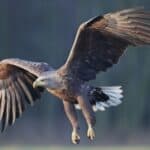
White-tailed Eagle
White-tailed Eagle A flagship raptor of the Gulf of Finland coast; increasingly encountered near bays, islands, and large water bodies, especially in the non-breeding season and near nesting areas in the wider region.
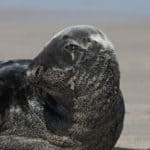
Grey Seal
Grey Seal The most iconic marine mammal of the Gulf of Finland; visitors look for hauled-out seals on outer islands/ice edges and in protected coastal waters (viewing is best from a distance and depends on season/ice).
Eurasian Beaver
Eurasian Beaver A signature species of canals, small rivers, and wetland edges; its dams and gnawed trees are often easier to spot than the animal itself, even close to suburban areas.
Eurasian Otter A charismatic but elusive predator of cleaner waterways; present in the region's riverine and coastal wetlands and a strong indicator of improving aquatic habitat quality where it persists.
Whooper Swan A classic northern swan seen on migration and during the breeding season in quieter wetlands; a highlight for visitors in spring and autumn.
Common Crane A defining voice of nearby bogs and wet meadows; large migratory movements occur regionally, and cranes are strongly associated with protected wetland landscapes near the Gulf coast.
Great Cormorant Now a conspicuous coastal bird in the Gulf of Finland; its expanding colonies and fishing flocks are a visible part of the modern coastal ecosystem.
Northern Pike A hallmark predator fish of the Neva delta, bays, and vegetated shallows; important both ecologically and culturally in local waters.
Atlantic Salmon
Atlantic Salmon Historically significant in the Neva basin and emblematic of river restoration efforts; today mainly notable through stocking/management and migratory runs where conditions allow.

Endemic & Rare Species

Ladoga Ringed Seal

Pusa hispida ladogensis

Endemic freshwater subspecies; globally rare and conservation-dependent

A unique ringed seal confined to Lake Ladoga (adjacent to the Saint Petersburg region's broader watershed). It is one of the most distinctive regional endemics and a flagship for aquatic conservation in Northwest Russia.

White-tailed Eagle

Haliaeetus albicilla

Regionally sensitive; recovering in parts of Europe after historical declines

While not endemic, its recovery and presence around the Gulf of Finland make it a high-profile conservation success story and a top species for coastal nature tourism.

Eurasian Otter

Lutra lutra

Protected in many jurisdictions; locally sensitive to water pollution and disturbance

Persistence in the urbanized Neva-Gulf landscape highlights the value of protected wetlands and improved water quality; vulnerable to habitat fragmentation and shoreline development.

Lesser White-fronted Goose

Anser erythropus

Globally Vulnerable (IUCN); scarce migrant

A rare Arctic-breeding goose that can occur on migration in the eastern Gulf of Finland region; important for flyway-level protection of staging wetlands.

European Eel

Anguilla anguilla

Critically Endangered (IUCN)

A long-distance migratory fish that may occur in brackish and riverine waters connected to the Baltic; its severe global decline makes any regional occurrences conservation-relevant.

European Mink

Mustela lutreola

Critically Endangered (IUCN); largely extirpated from many former areas

Historically part of the region's wetland fauna but heavily reduced/absent in many places due to habitat loss and competition from the introduced American mink; a key species in discussions of regional biodiversity loss.

Notable Populations

  • Major stopover and passage area for migratory waterbirds and raptors along the Baltic/White Sea-Baltic flyway system, concentrated in Gulf of Finland coastal wetlands and islands.
  • Gulf of Finland seal presence (especially grey seals) representing a conspicuous recovering marine-mammal component of the eastern Baltic.
  • Regionally important breeding and staging habitats for swans, geese, ducks, and waders in coastal reedbeds, bays, and delta wetlands around the Neva-Gulf interface.

Recent Changes

  • Grey seal numbers in the Baltic have generally recovered from historical lows, improving chances of sightings in the Gulf of Finland (though distribution and haul-out use vary by season and ice).
  • White-tailed eagle has expanded/rebounded in many parts of Northern Europe; observations and nesting in the broader region have become more regular compared with past decades.
  • Great cormorant has expanded in the Baltic region, becoming more common and sometimes controversial due to perceived impacts on fisheries and vegetation at colony sites.
  • Urbanization, shoreline hardening, and disturbance have reduced or degraded some near-city wetland habitats, contributing to local declines of sensitive waders and marsh-nesting birds.
  • Invasive/introduced mammals (notably American mink, Neovison vison, and raccoon dog, Nyctereutes procyonoides) have altered wetland predator dynamics and can negatively affect ground-nesting birds and native mustelids.
  • Ongoing fish management and restoration (including salmonid stocking in parts of the Neva basin) aim to improve migratory fish presence, but barriers, water quality, and habitat alteration remain limiting factors in many waterways.
Visit

Wildlife Viewing

Saint Petersburg has rich city and coastal wildlife. The Neva River, canals, Gulf of Finland shore, parks, wetlands, and islands bring birds, seals, and migration shows. Take easy city nature walks and short trips to beaches, reedbeds, and reserves for birding in April-May and August-October. Winter still offers city nature and northern birds on open water and ice edges.

Best Seasons

Spring (April-May)

Peak migration: huge movement of waterfowl and waders along the Gulf of Finland and wetlands; active songbirds in city parks; courtship and nesting behaviors begin. Expect variable weather, muddy trails, and the best bird diversity of the year.

Summer (June-August)

Breeding season: colonies and nesting activity (gulls, terns, herons in suitable wetlands), abundant dragonflies and butterflies, and long daylight for dawn/evening wildlife walks. Good for kayaking/canal edges and forested island walks; migration is quieter until late August.

Autumn (September-October)

Second migration peak: raptor passage, mixed flocks of passerines, and large gatherings of ducks/geese on the Gulf and lagoons. Cooler air improves visibility; dramatic coastal birding days after weather fronts.

Winter (November-March)

A stark, scenic season with hardy waterbirds on any remaining open water (river channels, ice-free coastal patches) and northern visitors such as gulls and sea ducks when conditions allow. Great for photography in parks and along embankments; days are short and windchill can be significant.

Top Wildlife Experiences

  • Gulf of Finland coastal birding day-trip: scan seawatches from accessible shoreline viewpoints around the Saint Petersburg coastal zone (especially after strong winds) for sea ducks, gulls, and migrating flocks.
  • Neva River embankment wildlife walk at dawn: watch gulls, cormorants, ducks, and urban-adapted birds feeding along the main river channel and quieter side branches; bring binoculars for distant waterfowl.
  • Island forest and shoreline loop (e.g., Yelagin Island / Central Park of Culture and Leisure): combine woodland songbirding with waterbird viewing on the river edge; ideal for relaxed, family-friendly wildlife time.
  • Wetland and reedbed birding near the city: visit nearby marshy areas and lagoons along the Gulf of Finland corridor for warblers, waders, and seasonal waterfowl concentrations-best in spring and autumn.
  • Seabird and migration 'seawatch' session: spend a few hours scanning the Gulf during migration windows (Apr-May; Sep-Oct) to practice identifying moving lines of ducks/geese and mixed gull flocks.
  • Urban park owl/woodpecker hunt (season-dependent): explore large parks with mature trees in the early morning to look and listen for woodpeckers, tits, and (occasionally) owls-best in late winter into spring.
  • Sunset estuary photography: plan a golden-hour shoot along river-mouth and coastal edges to capture feeding waterbirds, silhouettes of gulls/terns, and dramatic Baltic skies.

Wildlife Watching Types

Coastal seabird watching (sea ducks, gulls, cormorants, terns) Migration birding (spring and autumn flyways along the Gulf of Finland) Wetland birding (waders, reedbed passerines, waterfowl) Urban park birding (woodland birds, songbirds, woodpeckers) River and canal wildlife watching (ducks, gulls, fish activity, occasional otter-like sightings in quieter areas-rare and not guaranteed) Nature photography (coastal panoramas, waterbirds, winter ice-edge scenes) Insect watching in summer (dragonflies, butterflies in parks and wet meadows) Seasonal marine mammal spotting (occasional seals in the Gulf-highly variable and not reliable)

Guided Options

  • Local birding guide day trips focused on Gulf of Finland migration hotspots (spring/fall), combining coastal seawatching + wetland walks.
  • Small-group nature photography walks in major parks and on river embankments (dawn/sunset), tailored to waterbirds and urban wildlife behavior.
  • Kayak or small-boat eco-excursions on calmer river/canal sections (seasonal) emphasizing birds, shoreline ecology, and low-impact viewing.
  • Naturalist-led excursions to nearby protected areas and wetlands outside the city for a full-day species list and migration strategy.
  • Citizen-science style bird walks run by local nature clubs/universities/museums (seasonal), often timed to migration counts and public nature days.
Habitats

Ecosystems

Saint Petersburg sits on the Neva River delta at the eastern Gulf of Finland (Baltic Sea), forming a tight city–river–coast mix. Despite heavy urban growth, the area keeps a northern lowland feel: mixed and boreal-leaning forests in parks and outskirts, many freshwater channels (Neva, canals, lakes), brackish coast waters, and remaining wetlands and peatlands.

Biomes

Boreal Forest (Taiga)

Boreal/taiga-leaning vegetation expressed as coniferous and mixed forests in peri-urban greenbelts, large parks, and protected areas on sandy/glacial soils; cool temperate climate with long winters shapes species composition.

Patchy and fragmented within the federal city due to development; most prominent in larger protected/green areas and on the urban fringe.

Temperate Forest

Hemiboreal/temperate mixed forest elements (birch, aspen, alder and other broadleaf components mixed with spruce/pine) occur in managed forests, parklands, and regenerating secondary stands.

Widespread as a matrix vegetation type where land is not built up, but largely in managed/fragmented patches.

Freshwater

Dominated by the Neva River (multiple branches/delta channels), numerous canals, small rivers/streams, lakes and ponds; strong human modification via embankments, dredging, flood protection, and navigation.

Linear and nodal throughout the city; highest presence along the Neva, distributaries, and canal network.

Marine

Brackish nearshore marine environment of the Gulf of Finland, including bays, shallow coastal waters, and island/peninsula shorelines; influenced by shipping, coastal engineering, and seasonal ice.

Along the entire Gulf of Finland frontage and around coastal islands/shallows.

Wetland

Low-lying deltaic and coastal wetlands including reedbeds, wet meadows, marshy margins, and peat-influenced wetlands in depressions; many areas have been drained or filled, with important remnants in protected zones.

Localized but ecologically significant-concentrated in delta/coastal lowlands and protected coastal tracts.

Habitats

Urban

Dense metropolitan fabric with extensive embankments, hardened shorelines, canals, and engineered waterways; urban green infrastructure (parks, cemeteries, boulevards) provides habitat islands and corridors.

River/Stream

The Neva River and its distributaries form a large delta system with strong flow, navigation channels, and flood-control structures; key for fish movement and riparian bird use where banks are softer.

Pond

Numerous artificial and naturalized ponds in parks and residential areas; often eutrophic and important for waterfowl and amphibians where shoreline vegetation persists.

Lake

Small lakes and lake-like widenings in peri-urban areas and protected parks; often connected to wetlands or stream networks.

Wetland

Deltaic and coastal wetlands with reeds and sedges, providing breeding/stopover habitat for waterbirds along the Gulf of Finland flyway.

Marsh

Reedbeds and sedge marshes along sheltered bays, river backwaters, and low-lying coastal margins; sensitive to water-level regulation and shoreline development.

Bog

Peatland remnants and peat-influenced wet depressions in the broader lowland landscape; where present, they support specialized moss/ericaceous vegetation and high water tables.

Estuary

The Neva River delta functions as an estuarine/brackish transition zone where freshwater meets the Gulf of Finland, with strong mixing gradients and sediment dynamics.

Coastal

Brackish shoreline habitats along the Gulf of Finland, including bays, spits, and engineered waterfronts; supports coastal birds and nearshore fish nurseries in quieter areas.

Beach

Sandy recreational beaches and natural sand stretches occur in some coastal sectors; typically highly managed but still provide seasonal habitat for shorebirds where disturbance is lower.

Rocky Shore

Localized stone/bedrock or boulder shore segments and extensive artificial riprap/stone embankments that function as surrogate rocky habitat in places.

Forest

Mixed secondary forests and managed stands in parks and peri-urban greenbelts, often shaped by forestry history, recreation pressure, and fragmentation.

Coniferous Forest

Pine and spruce-dominated stands on sandy/glacial substrates and in larger protected tracts; important for boreal-associated birds and understory communities.

Deciduous Forest

Birch, aspen, alder and mixed broadleaf patches common in regenerating areas, riparian fringes, and park forests; often intergrades with conifer stands.

Agricultural/Farmland

Limited within the federal city compared with surrounding Leningrad Oblast, but includes peri-urban fields, dachas, and horticultural plots that create open mosaics near forest and wetland edges.

Ecoregions

WWF Terrestrial Ecoregion: Baltic mixed forests WWF Marine Ecoregion (MEOW): Baltic Sea
Protection

Conservation

Primary Threats

  • Continued residential and commercial expansion, densification, and redevelopment of waterfronts drives direct loss and fragmentation of remaining wetlands, riparian buffers, and coastal green spaces (especially in the Neva delta and along the Gulf of Finland shoreline).
  • Port facilities, shipping channels, dredging, and coastal engineering (including shoreline armoring and transport corridors) alter hydrology and sediment dynamics, disturb birds during breeding/migration stopovers, and increase collision and noise risks in nearshore waters.
  • Historical and ongoing land reclamation, infilling of marshes, and conversion of shallow coastal habitats reduce feeding and nesting areas for waterbirds and degrade nursery habitat for fish in the Neva Bay and adjacent coastal shallows.
  • Channelization, embankments, and hydrotechnical structures in the Neva delta and coastal zone modify water exchange, wetland inundation regimes, and sediment transport; these changes can simplify habitats and reduce ecological resilience.
  • Nutrient inputs (nitrogen/phosphorus) and legacy/ongoing contaminants (industrial pollutants, urban stormwater, microplastics) contribute to eutrophication and degraded water quality in the Neva Bay and eastern Gulf of Finland; high shipping activity adds chronic oil/chemical contamination risk.
  • Warmer winters and reduced, less stable sea ice in the Gulf of Finland threaten ice-dependent breeding of Baltic ringed seals and can shift fish distributions; more intense precipitation events increase stormwater runoff pulses and combined sewer overflow risks during extreme conditions.
  • Shipping (ballast water, hull fouling) and connected waterways facilitate non-native aquatic species establishment (e.g., invasive fish/invertebrates), while aggressive invasive plants along disturbed shorelines and roadsides displace native coastal/wetland vegetation.
  • Pressure on Baltic/coastal fish stocks and migratory species (e.g., salmon, eel) affects food webs and undermines recovery of threatened fish; illegal or unreported catch can be an added concern in accessible near-urban waters.
  • High recreational use of beaches, dunes, islands, and wetland edges (walking, boating, off-road use) disrupts nesting and roosting birds; nearshore tourism and fishing activity can disturb seal haul-outs and sensitive bird concentrations.
  • Large congregations of migratory waterbirds in coastal wetlands increase vulnerability to outbreaks such as avian influenza, with spillover risk heightened by dense urban-wild interface and frequent human presence.
Fun Facts

Did You Know?

Seals aren't just "offshore" here: grey and ringed seals are periodically reported inside the Neva Bay and even upriver toward the city-wild marine mammals turning up in a river-city setting.

St. Petersburg contains a true peat-bog ecosystem within city limits: the Sestroretsk Bog protected area preserves classic raised-bog habitats (sphagnum mosses, cranberry-type bog vegetation, bog birds/insects) that people usually associate with remote taiga, not a metropolis.

The city's flood-protection structures and coastal shallows around the Neva Bay create extensive sheltered, shallow-water feeding areas that can concentrate waterbirds during migration-one reason birdwatching hotspots exist right on the urban edge (not only far outside the city).

Some waterfowl increasingly overwinter on the Neva and canals where fast current and warmer discharges keep patches of water ice-free-so midwinter can feature ducks and gulls in places that look, on the map, like they should be frozen solid.

White-tailed eagles (Haliaeetus albicilla)-regularly seen around the Gulf of Finland/Neva Bay-are Europe's largest eagles by wingspan (often ~2.0-2.4 m), making St. Petersburg one of the few major European metros where you can realistically spot the continent's biggest eagle.

Eurasian beavers (Castor fiber), now established in several green/wet areas of the city, are the largest rodents in Europe-an outsized "megafauna" species living in a dense urban landscape.

Grey seals (Halichoerus grypus) from the Gulf of Finland-the biggest seal species in the Baltic Sea-are the Baltic's top native marine predator, and they are the seal most likely to be seen near St. Petersburg's coastal waters.

Ringed seals (Pusa hispida) occurring in the Gulf of Finland belong to the southernmost ringed-seal population on Earth (the Baltic Sea is the species' main non-Arctic stronghold), giving St. Petersburg one of the world's most southerly ringed-seal sightings.

Thank you for reading! Have some feedback for us?