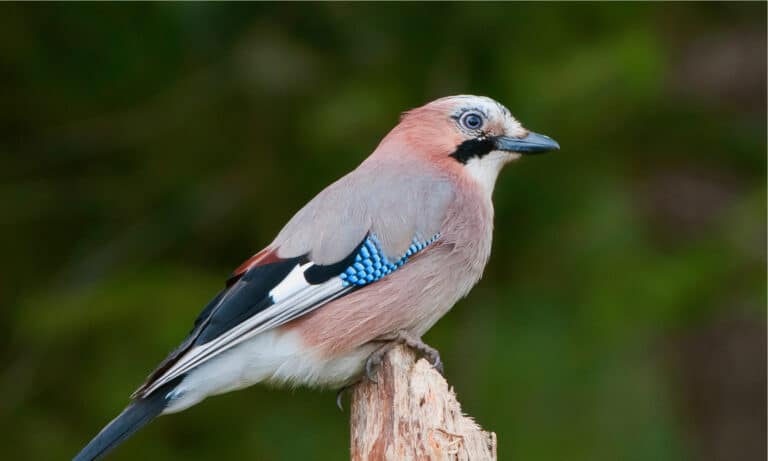
Eurasian Jay
Oak Forest Planter with a Blue Flash

Adygea's wildlife changes quickly over short distances: fertile lowland plains and river valleys give way to wooded foothills and the first rises of the Greater Caucasus. This mix of forest-steppe, riparian wetlands, and montane broadleaf-conifer forests supports steppe animals, forest mammals, and mountain birds, making Adygea part of the North Caucasus natural heritage. Key places include the Kuban River basin and its floodplains, important for frogs, waterbirds, and semi-aquatic mammals; forest-steppe patches on the plains, which feed raptors and small mammals; and foothill forests of oak, beech, and fir that shelter larger mammals and link lowlands to higher slopes. As a small, encircled region, Adygea acts as a wildlife corridor along rivers and ridges, so seasonal moves and many habitats can be seen near valleys and villages.
Adygea's small area runs from lowland steppe and river floodplains in the north into forest-steppe, broadleaf forests, then montane and subalpine zones in the western Caucasus foothills and highlands. This creates many habitats close together. Big river valleys, especially the Belaya–Kuban system, act as movement corridors linking lowland wetlands and farms with forested mountain refuges.
Lowland plains (~50 m) to ~3,238 m (Mt. Chugush area), spanning steppe, riparian, broadleaf forest, montane conifer-beech, and subalpine/alpine meadow zones
Adygea’s protected areas focus on mountain landscapes of the Western Caucasus (a UNESCO World Heritage) and regional parks linking alpine plateaus and subalpine meadows to broadleaf forests and the Belaya River basin. The main protected area is the federally protected Caucasian State Nature Biosphere Reserve, with nature parks, monuments, and smaller sanctuaries keeping habitat links and wildlife corridors.
Approx. 25-30% of Adygea's land area is under some form of legal protection (federal + regional), with the largest share in the mountainous southern part of the republic.
The premier strictly protected wilderness in Adygea's mountains, safeguarding intact altitudinal ecosystems (mixed forest → subalpine meadows → alpine zones). It is one of the best places in the North Caucasus for large-mammal conservation and raptor diversity, with minimal development and strong anti-poaching protection.
A world-renowned cluster of strictly protected and regionally protected mountain landscapes (including parts of the Caucasian Reserve and adjacent protected lands). Notable for high endemism, intact large-mammal guilds, and key migration/dispersion corridors along ridges and river headwaters.
The high plateau and massif area is especially important for alpine and subalpine communities, cliff-nesting raptors, and seasonal movements of ungulates. Open terrain and strong elevational gradients make it notable for wildlife observation (from a distance) and scientific monitoring.
A major regional biodiversity stronghold forming part of the wider Western Caucasus protected landscape. It is notable for limestone cliffs, ridge meadows, and forested slopes that support raptors and large mammals, and it helps connect habitats between stricter core reserves and surrounding managed lands.
Protects portions of the plateau-edge ecosystems outside the strict reserve core: karst features, montane forests, and high meadows that are important for ecological connectivity and seasonal foraging. Notable for raptors, forest mammals, and intact headwater habitats.
A short but ecologically important canyon segment used by raptors and forest birds, with riparian refuges for mammals. While heavily visited, it still functions as a local biodiversity pocket and a corridor element along the Belaya River valley.
A set of riparian and headwater-protection areas (often designated as regional protected sites and water-protection zones) that maintain riverine forests, gravel bars, and cold-water tributaries. Important as movement corridors linking foothill habitats with highland protected areas, and for fish-eating birds and semi-aquatic mammals.
Small-to-medium protected forest parcels in the foothills that conserve mature broadleaf stands and serve as stepping-stones for forest mammals and birds between the lowlands and the mountain reserve system.
Protected fragments of forest-steppe, shelterbelts, and wet depressions in the republic's lowland districts that are important for farmland biodiversity, small mammals, and raptors, and for maintaining connectivity to the Kuban/Laba river systems.
Adygea sits on a strong ecological gradient-from Kuban/Belaya river valleys and forest-steppe lowlands up into the wooded foothills and alpine-meadow, limestone plateau landscapes of the Western Caucasus (including areas adjacent to/within the Caucasus State Biosphere Reserve). This compression of habitats supports high wildlife diversity for a small region, and makes Adygea an important corridor for large mammals (bears, wolves, lynx) and a refuge for Western Caucasus endemics and montane specialists (tur, Caucasian black grouse, endemic amphibians).
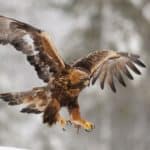
Adygea is small but has river valleys, forest-steppe in the north, and beech-oak forests with limestone gorges in the southern Caucasus foothills. Best viewing is along the Belaya River and near the Caucasus State Biosphere Reserve. Expect raptors, woodpeckers, river birds, red deer, wild boar, roe deer, and seasonal amphibians and reptiles. Use quiet dawn or dusk hikes.
Peak bird activity and migration. Forest edges and river corridors come alive with songbirds and woodpeckers; raptors begin using thermals along ridgelines. Amphibians breed in wetlands and streams, and mammals are more visible before summer foliage fully thickens. Expect changeable weather and high water in rivers-great for riverbird viewing but plan hikes accordingly.
Best for high-elevation meadows and long day hikes in the foothills. Butterflies and other insects are abundant; reptiles are active on warm rocky slopes. Birds can be quieter midday-plan dawn outings and late-evening scans. Rivers and gorges are scenic but busier; seek quieter side valleys and forest interiors for wildlife.
Excellent all-around season: clear air for spotting raptors and eagles over ridges, active ungulates as they feed before winter, and strong photo conditions with fall colors in beech forests. River valleys remain productive for waterbirds. Cooler temperatures make longer hikes comfortable.
Best for tracking and sign-spotting in snow (where present in foothills), plus wintering birds in river valleys. Look for footprints and browsing sign of deer and boar, and scan open areas for raptors. Some trails may be icy or restricted-guided trips are especially useful.
Republic of Adygea shows a strong north–south change in habitats. Lowland Kuban and Belaya river plains with steppe and farming shift to forest-steppe and broadleaf foothill forests, then rise into the Western Caucasus with mixed montane forests, subalpine and alpine meadows, cliffs, karst caves, and fast headwaters. Adygea links lowland river valleys to protected mountain ecosystems.
Lowland steppe and forest-steppe on the northern plains and rolling foothill margins, with grass-forb communities and extensive agricultural conversion.
Common in the north and central lowlands; heavily fragmented by cropland and settlements.
Foothill to montane broadleaf and mixed forests (oak, beech, hornbeam; with increasing fir/spruce at higher elevations), forming the dominant natural cover in the southern half.
Widespread in the south/foothills; forms the main continuous natural vegetation belt.
High-elevation subalpine shrublands and alpine meadows/rock fields on the upper ridges and plateaus of the Western Caucasus (e.g., areas around the Lago-Naki highlands and adjacent massifs).
Localized to the highest southern parts; patchy but ecologically distinctive.
Large rivers and tributaries (notably the Belaya River basin) with gravel-bed channels, gorges, riparian forests, and headwater streams draining the Caucasus.
Present throughout; densest along major valleys and in mountain headwaters.
Floodplain wetlands, oxbows, riparian marshes, and seasonally waterlogged depressions along major river valleys on the plains (historically more extensive).
Scattered and reduced; mainly in lowland floodplains and backwaters.
Steppe/forest-steppe remnants on the northern plains; many areas now managed as hayfields or converted to cropland.
Dry to mesic grass-forb communities on lowland terraces and gentle slopes; important for open-country birds and small mammals where intact.
Foothill broadleaf forests (oak-hornbeam, beech-dominated stands), especially in humid ravines and north-facing slopes.
Higher-elevation dark conifer and mixed stands (fir/spruce components) on cooler montane slopes and upper valleys.
Continuous montane forest matrix in the south forming connectivity with the Western Caucasus protected landscapes.
Transitional forest-steppe mosaics and riparian tree belts (willow/poplar) along lowland rivers.
Subalpine shrub communities and shrub-encroached clearings/pastures in the upper foothills and near the treeline.
Subalpine and alpine grasslands on high plateaus and ridges, seasonally rich in herbs and supporting grazing and endemic flora pockets.
Rugged Western Caucasus terrain with steep elevational gradients, avalanche tracks, and diverse slope/aspect microhabitats.
Limestone and rocky escarpments and river gorges, providing nesting ledges and specialized rock flora.
Karst cave systems (e.g., well-known caves in the foothill limestone zones) supporting bat roosts and cave-adapted invertebrates.
Belaya River and tributary network with braided/gravel sections on plains and confined, high-energy channels in mountain gorges.
Floodplain backwaters, reedbeds, and wet meadows along major valleys; important stopover/foraging habitat for waterbirds where present.
Localized reed/sedge marsh patches in lowland floodplains and oxbow areas.
Extensive croplands and pastures in the north and central lowlands (dominant land cover outside the mountain belt).
Urban and peri-urban habitats around Maykop and other settlements, with riverbank green corridors and fragmented woodland patches.
A globally rare "rewilding" story happened here: the original Caucasian bison (a local form of wisent) was wiped out, but bison were later reintroduced to the Western Caucasus; today you can find free-ranging bison again in Adygea's protected mountains.
Adygea is an enclave inside Krasnodar Krai. Its mountains act like a "wildlife escalator" as animals move up and down each season for food and snow, making valleys corridors in spring and bottlenecks in winter.
The West Caucasian tur (Capra caucasica), a wild mountain goat found only in the Caucasus, uses the limestone and cliff terrain of places like Bolshoy Tkhach for predator avoidance-terrain that looks uninhabitable to humans but is prime habitat for turs.
Adygea's shaded gorges and wet forests are one of the few places where the Caucasian salamander (Mertensiella caucasica) lives; it is from the western Caucasus and is also in nearby Russia and Georgia.
River canyons like the Belaya hold forest-like wildlife right beside open lowlands, so animals that need dense cover—such as wildcat and otter in Western Caucasus rivers—can live near steppe edges over short distances.
Adygea includes parts of the Western Caucasus UNESCO World Heritage site, like Bolshoy Tkhach Park and the Caucasus State Nature Biosphere Reserve, largely untouched by people and with Europe's largest natural mountain forests.
The European bison (Bison bonasus)-Europe's heaviest land mammal-roams in the Adygea section of the Caucasus State Nature Biosphere Reserve as part of the Western Caucasus restoration population.
In Adygea’s small area you can cross one continuous protected landscape from steppe and river-valley wildlife up to subalpine and alpine communities on the Lago-Naki Plateau and Fisht-Oshten massif, making it a key corridor to the Main Caucasus.
The Caucasus State Nature Biosphere Reserve (partly in Adygea) is among the largest strict nature reserves in the North Caucasus and one of the region's most important refuges for wide-ranging mammals such as brown bear, wolf, and lynx.
2 species documented in our encyclopedia
Thank you for reading! Have some feedback for us?
We appreciate your help in improving our content.
Our editorial team will review your suggestions and make any necessary updates.
There was an error submitting your feedback. Please try again.