
Sand Lizard
Green-flanked sprinter of the sands

Udmurtia lies west of the Urals in the Kama–Vyatka basin. It is a transition zone where boreal (north) forests meet temperate forest-steppe to the south. This mix supports many kinds of animals: large forest mammals, many small carnivores, and diverse birds that depend on wetlands, floodplains, and mixed woods. Nature here is "river-shaped": the Kama River and its tributaries guide animal movements and breeding. Main habitats are mixed conifer-broadleaf forests (spruce, pine, birch, aspen, oak, linden), riparian corridors, peatlands and marsh hollows, and meadow-steppe patches. Floodplain wetlands are key for breeding and migrating waterbirds and waders. Forests give cover and food for moose and wild boar and den sites for wolf and lynx. Beaver-made ponds help amphibians, fish, and wetland birds. Udmurtia is a crossroads where northern taiga and southern meadow species occur close together, making wildlife easy to find along rivers and meadows.
Udmurt Republic lies on the East European Plain in the Kama-Vyatka river basin, west of the Urals. Its low uplands, wide river valleys, and mixed forest to forest-steppe transition make a patchwork of homes for boreal (taiga) and temperate species. Floodplains, wetlands, and reservoirs support aquatic and shoreline life, while north–south change to more open farmland affects species spread.
Approximately ~50-330 m above sea level (low-relief uplands and river valleys create modest but ecologically meaningful gradients in moisture, soils, and forest type)
No ocean coastline; landlocked. Notable inland "shorelines" occur along the Kama River and major reservoirs (especially the Votkinsk Reservoir), which function as key aquatic and wetland habitat edges.
The Udmurt Republic's protected areas are mostly regional: wildlife sanctuaries, natural monuments, and small refuges. They protect mixed conifer-broadleaf forests, river floodplains (Kama, Izh, Cheptsa), bogs, and forest-steppe patches. At the federal level, Nechkinsky National Park in the Kama River valley is the main site. Key species: moose, bear, wolf, lynx, osprey, white-tailed eagle, beaver, and otter.
Approximately ~5-7% of the republic's land area is under some form of legal protection (federal + regional protected areas); the exact share varies by how small natural monuments and buffer zones are counted.
The republic's primary federal protected area, safeguarding the Kama River valley with extensive floodplain forests, oxbow lakes, and wetland complexes. Notable for raptor and waterbird habitat, beaver/otter waterways, and strong representation of mixed forest fauna.
A protected area in the Udmurt Republic centered on forest and river ecosystems along the Kama River basin, notable for mixed taiga-broadleaf habitats that support large mammals and rich birdlife associated with floodplains and wetlands.
A protected forest-and-river landscape along the Kama River in the Udmurt Republic, created to conserve taiga and mixed-forest ecosystems and associated wildlife habitats.
Small but biodiversity-rich protected fragments of meadow-steppe, dry grasslands, and oak/birch forest-steppe edges, important for pollinators, ground-nesting birds, and maintaining habitat diversity at the northern edge of steppe influence.
Protected floodplain segments and island/oxbow systems along the Kama that complement Nechkinsky NP by safeguarding nesting/feeding areas for large raptors and colonial waterbirds, plus spawning and nursery habitat for fish.
Boreal peatlands and boggy pine forests protected for their water-regulating function and specialized wildlife; important for breeding cranes and as refuge habitat with low human disturbance.
Protected spring-fed streams, small rivers, and surrounding mixed forests that maintain water quality and provide habitat for semi-aquatic mammals and forest birds near the republic's more populated areas.
Udmurt Republic sits in the Kama-Vyatka river basin west of the Urals, where dark conifer-broadleaf mixed forests, pine/spruce stands, river floodplains, and forest-steppe edges create a classic "taiga-meets-temperate" fauna. Wildlife highlights are large forest mammals (moose, bear, wolf, lynx), strong wetland/river assemblages (beaver, otter, waterfowl), and a rich boreal bird community (grouse, owls, raptors). Diversity is driven by extensive river corridors and mosaics of woodland, bogs, meadows, and agricultural openings.

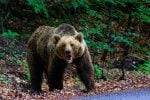
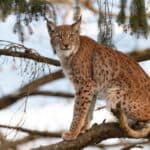
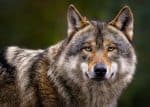
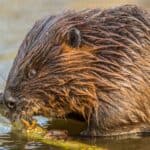
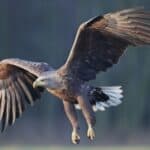
Udmurt Republic has mixed forest and forest‑steppe in the Kama‑Vyatka basin: taiga‑edge woods, wide river valleys, peatlands, marshy meadows, and many lakes and reservoirs. Expect elk (moose), roe deer, beaver, red fox, hare, and many songbirds and woodpeckers. Best viewing is at dawn and evening, from riverbanks, hides or boats, and by winter ski tracking.
Peak bird activity: cranes, ducks, geese, grebes and early songbird arrivals in floodplains and wetlands. Forests come alive with drumming woodpeckers, owls calling at dusk, and lekking/territorial displays. Rivers run high-excellent for beaver sign and waterbird concentrations along backwaters and oxbows.
Best for long days, comfortable hides/boat trips, and family-friendly nature outings. Expect breeding birds (warblers, thrushes, raptors), butterflies and dragonflies over meadows, and regular sightings of beaver and muskrat-like riparian activity at dusk. In forest-steppe edges, look for roe deer at sunrise and foxes hunting field margins.
Colorful forests and the most reliable big-mammal viewing: elk/moose and deer become more visible, and tracks/sign increase on damp ground. Migration picks up again on reservoirs and wetlands (ducks, geese, swans where present), and raptors follow river corridors. Excellent photography light and fewer insects.
Prime season for tracking and quiet wildlife watching in snow: follow fresh trails of elk/moose, hare, fox and marten-like species; look for owl activity and winter finches. Rivers and lakes freeze, concentrating birds around open water/ice edges (where available) and in town parks/forest belts. Ideal for guided ski/walk routes and learning animal sign.
The Udmurt Republic lies in the Kama-Vyatka basin on the western side of the Ural Mountains. It is a transition zone between southern boreal mixed forests and forest-steppe. Landscapes are mostly mixed conifer-broadleaf forests, with large river valleys (the Kama and tributaries), floodplains, peat wetlands, and human lands like cropland, hay meadows, and Izhevsk.
Mixed and broadleaf-dominated forests (often with spruce and pine admixture) on well-drained uplands and interfluves; includes secondary regrowth forests shaped by forestry and past clearing.
Widespread; together with boreal-type forests comprises roughly about half of the republic, especially central and northern areas.
Southern taiga elements with coniferous stands (spruce, pine) and mixed conifer-birch forests, particularly toward the north and in less disturbed tracts.
Common in the north and northeast; locally dominant in larger forest blocks.
Forest-steppe features: open hay meadows, dry grasslands on warm slopes, and grass-dominated clearings and fallows; many areas are maintained by agriculture rather than purely natural processes.
Patchy; most prominent in the south/southwest and around settled/agricultural zones.
Large lowland rivers and tributary networks (Kama basin: Izh, Cheptsa, Kilmez and others), oxbows, small lakes/ponds, and reservoirs that support riparian forests, fish, and aquatic vegetation.
Occurs throughout as a dense river network; highest ecological influence along major valleys and floodplains.
Peatlands, wet meadows, floodplain marshes, and waterlogged forest depressions; includes boggy forest complexes and riparian wetland mosaics.
Scattered but locally extensive in low-lying areas, floodplains, and poorly drained depressions.
Dominant landscape matrix of mixed conifer-broadleaf stands with extensive secondary forests from historical logging and land conversion.
Birch-aspen and linden-associated stands common in succession and on richer soils, especially near river terraces and in managed forests.
Spruce and pine stands (often mixed with birch) forming southern-taiga habitats in the north and in larger contiguous forest tracts.
Open-canopy forest and edge habitats around settlements, fields, and along gently rolling interfluves; important for edge and generalist fauna.
Hay meadows and mesic grasslands in the forest-steppe belt and on floodplains; many are semi-natural and maintained by mowing/grazing.
Small, localized dry grassland patches on warmer, better-drained slopes and sandy/gravelly soils; ecotonal with forest edges (forest-steppe).
Willow and mixed shrub thickets on floodplains, river islands, and abandoned fields; common successional habitat.
Kama-basin river corridors with riparian forests, sandy/gravel bars, oxbows, and seasonally inundated floodplains (notably along the Cheptsa, Izh, Kilmez and other tributaries).
Mostly small natural lakes/oxbows and waterbodies embedded in floodplains and wetland complexes; limited in size compared with river habitats.
Numerous small ponds and reservoirs (including fish ponds and impoundments) in agricultural and peri-urban areas.
Floodplain wetlands and wet meadows supporting sedges, reeds, and high productivity for birds and amphibians.
Shallow, emergent-vegetation zones in floodplains and lake/pond margins; expands during high-water periods.
Peat-accumulating bogs in depressions and poorly drained lowlands; often with sphagnum and stunted pine/birch assemblages.
Waterlogged forested wetlands (alder/birch-willow influenced) along backwaters and in low-lying forest depressions.
Local riverbank bluffs and steep valley-side exposures that create warm, erosion-prone microhabitats and nesting/denning niches.
Small karst/erosional cavities and subterranean voids where suitable geology occurs; limited but locally important for bats and overwintering fauna.
A substantial share of the southern/central landscape is cropland and managed hayfields, creating a strong forest-field mosaic.
Urban-industrial habitats around Izhevsk and other towns (e.g., Votkinsk, Sarapul) with parks, riparian embankments, and brownfields.
Peri-urban summer-cottage and garden areas, and mixed low-density development with remnant forest patches and small waterbodies.
Udmurtia lies in a transition belt from mixed forest to forest-steppe, so forest specialists (e.g., capercaillie, spruce-associated mammals) and open-land/edge species live together thanks to the Kama-Vyatka basin's mosaic of woods, meadows, and floodplains.
Beavers in small Kama tributaries can permanently change local water flow. One long-lasting dam can turn a fast stream into a chain of wetlands, making amphibian nurseries and waterfowl feeding areas.
Moose here are strong swimmers and cross wide water. In the Kama Reservoir, they use open water as a path, moving between peninsulas and forest blocks that look isolated to people.
Capercaillie males return to the same lekking clearings ("toks") every year. One small patch of Udmurt forest can be very important for their breeding even if nearby habitat looks fine.
The "big river + mixed forest" combination produces unexpected predator-prey pairings: along Kama floodplains, fish-eating mammals and birds can coexist with classic taiga predators (wolf/lynx), because the food web is fed from both aquatic and terrestrial systems at once.
Udmurt mixed forests support the moose (Alces alces) - the world's largest living deer species; bulls can exceed 600 kg, making it the undisputed heavyweight herbivore of the Kama-Vyatka forest zone.
The Kama-Vyatka river basin in Udmurtia is classic Eurasian beaver country: the Eurasian beaver (Castor fiber) is the largest native rodent in Europe and the second-largest rodent on Earth (after the capybara).
In Udmurt conifer-mixed forests, the western capercaillie (Tetrao urogallus) represents the record-holder among grouse: it's the world's largest grouse species, with males often reaching 4-5 kg.
Udmurtia's taiga-edge landscapes can host the Eurasian eagle-owl (Bubo bubo), one of the world's largest owls and widely regarded as Europe's largest owl; it is a top nocturnal predator of forest-steppe ecotones.
The Kama system's big-river fish fauna includes the wels catfish (Silurus glanis), one of Europe's largest freshwater fishes (verified maximum lengths reported around 2.5 m), turning the Kama reservoirs and deep holes into true "giant-fish" habitat.
1 species documented in our encyclopedia
Thank you for reading! Have some feedback for us?
We appreciate your help in improving our content.
Our editorial team will review your suggestions and make any necessary updates.
There was an error submitting your feedback. Please try again.