N S W E
Wildlife Expeditions

Wildlife of
Novgorodskaja oblast'

A taiga-and-wetland stronghold where Lake Ilmen and vast bogs fuel standout waterbird migrations and classic boreal mammals.
3 Species
54,501 km² Land Area
Overview

About Novgorodskaja oblast'

Novgorod Oblast lies where the Baltic-influenced northwest meets the upper Volga basin. Its land is a mix of broadleaf-conifer forests, dark taiga, and very large wetlands. These habitats support moose, brown bear, wolf, lynx, beaver, and many birds where forest meets marsh, meadow, and river thickets. Key places are peat bogs and fens, river corridors such as the Volkhov and its tributaries, and Lake Ilmen. Lake Ilmen’s shallow, rich waters and reedbeds draw many migrating and breeding waterbirds. Nearby wetlands are nurseries for frogs, dragonflies, and wetland birds, and they serve as stopovers on flyways. Forests of spruce and pine with patches of birch, aspen, and oak help owls, woodpeckers, grouse, and songbirds. Large open-water and wetland areas inside a mostly forested region make it excellent for taiga mammals and big waterbird movements.

Physical Features

Geography

Novgorod Oblast has boreal and mixed forests, lowlands around Lake Ilmen, and large wetlands and peat mires. Rivers draining to the Baltic through the Volkhov form rich river and floodplain habitats. The Valdai uplands have more varied forests and lakes. These wetlands and waterways are vital for breeding and stopover migratory birds and boreal mammals.

54,501 km² Land Area
Mid-sized federal subject in Russia (roughly middle tier by area) Size Rank
Russia Country
Oblast Type
Elevation Range

~15-20 m (Lake Ilmen lowlands) to ~300 m (upland highs in the southeast/Valdai-influenced terrain)

Coastline

No ocean coastline; extensive freshwater shoreline-especially along Lake Ilmen-and widespread riverbanks and wetland margins that function as key 'coastal' habitats for aquatic and semi-aquatic wildlife.

Key Landscapes

Taiga and mixed conifer-broadleaf forests (dominant matrix habitat) Ilmen Lowland and the Lake Ilmen basin (shoreline, deltas, floodplains) Major rivers and riparian corridors: Volkhov (outflow from Lake Ilmen), plus Lovat, Msta, Polist and associated tributaries Extensive wetlands/peatlands and mire complexes (bogs, fens, marshes) supporting waterfowl and wetland specialists Valdai/adjacent uplands and rolling morainic terrain (higher, lake-dotted areas with varied forest types) Numerous smaller lakes and glacial/postglacial water bodies that add habitat diversity and connectivity
Parks & Reserves

Protected Areas

Novgorod Oblast's protected areas focus on two federal cores—Valdai National Park and Rdeysky Nature Reserve—and regional wildlife sanctuaries that protect Lake Ilmen wetlands, Volkhov‑Msta‑Lovat floodplains, and bog and peatland complexes. Conservation targets are taiga and mixed‑forest mammals (moose, brown bear, Eurasian lynx) and migratory waterbirds and raptors (osprey, white‑tailed eagle). Most wetland and bird protections are regional.

Protected Coverage

≈3.5-5%

National Parks & Preserves

Valdai National Park

≈158,000 ha (≈1,580 km²)

A classic Valdai Upland landscape of taiga-mixed forests, glacial lakes, and river headwaters. Its mosaic of old forests, bogs, and lake shores supports strong populations of large mammals and fish-eating raptors, and it is one of the best areas in the region for wildlife viewing around forest-lake ecotones.

Moose (Alces alces) Brown bear (Ursus arctos) Eurasian lynx (Lynx lynx) Osprey (Pandion haliaetus) Capercaillie (Tetrao urogallus)

State & Provincial Parks

Priilmenye (Lake Ilmen) Regional Wetland Wildlife Sanctuary (regional protected area; name used for Lake Ilmen wetland sanctuaries)

Typically tens to a few hundred km² depending on the specific sanctuary unit(s)

A cluster of protected wetlands and shallow-water habitats around Lake Ilmen that are crucial for migratory waterfowl staging, breeding marsh birds, and raptors hunting along open shorelines and reedbeds.

Whooper swan (Cygnus cygnus) Bean goose (Anser fabalis complex) Northern pintail (Anas acuta) White-tailed eagle (Haliaeetus albicilla) Eurasian bittern (Botaurus stellaris)

Msta River Valley Landscape Wildlife Sanctuary (regional protected area)

Typically ~100-500 km² for comparable river-valley wildlife sanctuaries (varies by designated boundaries)

Protects riverine floodplain habitats, oxbows, and mixed forests along the Msta system-important for beaver wetlands, river birds, and as movement corridors for large mammals between forest blocks.

Eurasian beaver (Castor fiber) Eurasian otter (Lutra lutra) Black kite (Milvus migrans) Common kingfisher (Alcedo atthis) Moose (Alces alces)

Valdai Upland Forest-Lake Regional Wildlife Sanctuaries (buffer and satellite sanctuaries around Valdai National Park; regional protected areas)

Usually small-to-medium sites (often <50-200 km² each), distributed as multiple units

A set of regional sanctuaries and natural monuments that complement Valdai National Park by protecting additional old forest patches, bogs, and small lakes used by forest grouse, raptors, and large mammals-helping maintain connectivity across the upland.

Hazel grouse (Tetrastes bonasia) Black grouse (Lyrurus tetrix) Northern goshawk (Accipiter gentilis) Eurasian lynx (Lynx lynx) Brown bear (Ursus arctos)

Wildlife Refuges

Rdeysky Nature Reserve (strict nature reserve)

36,922 ha (about 369 km²)

A federally protected strict nature reserve in Novgorod Oblast within the Polist-Lovat mire system, dominated by raised bogs, wetlands, and boreal forests. It is managed primarily for ecosystem and wildlife conservation with limited public access (not a national park).

Brown bear (Ursus arctos) Gray wolf (Canis lupus) Eurasian elk/moose (Alces alces)

Wilderness Areas

  • Rdeysko-Polistovsky bog wilderness (the raised-bog massif and forest islands within and around Rdeysky Reserve; among the most roadless landscapes in the oblast)
  • Interior forests and lake districts of the Valdai Upland (backcountry areas away from main roads/settlements with high forest connectivity)
  • Upper Lovat headwaters mires and wet conifer forests (road-poor peatland-forest mosaic important for cranes and large mammals)
  • Remote mixed-forest tracts between the Msta and Volkhov basins (river-corridor wilderness pockets and low-density forestry landscapes)
Animals

Wildlife

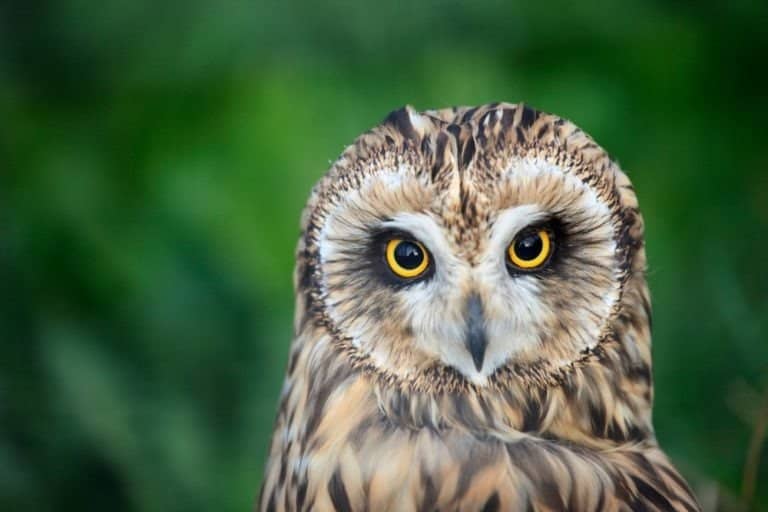
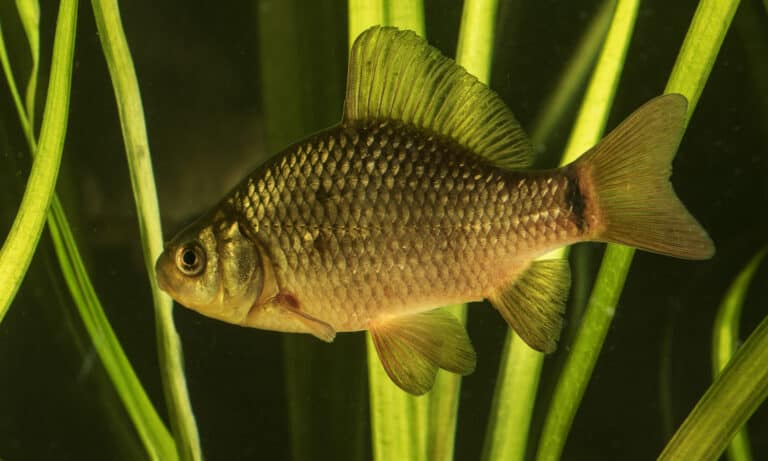
Novgorod Oblast sits in Russia's northwest forest-and-wetland belt, where southern taiga and mixed forests grade into vast peatlands, floodplain meadows, and large freshwater systems (notably Lake Ilmen and its tributaries). This mosaic supports classic boreal mammals (moose, bear, wolf, lynx), strong gamebird populations (capercaillie, black grouse), and especially rich birdlife during migration-waterfowl, raptors, and cranes concentrate around wetlands and lakes. Aquatic habitats are dominated by freshwater fish communities typical of the Baltic/Upper Volga transition zone.
~50-60 species (typical for NW Russia forest-wetland regions) Mammals
~230-260 species recorded across seasons (with strong migratory component) Birds
~4-6 species (low diversity typical of cool, wet climates) Reptiles
~8-10 species Amphibians
~35-50 species across lakes, rivers, and reservoirs Fish
Examples

Iconic Species

Moose (Eurasian elk) The signature large herbivore of Novgorod's forests and bog edges; frequently seen near wetland margins and forest roads, especially at dawn/dusk.
Brown Bear
Brown Bear A flagship taiga predator and scavenger; presence reflects extensive, relatively intact forest-wetland landscapes.
Gray Wolf
Gray Wolf A defining carnivore of boreal ecosystems; tracks and howling are part of the wilderness experience in larger forest blocks.
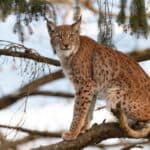
Eurasian Lynx
Eurasian Lynx Elusive forest cat associated with mature forest and abundant hare/ungulate prey; more often detected by tracks than sightings.
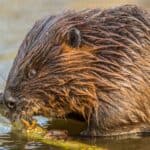
Eurasian Beaver
Eurasian Beaver A key ecosystem engineer; beaver dams and canals are common in smaller rivers and forest streams, creating habitat for waterbirds and amphibians.
Western Capercaillie Iconic taiga grouse of conifer and mixed forests; spring displays are a well-known natural spectacle where habitat remains suitable.
Black Grouse Characteristic of forest edges, bogs, and clearings; lekking in spring is one of the most visible wildlife events in the region.
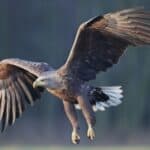
White-tailed Eagle
White-tailed Eagle A top predator of large lakes and rivers; increasingly associated with major water bodies and rich fish stocks (including Lake Ilmen system).
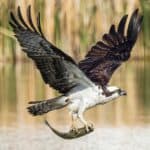
Osprey
Osprey A fish-eating raptor strongly tied to clean, productive waters; often seen hunting over lakes and broad rivers.
Common Crane A defining wetland and bog species; large numbers may stage during migration, and breeding pairs occupy peatlands and marshy openings.

Endemic & Rare Species

Black Stork

Ciconia nigra

IUCN: Least Concern (globally); rare and local breeder in many parts of NW Russia

Requires quiet, extensive forests with nearby wetlands/streams; its presence indicates low-disturbance forest landscapes.

Greater Spotted Eagle

Clanga clanga

IUCN: Vulnerable; scarce breeder linked to large wetland complexes

A wetland-dependent raptor associated with bogs, floodplains, and extensive marshes-habitats well represented in the oblast but sensitive to drainage and disturbance.

European Mink

Mustela lutreola

IUCN: Critically Endangered; severely reduced and often displaced by invasive American mink

Historically tied to natural river corridors and wetlands; where it persists (or is occasionally recorded), it is of high conservation importance.

Lesser White-fronted Goose

Anser erythropus

IUCN: Vulnerable; scarce migrant

A high-profile conservation species that may occur on migration; key stopover wetlands and safe roosting sites are crucial during passage.

White-tailed Eagle

Haliaeetus albicilla

IUCN: Least Concern (recovering in Europe); regionally notable as a recovering flagship raptor

While not globally rare today, it remains conservation-significant as a sensitive top predator benefiting from reduced persecution and improved protection of nesting areas.

Notable Populations

  • Lake Ilmen and associated river/floodplain wetlands function as an important seasonal concentration area for migratory waterfowl (geese, ducks, swans) and cranes in northwest Russia.
  • Breeding concentrations of fish-eating raptors (notably osprey and recovering white-tailed eagles) are strongly tied to the oblast's large lakes, reservoirs, and river corridors.
  • Extensive beaver-modified waterways create landscape-scale wetland habitat that supports amphibians, fish nurseries, and marsh-nesting birds.

Recent Changes

  • Recovery and increased visibility of large raptors (especially white-tailed eagle and osprey) in many parts of northwest Russia, linked to reduced persecution, legal protection, and improving nest-site security.
  • Expansion/rebound of Eurasian beaver populations over recent decades, increasing the extent of beaver ponds and associated wetland biodiversity.
  • Strong fluctuations and local declines in wild boar numbers in parts of European Russia due to African swine fever control and outbreaks, affecting predator-prey dynamics and hunting pressure.
  • Continued spread and consolidation of invasive/introduced mesocarnivores in the broader region (e.g., raccoon dog) and the widespread presence of American mink, increasing pressure on native wetland fauna and potentially impacting European mink where present.
  • Ongoing sensitivity of bog and floodplain specialists to drainage, peat extraction, and disturbance-pressures that can reduce breeding success for rare wetland birds even where habitat appears extensive.
Visit

Wildlife Viewing

Novgorod Oblast has Northwest Russia taiga and mixed forests, large raised bogs, floodplains, Lake Ilmen and the Volkhov-Msta river network. Expect strong birding, especially during spring and autumn migration and in wetlands. You may see moose, wild boar, beaver, or signs of wolf and lynx. Best for quiet, patient viewing from hides, boats, boardwalks, and guided walks in protected areas.

Best Seasons

Spring (Apr-May)

Peak migration and courtship: big movements of waterfowl and waders on Lake Ilmen and river floodplains; active woodpeckers and owls in forests; amphibian choruses in woodland ponds. Expect variable weather, muddy trails, and rapidly changing water levels-bring waterproof footwear and plan for early-morning birding.

Summer (Jun-Aug)

Long daylight and best access to bogs/forest tracks. Great for canoe/boat-based birding on rivers and lake edges, beaver watching at dusk, dragonflies and butterflies on bog margins, and forest birds with fledglings. Mosquitoes can be intense in wetlands-pack head net/repellent.

Autumn (Sep-Oct)

Second migration peak: cranes, geese, and ducks concentrate on lake shallows and harvested fields near wetlands; raptors passage on clear days; rich fungi season in forests. Cooler, clearer air often improves viewing; plan around shorter daylight and early frosts.

Winter (Nov-Mar)

Snow makes tracking and mammal sign easy (moose trails, hare/fox tracks; occasional wolf/lynx sign). Good chances for winter forest birds (tits, crossbills; finch flocks some years) and photogenic landscapes. Lake/river conditions vary-use local guidance for safe ice access; dress for severe cold and wind off Lake Ilmen.

Top Wildlife Experiences

  • Sunrise migration watch on Lake Ilmen shorelines and deltas (Ilmen lakeside viewpoints near accessible settlements): scan for massed ducks, geese, swans, and waders; return at dusk for beaver activity along reedy channels.
  • Wetland boardwalk and bog-edge walk in the Rdeysky Nature Reserve vicinity (where visitor access is permitted): look for cranes, grouse, and bog-specialist plants; best in late spring-summer when trails are passable (always check access rules and local conditions).
  • Volkhov River boat-based wildlife viewing (near Veliky Novgorod and downstream stretches): quiet boat or kayak trips at dawn/dusk for waterbirds, otter/beaver sign, and raptor flyovers; combine with riverside forest walks for woodpeckers.
  • Forest mammal-tracking day in taiga/mixed forest (Valdai Upland fringe areas within Novgorod Oblast): hire a local guide to follow fresh tracks, find feeding areas, and learn sign-reading for moose, wild boar, fox, and hare-best after fresh snowfall.
  • Evening beaver watch on smaller tributaries (Msta/Lovat basin backwaters): stake out calm bends with gnawed trunks and slides; stay downwind and quiet-summer and early autumn are ideal.
  • Cranes-and-geese autumn spectacle around Lake Ilmen's shallow bays and nearby fields: late September-October for large gatherings; pair with a raptor watch on clear, breezy days.
  • Spring forest 'dawn chorus' walk in mixed forests near Veliky Novgorod (easy day trip): focus on songbirds, woodpeckers, and owls; start pre-dawn and finish mid-morning when activity slows.

Wildlife Watching Types

Birding hotspots (lake shores, river floodplains, reedbeds, bogs) Migration watching (spring and autumn waterfowl, geese, cranes; raptor passage on clear days) Mammal viewing (moose, wild boar, beaver; occasional wolf/lynx sign) Beaver/otter sign-spotting along quiet rivers and backwaters Bog and wetland nature walks (crane habitat, grouse areas, bog flora) Winter tracking and snowshoe wildlife walks Wildlife photography from shoreline viewpoints, hides, and boats

Guided Options

  • Local naturalist-led birding days around Lake Ilmen and the Volkhov floodplain (seasonal migration focus; typically dawn-to-midday with optional dusk beaver add-on).
  • Rdeysky Nature Reserve-area guided trips (where permitted): small-group bog walks and species ID; logistics often include 4x4 transfers and strict route planning due to difficult terrain.
  • Valdai Upland/forest tracking excursions with a ranger or experienced local guide (winter emphasis on tracks and sign; can be adapted for photography).
  • Canoe/kayak wildlife tours on calm river sections (summer): low-noise waterbird viewing and beaver habitat interpretation; suitable for beginners on sheltered stretches.
  • Regional eco-centers, museums, and park/forestry district offices that run seasonal nature walks, school-style ecology trails, and citizen-science bird counts-ask in Veliky Novgorod for current schedules and contacts.
Habitats

Ecosystems

Novgorod Oblast in northwest Russia lies between southern taiga and mixed broadleaf-conifer forests and has many wetlands and peatlands. Lake Ilmen and Volkhov‑Msta river network shape the region and support boreal mammals, forest understories, mires, and migratory bird stopover and breeding sites. Forestry, farming, and settlements create a patchwork of managed forests, drained and undrained peatlands, hayfields, and cropland.

Biomes

Boreal Forest (Taiga)

Southern-taiga landscapes dominated by coniferous stands (spruce and pine) mixed with birch and aspen on disturbed sites; extensive peat-forming mires and forest-mire mosaics are characteristic.

Widespread; dominant biome across most of the oblast, especially away from intensively farmed lowlands.

Temperate Forest

Mixed broadleaf-conifer forests in the southern and more fertile parts, with spruce-birch-aspen mixtures and pockets of broadleaf influence (e.g., oak/linden components locally where soils and microclimate allow).

Common as a transition belt, more frequent toward the south and in nutrient-richer river/lake landscapes.

Freshwater

Large lake and river systems (Lake Ilmen; Volkhov, Msta, Lovat and tributaries) with floodplains, backwaters, and aquatic vegetation supporting fish, waterfowl, and riparian communities.

Regionally significant; concentrated around Lake Ilmen and major river corridors.

Wetland

Extensive bogs, fens, and swampy forest lowlands; peatlands and mire complexes are prominent, including raised bogs and patterned mires with sphagnum communities and sedge fens.

Very high; broad expanses across low-lying areas and interfluves, especially in poorly drained basins.

Habitats

Forest

Large contiguous forest tracts with a managed/unmanaged mix; important for boreal fauna and forest bird assemblages.

Coniferous Forest

Spruce- and pine-dominated stands typical of southern taiga; includes drained and undrained forested peatlands.

Deciduous Forest

Birch-aspen forests common after disturbance (logging, fire) and on certain soils; local broadleaf admixture occurs in warmer/fruitful sites.

Woodland

Forest edges and more open tree cover around settlements, agricultural margins, and along sandy terraces.

Grassland

Meadows and hayfields in floodplains and around Lake Ilmen; many are semi-natural or maintained by mowing/grazing.

Shrubland

Willow/alder shrub thickets in wet riparian zones and on abandoned fields, often part of successional mosaics.

Lake

Lake Ilmen and numerous smaller lakes; important for fish spawning areas, reedbeds, and migratory waterbirds.

River/Stream

Volkhov, Msta, Lovat and tributaries with riparian forests, floodplain meadows, oxbows, and seasonally inundated habitats.

Pond

Small natural ponds and human-made waterbodies (peat-cutting remnants, farm ponds) providing amphibian and aquatic invertebrate habitat.

Wetland

Mire complexes (bogs/fens) and wet forest lowlands; key for carbon storage and specialist flora (sphagnum, sedges).

Swamp

Forested swamps with alder/birch and high water tables, especially along lowland river basins and lake margins.

Marsh

Reed and sedge marshes around Lake Ilmen shores and river mouths/backwaters; high value for breeding and staging birds.

Bog

Raised bogs and acidic sphagnum mires with dwarf shrubs and open pools; widespread in poorly drained areas.

Agricultural/Farmland

Croplands and improved grasslands concentrated on more fertile soils, especially around Lake Ilmen lowlands and accessible river valleys.

Urban

Built-up areas (e.g., Veliky Novgorod) with green spaces and riparian corridors that still connect to surrounding habitats.

Suburban

Settlement fringes with mixed gardens, small fields, secondary woodland, and wetlands fragments.

Ecoregions

Sarmatic mixed forests Scandinavian and Russian taiga
Protection

Conservation

Primary Threats

  • Industrial clear-cutting and short-rotation forestry in taiga/mixed forests reduce old-growth structures (large deadwood, mature conifers) needed by boreal specialists, and increase road density that opens remote areas to disturbance and poaching. Logging near riparian corridors can also elevate sediment loads into tributaries feeding Lake Ilmen.
  • Drainage of wetlands and forested peatlands (historical melioration channels, peatland edge drying) simplifies bog-fen mosaics and shrinks breeding/stopover habitat for wetland birds around the Lake Ilmen lowlands and southern bog complexes. Shoreline development and conversion of natural floodplain vegetation also reduce habitat quality in river deltas entering Lake Ilmen.
  • Nutrient runoff (fertilizers, livestock wastes) and municipal/industrial effluents in the Lake Ilmen watershed contribute to eutrophication, algal blooms, and periodic oxygen stress, affecting fish spawning grounds and food resources for waterbirds. Localized contamination also occurs along transport corridors and in urban/industrial nodes (e.g., around Veliky Novgorod).
  • Warmer winters and more frequent heat/drought episodes increase peatland drying and wildfire risk in bog systems, shift ice-cover timing on Lake Ilmen (affecting winter fishing safety and fish ecology), and can alter migratory bird phenology and wetland hydrology in the Ilmen lowland.
  • Hydrological alteration from drainage canals, river regulation in parts of the basin, and channel maintenance changes flooding regimes in tributary deltas and lowland wetlands feeding Lake Ilmen. These modifications can reduce natural sediment/nutrient buffering by floodplains and degrade spawning and nursery habitats.
  • Fishing pressure in Lake Ilmen and connected rivers (including high take during seasonal runs) can depress local stocks, especially when combined with eutrophication and habitat change that affects spawning success. Bycatch and unreported catch are additional risks where enforcement capacity is limited.
  • Legal hunting is widespread, and illegal take can occur in remote forest/wetland areas. Disturbance and occasional poaching affect large mammals and sensitive birds, particularly during breeding seasons near bogs and lake shorelines.
  • Recreation and second-home development around scenic lake districts (notably in/near Valdai National Park and along Lake Ilmen) increase boat traffic, noise, and trampling of shoreline and wetland vegetation, which can disrupt nesting waterbirds and raptors and fragment quiet refuges.
  • Road building for forestry and regional transport, plus powerline/pipeline corridors, fragment habitats and increase edge effects. Powerlines can pose collision/electrocution risks for large birds (e.g., eagles, storks) in open wetland-forest mosaics and near lake shores.
  • Non-native fish and aquatic organisms introduced through stocking, bait release, or connected waterways can alter food webs in Lake Ilmen and tributaries. Invasive riparian plants can also spread along disturbed shorelines and road verges, displacing native wetland vegetation.
Fun Facts

Did You Know?

Some of Novgorod Oblast's most "empty-looking" open landscapes-the raised bogs-are actually predator hotspots at insect scale: carnivorous plants such as round-leaved sundew (Drosera rotundifolia) and bladderworts (Utricularia spp.) actively trap prey in nutrient-poor peatlands.

Lake Ilmen is so shallow and wind-exposed that strong winds can rapidly pile water onto shores (seiche/set-up events), temporarily flooding reedbeds and meadows-creating sudden feeding bonanzas for waders and dabbling ducks and triggering fish movement in the nearshore shallows.

In these taiga forests the Eurasian beaver (Castor fiber) builds dams and canals that turn small streams into pond chains, boosting amphibian numbers and creating nursery habitat for small fish eaten by bigger fish and herons.

In mixed-forest Novgorod landscapes, clearings, old fields, and wet meadows can support higher day-to-day bird diversity than "solid" dark conifer stands-because the ecotone (forest edge + wetland) packs more niches into a small area.

Even in a forested area, moose (Alces alces), brown bear (Ursus arctos), wolf (Canis lupus), and Eurasian lynx (Lynx lynx) survive partly because extensive wetlands — bogs and swampy forests — give safe places and low human access.

The Polistovo-Lovat bog massif, reaching Novgorod Oblast at Rdeysky, is one of Europe's largest intact raised bogs (~2,000 km²). It is a key site for Eurasian crane (Grus grus), golden plover (Pluvialis apricaria), and bog dragonflies.

Lake Ilmen is very large (about 980 km², up to 2,000 km² at high water). Its wide, shallow shores make vast spawning and nursery habitat for fish, notably pike Esox lucius, bream Abramis brama and zander Sander lucioperca.

Rdeysky State Nature Reserve in Novgorod Oblast protects a single, continuous peatland-forest complex of about ~37,000 hectares-one of the largest protected bog landscapes in Northwest Russia-important for nesting raptors (including white-tailed eagle Haliaeetus albicilla) and cranes.

Valdaysky National Park in the Valdai Hills of Novgorod Oblast has many glacial lakes and wetlands across about 1,500 km², a very lake-rich area that attracts fish-eaters like osprey (Pandion haliaetus) and Eurasian otter (Lutra lutra).

The Lake Ilmen-Volkhov river system is a major northwestern migration corridor linking the Baltic and upper-Volga basins, and Ilmen's floodplains can hold regionally massive stopovers of waterbirds (geese, swans, ducks) during spring/autumn passage compared with surrounding taiga forests.

Thank you for reading! Have some feedback for us?