N S W E
Wildlife Expeditions

Wildlife of
Jakutija

A land of extreme cold and vast wild rivers where taiga meets Arctic tundra, Yakutia supports iconic reindeer, muskox, and towering seabird colonies.
36 Species
3,083,523 km² Land Area
Overview

About Jakutija

The Sakha Republic (Yakutia) is one of the planet's largest wild places — an immense area of larch-dominated taiga, mountain ranges, Arctic coastal tundra, and frozen ground (permafrost) with some of Earth's coldest winters. Cold-adapted wildlife include wolves and wolverines in the taiga, brown bears fishing river corridors, and migratory birds that fill short, bright summers to breed on lakes, marshes, and tundra. The Laptev and East Siberian seas and Arctic islands host polar bears, walrus, and seasonal whales. The Lena River system makes riparian forests, wetlands, and a great delta that serve as breeding grounds for geese, swans, and cranes. Yakutia is unique for its huge size and strong seasonal change — long, deep cold months followed by a short summer burst of insects, flowers, and nesting birds — and for having a clear taiga-to-Arctic gradient within one region.

Physical Features

Geography

Sakha Republic (Yakutia) spans Arctic coasts, taiga and mountains over permafrost, creating strong north–south zones: coastal lowland tundra for migratory birds and mammals; forest–tundra and larch taiga with moose, brown bear and sable; mountains act as refuges and corridors. Large rivers like the Lena, with floodplains, deltas, wetlands and thermokarst lakes, concentrate life and serve as migration and breeding sites.

3,083,523 km² Land Area
Largest federal subject (subdivision) in Russia Size Rank
Russia Country
Federal_subject Type
Elevation Range

Sea level to ~3,003 m (Peak Pobeda, Chersky Range)

Coastline

Arctic Ocean coastline on the Laptev Sea and East Siberian Sea (includes the New Siberian Islands), providing marine-coastal tundra interfaces and ice-associated habitat

Key Landscapes

Arctic coastal tundra along the Laptev Sea and East Siberian Sea (including extensive coastal lowlands and barrier-lagoon systems) Lena River and the Lena Delta (one of the world's largest Arctic deltas; major wetland and breeding habitat for waterfowl and shorebirds) Major river basins and floodplains: Lena (with Aldan and Vilyuy tributaries), plus Yana, Indigirka, Kolyma, Olenek and Anabar-key riparian corridors through taiga and tundra Central Yakutian Lowland and other broad plains supporting extensive larch taiga, wetlands, and thermokarst depressions Yana-Indigirka-Kolyma lowlands with tundra/wetland mosaics important for migratory birds and seasonal grazing mammals Verkhoyansk Range (orographic barrier influencing regional climate and habitat transitions; alpine and subalpine zones above treeline where present)
Parks & Reserves

Protected Areas

Sakha Republic (Yakutia) holds one of Russia’s most intact wild areas: larch taiga, mountain tundra (Verkhoyansk, Chersky), and Arctic coastal tundra with big river deltas like the Lena. Protected areas include federal parks, strict nature reserves, wildlife sanctuaries, plus republic parks and reserves. Key priorities: Arctic waterfowl and raptors; polar bear, walrus; taiga species—wild reindeer, brown bear, wolverine, sable.

Protected Coverage

≈10-12% of the republic's land area is under some form of formal protection (federal + republic-level categories; exact share varies by classification and boundary updates).

National Parks & Preserves

Lena Pillars National Park

≈12,700 km²

UNESCO-listed landscapes along the Lena River combine cliffs, riverine forests, and floodplain habitats that support rich birdlife and large taiga mammals; the Lena corridor is an important migration route and a productive wildlife-viewing area by boat.

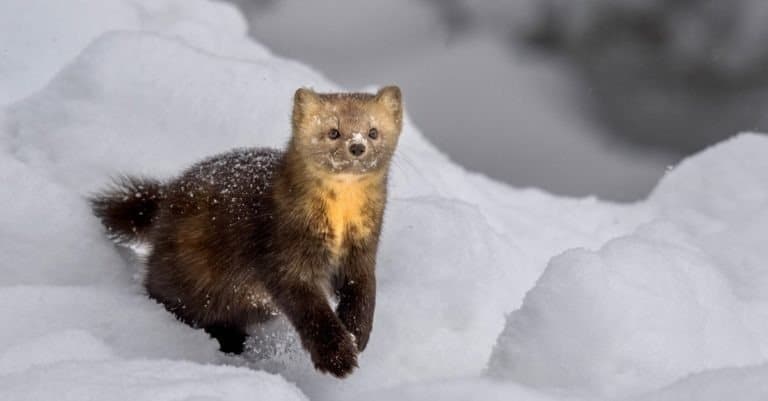
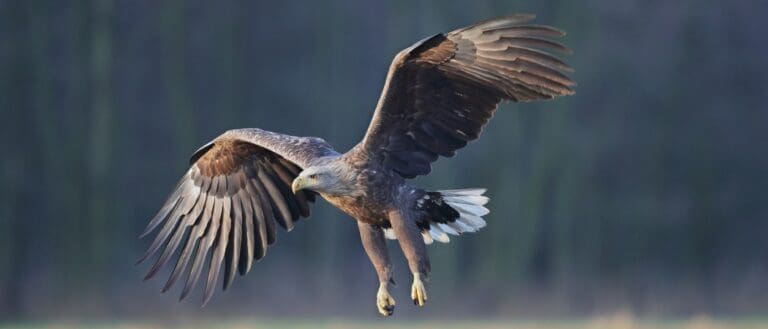
Moose (elk) Brown bear Sable White-tailed eagle Siberian (taiga) musk deer

State & Provincial Parks

Moma Nature Park

≈2,500-3,000 km² (approx.; park boundaries vary by source)

Mountain tundra and river valleys in the Chersky region, with glaciers, rugged ridgelines, and low human footprint-stronghold habitat for mountain ungulates and large predators, with opportunities for observing alpine tundra wildlife.

Siberian snow sheep Brown bear Wolverine Arctic fox Golden eagle

Kytalyk Resource Reserve / Sanctuary

≈18,000-20,000 km² (order of magnitude; commonly cited as a very large reserve)

Wetland-tundra mosaic in the Indigirka lowlands created primarily to protect breeding habitat for globally threatened cranes and other migratory waterbirds; among Yakutia's most important bird-conservation areas.

Siberian crane Bewick's swan Greater white-fronted goose Lesser white-fronted goose Arctic fox

Suntar-Khayata (regional protected area complex; often managed as nature-park/resource-reserve units)

Large mountain protected-area complex (exact administratively protected polygons vary)

High-elevation tundra and glaciated ridge habitats in the Suntar-Khayata Range supporting alpine specialists and migration corridors between basins; important for maintaining intact mountain ecosystems under climate stress.

Siberian snow sheep Wolverine Brown bear Gyrfalcon Willow ptarmigan

Wildlife Refuges

Kytalyk Resource Reserve / Sanctuary (Indigirka lowlands)

≈18,000-20,000 km² (order of magnitude)

Managed primarily for migratory birds and wetland conservation; key site for cranes and tundra-nesting waterfowl, with strict seasonal protections in core areas.

Siberian crane Bewick's swan Lesser white-fronted goose Steller's sea eagle Arctic fox

Medvezhyi Islands Federal Wildlife Sanctuary (East Siberian Sea)

≈8,000-10,000 km² (reported figures vary)

Marine/coastal refuge emphasizing polar bear denning and walrus haul-outs; also important for seabirds and ice-associated seals.

Polar bear Pacific walrus Bearded seal Ringed seal Ivory gull

Lena River Delta wetlands (core areas largely within Ust-Lensky Reserve; Ramsar-type internationally important wetland values)

Protected core ≈14,300 km² (as part of Ust-Lensky Reserve)

Massive Arctic delta wetlands supporting one of the most significant breeding/staging concentrations of waterbirds in northeastern Siberia; critical for long-distance migrants on the East Asian-Australasian and Eurasian flyways.

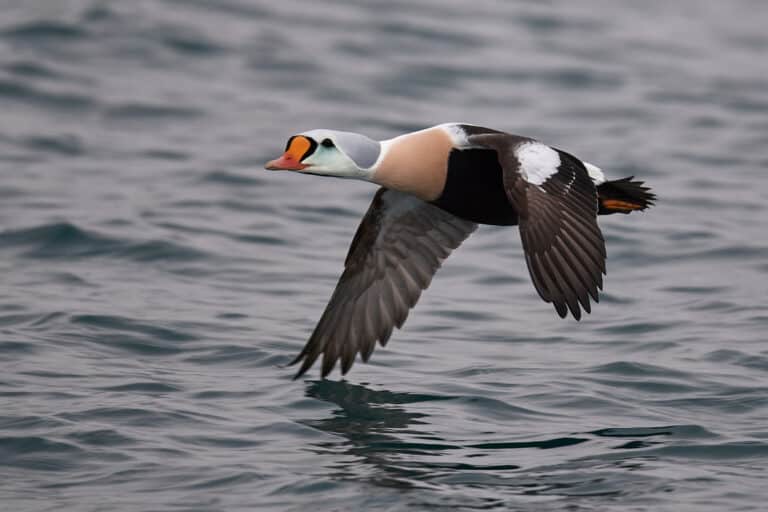
Lesser white-fronted goose Bewick's swan Snowy owl Rough-legged buzzard Pacific eider

Wilderness Areas

  • Verkhoyansk Range interior (very low road density; extensive mountain-tundra and taiga headwaters)
  • Chersky Range backcountry between the Indigirka and Kolyma basins (remote alpine ecosystems and migration corridors)
  • Upper Indigirka and tributary headwaters (large, largely roadless river-valley wilderness)
  • Olenyok River basin and western/central Yakutian taiga blocks (intact larch forests with limited access)
  • Yana-Indigirka lowlands tundra-wetland expanses (critical migratory-bird landscapes with minimal permanent infrastructure)
  • Arctic coastal tundra and nearshore zone east and west of Tiksi (seasonal sea-ice wildlife, denning/haul-out areas)
Animals

Wildlife

The Sakha Republic (Yakutia) spans immense taiga forests, Arctic tundra, river deltas, and mountain systems under one of Earth's most extreme continental climates. Wildlife is characteristically boreal-Arctic: large predators and ungulates in the taiga (bear, wolf, moose), wide-ranging tundra species (wild reindeer, Arctic fox), and globally important concentrations of migratory waterbirds in the Lena Delta and other northern wetlands. Freshwater biodiversity is especially defining, with cold-water rivers (Lena, Indigirka, Kolyma) supporting salmonids, whitefishes, and sturgeons adapted to long ice seasons.
≈60-70 species (taiga carnivores/ungulates plus tundra and coastal Arctic mammals) Mammals
≈280-330 species recorded (very high seasonal diversity due to migration and Arctic breeding) Birds
≈2-4 species (very low; limited by climate-mostly a few hardy lizards/snakes in the south) Reptiles
≈2-4 species (few cold-tolerant frogs/toads, mainly southern and river-valley areas) Amphibians
≈50-70 freshwater/brackish species (whitefishes, salmonids, pike, perch; plus sturgeon in major rivers) Fish
Examples

Iconic Species

Wild Reindeer (Eurasian Tundra Reindeer) A defining tundra animal of northern Yakutia; large seasonal movements and river crossings are among the region's most dramatic wildlife spectacles.
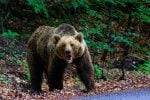
Brown Bear
Brown Bear Widespread in taiga and river valleys; a flagship predator/scavenger often associated with salmonid runs and berry-rich late summers.
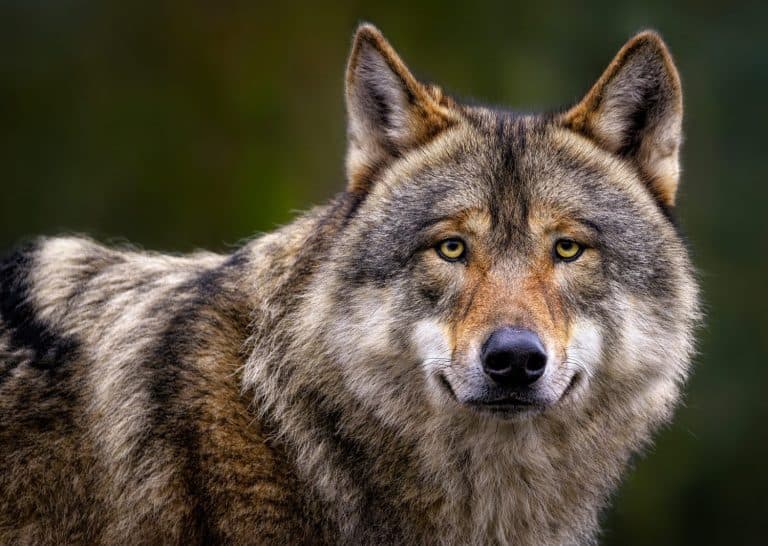
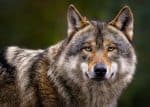
Gray Wolf
Gray Wolf An emblematic taiga predator that shapes ungulate dynamics across vast roadless landscapes.
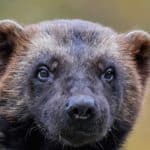
Wolverine
Wolverine A classic symbol of Siberian wilderness; uncommon and wide-ranging, associated with remote mountain-taiga mosaics.
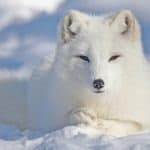
Arctic Fox
Arctic Fox Characteristic of coastal tundra and islands; often linked to lemming cycles and seabird colonies along the Arctic coast.
Siberian Crane One of the most sought-after birds in Arctic wetlands; Yakutia is crucial for the eastern population's breeding grounds.
Steller's Sea Eagle A massive raptor of big rivers and coastal areas in the Russian Far East and adjacent regions; seen along fish-rich waterways during migration and seasonal movements.
Moose (Siberian/Yakut Moose) A signature taiga megaherbivore frequently associated with floodplains, willow thickets, and post-fire regrowth.
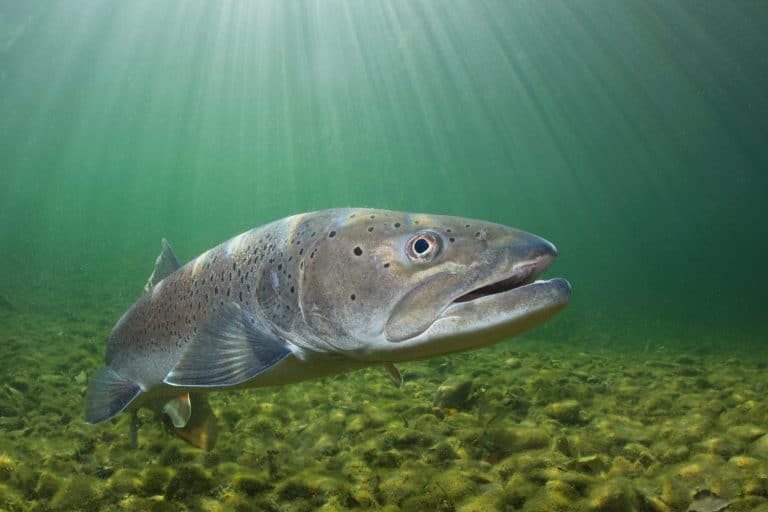
Siberian (Yakut) Taimen Legendary trophy fish of clear, cold rivers; a key symbol of intact freshwater ecosystems (and a focus of catch-and-release tourism where practiced).

Endemic & Rare Species

Siberian Crane (Eastern population)

Leucogeranus leucogeranus

Critically Endangered (IUCN); eastern population relies on Yakutia for breeding

Yakutia's tundra wetlands (notably in the northeast and large deltas) are among the most important breeding habitats for this globally imperiled crane.

Spoon-billed Sandpiper

Calidris pygmaea

Critically Endangered (IUCN); extremely small global population

Uses Northeast Siberian coastal tundra for breeding in parts of the region's Arctic; one of the world's rarest shorebirds.

Lesser White-fronted Goose

Anser erythropus

Vulnerable (IUCN); declining across much of its range

Breeds in remote Arctic/subarctic wetlands; Yakutia provides key nesting and staging areas along major river corridors.

Spectacled Eider

Somateria fischeri

Near Threatened (IUCN); localized breeding distribution

A high-Arctic sea duck with important breeding areas in northeastern Siberia; sensitive to disturbance and environmental change in coastal tundra lagoons.

Snow Sheep

Ovis nivicola

Near Threatened (IUCN); regional declines from fragmentation and hunting pressure in parts of its range

A Northeast Siberian mountain sheep strongly associated with Yakutia's rugged ranges; a flagship of remote alpine and subalpine habitats.

Polar Bear (Laptev Sea subpopulation)

Ursus maritimus

Vulnerable (IUCN); sea-ice dependent

Uses Yakutia's Arctic coastline and sea-ice edge for hunting and denning; highly sensitive to sea-ice loss.

Siberian Sturgeon (Lena River populations)

Acipenser baerii

Endangered (IUCN) globally; many river populations depleted or regulated

A long-lived, slow-reproducing fish of major rivers; Yakutia's large river systems retain some of the most important remaining habitats in the Russian Arctic/subarctic.

Notable Populations

  • Lena River Delta and adjacent Arctic wetlands: one of Eurasia's most important breeding and stopover complexes for migratory waterbirds and shorebirds (geese, swans, waders).
  • Eastern Siberian (Yakutian) breeding areas for the Critically Endangered Siberian Crane's eastern population.
  • Laptev Sea coastal zone: nationally significant Arctic coastal habitat supporting polar bears, seabirds, and seasonally walrus/beluga use (distribution varies with ice conditions).
  • Cold, free-flowing river networks (Lena/Indigirka/Kolyma basins): nationally significant habitat for taimen and diverse whitefish complexes, underpinning subsistence and recreational fisheries.

Recent Changes

  • Muskox reintroduction/establishment: animals translocated to parts of Arctic Yakutia (starting in the 1990s) have formed free-ranging populations and expanded locally in suitable tundra.
  • Wood bison introduction: a conservation introduction program has established a growing free-ranging population in central Yakutia (originating from Canadian stock), with ongoing monitoring and range expansion.
  • Arctic climate-driven shifts: northward movement/greater winter presence of some boreal species (e.g., red fox in tundra zones) and increased variability in migratory timing for birds.
  • Sea-ice loss impacts: growing pressure on polar bears and other ice-associated wildlife along the Laptev Sea coast (changes in hunting access and denning conditions).
  • Concerns for wild reindeer: several regional herds in Northeast Siberia have faced declines or increased variability linked to harvest pressure, industrial disturbance, and changing snow/ice conditions affecting forage access.
  • Freshwater pressures: localized declines and stricter management discussions for large salmonids (notably taimen) due to overharvest in some areas and habitat disturbance near settlements/industry.
Visit

Wildlife Viewing

Sakha Republic (Yakutia) has remote wildlife across taiga, wide tundra, Arctic coast/islands, and big rivers like the Lena. See moose, wild reindeer/caribou, brown bear, wolf, wolverine, many riverbirds, and major Arctic breeding grounds for geese, swans, and shorebirds. Best in June-August and migration times; winter is cold with little daylight. Visits to Lena Pillars and Ust-Lensky need planning and permits.

Best Seasons

Late winter (February-March)

Best balance of cold and daylight for winter wildlife sign: fresh tracks in snow (wolf, hare, fox), chances for moose and occasionally wolverine in taiga edges; excellent photography light, ice roads open in some areas, strong aurora potential. Expect very low temperatures and windchill-specialized clothing and safety planning required.

Spring (April-May)

Migration ramps up as daylight increases: early waterfowl movement along thawing river corridors; raptors become more active; bears may begin emerging in late spring (timing varies). Conditions are highly variable with melt, river ice break-up, and difficult travel ("mud season") outside towns.

Summer (June-August)

Peak biodiversity and access. Prime time for birding (breeding waders, geese, swans), river expeditions on the Lena and tributaries, and tundra/arctic visits when feasible. Long daylight, wildflowers, abundant insects (bring serious mosquito/blackfly protection). Highest odds for bears along rivers and for large mammals near wetlands and forest edges.

Early autumn (September)

Crisp weather, fewer insects, strong fall colors in larch forests, and active foraging wildlife. Good time for moose viewing around wetlands and for late-season bird migration. Nights lengthen quickly; some remote services begin to wind down.

Late autumn to early winter (October-January)

Freeze-up period with increasing snow cover: excellent for tracking and winter landscape photography, but travel can be challenging during transitions. By mid-winter, deep cold and short days dominate; aurora viewing is strong on clear nights, and guided winter trips focus on cultural + nature experiences and track-based wildlife search.

Top Wildlife Experiences

  • Boat or kayak the Lena River near Yakutsk to Lena Pillars Nature Park for cliffside birdlife, raptors, and riverside mammal encounters (best June-August; also photogenic in September).
  • Multi-day river expedition into the Lena Delta (Ust-Lensky Nature Reserve area, permit-dependent) to witness Arctic breeding birds-geese, swans, and shorebirds-plus foxes and other tundra wildlife (best late June-July).
  • Birding-focused trip to tundra wetlands and river channels during peak breeding season (north of Yakutsk toward Arctic zones, logistics dependent) for cranes, waders, and large gatherings of waterfowl (best June-early August).
  • Taiga mammal safari by boat/4x4 around central Yakutia river corridors and forest edges-targeting moose, brown bear, beaver, and diverse woodland birds (best July-September; mornings/evenings).
  • Autumn larch-taiga photography and wildlife tracking around accessible protected landscapes near Yakutsk and along the Lena, combining scenic hikes with chances for moose and migrating birds (best September).
  • Winter track-and-sign wildlife outing from Yakutsk (or nearby settlements) with local guides-searching for fox, hare, and potentially wolf sign, combined with aurora sessions (best February-March).
  • Remote Arctic coast/island expedition (cruise-style or chartered logistics; highly specialized) for seabirds and polar-environment wildlife viewing opportunities where access is allowed and safe (best July-August; availability varies widely).

Wildlife Watching Types

Arctic and subarctic birding (breeding and migration) Tundra wetland bird hotspots (geese, swans, cranes, shorebirds) River corridor wildlife watching (Lena and tributaries) Brown bear viewing opportunities (riverine foraging zones; best with experienced local guides) Moose viewing around taiga wetlands and forest edges Track-and-sign safaris in winter (wolves/foxes/hares; occasional wolverine sign) Raptor watching (cliffs/river bluffs; seasonal) Boat-based wildlife observation and nature photography Aurora + winter nature expeditions (combined experience rather than pure wildlife)

Guided Options

  • Lena Pillars Nature Park day trips and multi-day river tours from Yakutsk (boat excursions, hiking, photography-oriented itineraries).
  • Permit-based reserve visits and scientific-style birding trips to the Lena Delta/Ust-Lensky Nature Reserve zone (usually arranged through specialized operators; group sizes and routes often restricted).
  • Specialized birding expeditions to northern tundra wetlands (custom itineraries using boats/4x4/charter flights where needed; timed for late June-July breeding season).
  • Winter nature programs based from Yakutsk and nearby settlements: track-and-sign outings, aurora nights, and cold-weather safety-supported field days.
  • Multi-sport river expeditions (rafting/packrafting/kayaking) on Lena tributaries that incorporate wildlife watching and remote camping-best arranged with experienced Siberia operators familiar with local conditions and permits.
  • Community-based guiding in rural areas (where available) combining cultural experiences with wildlife observation-useful for accessing local knowledge of seasonal animal movements.
Habitats

Ecosystems

The Sakha Republic (Yakutia) spans Arctic coasts, lowlands, and mountain systems (Verkhoyansk, Chersky, Stanovoy), creating strong north–south zones with extreme cold and permafrost. Much is boreal larch taiga, grading north to shrub and grass tundra and alpine meadows. Large rivers (Lena, Indigirka, Kolyma) form floodplains, thermokarst lakes, and peatlands; the far north has Arctic coasts and islands.

Biomes

Boreal Forest (Taiga)

Dominant taiga biome, largely permafrost-underlain larch (Larix) forests with pine/spruce locally, extensive moss-lichen ground layers, and frequent fire influence in drier interiors.

Largest biome; roughly ~60-75% of the republic, especially central and southern Yakutia and major interior lowlands.

Tundra

Arctic and subarctic tundra with dwarf shrubs, sedges, mosses, and lichens; includes polygonal ground, frost heave features, and coastal tundra plains near the Arctic Ocean.

Extensive in the north; roughly ~20-30%, including coastal mainland and high-latitude lowlands.

Alpine

High-elevation alpine tundra and meadow complexes on mountain ranges (e.g., Verkhoyansk and Chersky), with sparse woody vegetation, wind-exposed ridges, and snowbed communities.

Patchy but widespread in uplands; ~3-8% depending on elevation zone and mountain extent.

Freshwater

Major river corridors (Lena, Aldan, Vilyuy, Indigirka, Kolyma), braided channels, floodplain lakes, and vast thermokarst lake fields and thermokarst depressions driven by permafrost dynamics.

Present throughout; concentrated along the Lena basin and northern lowlands; small in area fraction but ecosystem-dominant in corridors and basins.

Wetland

Peatlands, floodplain wetlands, thermokarst depressions, and deltaic marshes (notably the Lena Delta), important for migratory birds and carbon storage in permafrost soils.

Widespread in lowlands and river deltas; locally extensive in central/northern plains.

Marine

Arctic marine ecosystems along the Laptev and East Siberian Sea coasts and around the New Siberian Islands: seasonal sea ice, recurring areas of open water within sea ice, and productive nearshore shelves during ice-free periods.

Limited to the northern coastline and islands; small fraction of the republic's area but ecologically significant.

Habitats

Coniferous Forest

Permafrost taiga dominated by Dahurian larch; pine and spruce occur locally on better-drained sites, with extensive lichen-moss understories.

Forest

Broad taiga landscapes including mixed age classes shaped by fire, river disturbance, and permafrost-controlled drainage.

Tundra

Shrub-moss-lichen tundra and graminoid tundra; includes polygonal tundra and coastal tundra plains in the far north.

Shrubland

Dwarf birch and willow shrub belts in forest-tundra ecotones and riverine corridors, especially northward and in disturbed/thermokarst areas.

Mountain

Verkhoyansk and Chersky ranges with strong elevational gradients from taiga foothills to alpine tundra; steep valleys and high passes create habitat mosaics.

Alpine Meadow

Patchy high-elevation meadow and herb communities in sheltered slopes and snowbed areas within mountain systems.

River/Stream

Large free-flowing rivers (Lena, Indigirka, Kolyma) with braided reaches, riparian willow stands, sand/gravel bars, and extensive floodplains.

Lake

Numerous permafrost-related thermokarst lakes and floodplain oxbows; strong seasonal ice cover and high importance for waterfowl.

Pond

Small thaw ponds and shallow tundra pools common in polygonal ground and thermokarst terrain; highly dynamic season-to-season.

Wetland

Floodplain wet meadows, sedge fens, and permafrost-influenced wet basins; especially extensive in northern lowlands and major river valleys.

Bog

Peat-accumulating bog and peat plateau systems in poorly drained lowlands; important long-term carbon stores under cold conditions.

Marsh

Deltaic and floodplain marshes, notably within the Lena Delta and other northern river mouths, supporting breeding and staging birds.

Swamp

Forested and shrub swamps in taiga lowlands and along slow-moving tributaries where drainage is impeded by permafrost.

Coastal

Arctic coastal plains, lagoons, spits, and low bluffs along the Laptev/East Siberian seas, strongly influenced by sea ice and storm surges.

Beach

Short Arctic-season sandy/gravel beaches and barrier features along low-energy stretches of the northern coast and islands.

Rocky Shore

Localized rocky and bouldery shorelines and coastal cliffs, more common around island and headland sections.

Open Ocean

Seasonally ice-covered Arctic waters offshore from the northern coast; productivity peaks during the brief open-water season.

Seabed/Benthic

Shallow Arctic shelf seafloor habitats on the Laptev and East Siberian shelves, supporting benthic communities adapted to cold, turbid conditions.

Deep Sea

Limited relevance; deeper Arctic basin waters occur beyond the broad shelves, mostly outside nearshore Yakutia but connected via marine processes.

Urban

Sparse urban footprint concentrated in Yakutsk and a few regional centers, embedded within taiga and riverine landscapes.

Agricultural/Farmland

Localized hayfields, pasture, and small-scale cultivation mainly in the central Lena basin and warmer southern valleys; constrained by permafrost and short growing season.

Ecoregions

East Siberian taiga Verkhoyansk-Kolyma conifer forests Northeast Siberian tundra Northeast Siberian coastal tundra Arctic desert
Protection

Conservation

Primary Threats

  • Yakutia is warming. Thawing permafrost weakens riverbanks and slopes, changes wetlands used by breeding waterbirds (Lena Delta, tundra lowlands), makes thermokarst lakes, and releases old pollutants. More and larger fires damage taiga and larch forests. Laptev sea-ice loss alters marine mammal resting sites and brings more ships and people.
  • Large-scale diamond mining (e.g., Mirny/Aikhal region) and extensive gold mining in river catchments (including placer operations) create localized habitat loss, river turbidity, sedimentation, and contamination risks. New or expanded mines increase road building, camps, and off-road traffic that fragment tundra/taiga and can disrupt reindeer migration routes and sensitive nesting areas.
  • Main threats are mine wastewater and tailings seepage, fuel spills from river transport, winter roads and airfields, and old industrial pollution in some basins such as the Vilyuy area. In Arctic coastal zones, more shipping and ports raise oil spill and pollution risks for seabirds and marine mammals.
  • Building and widening roads, winter ice roads, pipelines, powerlines, airstrips, and ports (including those for the Northern Sea Route) breaks up habitat, gives easier access for illegal hunting, disturbs wildlife, blocks or reroutes wild reindeer, and raises collision and electric shock risks for large birds.
  • Direct footprint from mines, settlements, and associated gravel extraction reduces and fragments habitat in otherwise continuous taiga/tundra. Indirect habitat loss is also driven by severe wildfires, which can remove old-growth larch stands and degrade riparian forests critical for raptors and riverine biodiversity.
  • Compared to more southern Russian regions, industrial logging is less widespread but can be locally significant near transport corridors and settlements. Where it occurs, it can reduce mature larch forest structure, simplify riparian buffers, and increase fire susceptibility and erosion in watersheds important for fish spawning.
  • Subsistence and licensed harvest are culturally and economically important, but illegal take and weak enforcement in remote areas can affect wild reindeer, snow sheep, and waterfowl. In coastal areas, unregulated disturbance and occasional illegal take can affect walrus haul-outs and other marine mammals.
  • High-value raptors (notably gyrfalcons) and furbearers create incentives for illegal capture/harvest and trafficking. Improved access via infrastructure and air transport can facilitate movement of illegally obtained wildlife or parts from remote districts.
  • Fishing pressure on large river systems (Lena, Indigirka, Kolyma and tributaries) and coastal waters can impact slow-growing species (e.g., sturgeon) and localized spawning aggregations. Illegal nets and unreported catch can be a problem where enforcement capacity is limited by distance and seasonality.
  • Industrial camps, increased river traffic in ice-free seasons, helicopter activity, and growing tourism nodes (e.g., iconic landscapes such as Lena Pillars) can disturb nesting raptors, crane breeding sites, and coastal haul-outs. Noise and presence are particularly impactful in tundra breeding seasons and at marine mammal aggregation sites.
  • As sea-ice conditions change, polar bears may spend more time onshore and encounter settlements and field camps along the Arctic coast. Brown bear encounters can increase near communities and waste sites. Reindeer herding areas can experience conflicts with industrial users over land access and disturbance along migration corridors.
  • Permafrost thaw can expose long-buried carcasses and pathogens; Yakutia has experienced anthrax outbreaks affecting reindeer and posing risks to people and wildlife. Warmer summers and changing insect dynamics can increase parasite loads and stress in reindeer and other ungulates.
  • Hydrological alteration in parts of the republic (including regulated reaches and reservoirs such as in the Vilyuy basin) changes flow regimes, temperature, sediment transport, and floodplain connectivity, affecting riparian habitats and fish reproduction. Fire regime shifts (more frequent/severe fires) are also transforming ecosystem structure beyond historical variability.
  • Localized depletion can occur where multiple pressures stack: concentrated fishing near accessible river sections, increased harvest pressure along new roads/winter routes, and cumulative impacts around industrial hubs. Depletion risks are higher for slow-reproducing species and for herds/populations already stressed by climate change.
Fun Facts

Did You Know?

In Yakutia, frozen "archives" in permafrost along Arctic coasts and big rivers like the Lena thaw and collapse, sometimes releasing Ice Age bones and tusks after one warm summer or storm.

Despite air temperatures that can plunge far below −40°C, some Yakutian rivers maintain winter openings (open-water areas/ice leads) fed by current and springs; these patches can concentrate fish and attract birds that need open water even in midwinter.

Since the 1990s, Musk ox have been brought back to parts of Yakutia's Arctic tundra, including the Lena Delta/Arctic coastal zone, making free-roaming herds in land they lived in during the Ice Age.

Many Yakutian thermokarst lakes can become oxygen-poor under thick winter ice; crucian carp-an important local food fish-can survive these harsh conditions far better than most fish by tolerating prolonged low-oxygen periods.

In summer, tundra insects aren't just a nuisance-they're an engine of the food web: explosive mosquito and midge hatches provide a major protein pulse that helps migratory shorebirds and waterfowl raise chicks fast during Yakutia's very short breeding season.

The Lena Delta in northern Yakutia is one of the largest Arctic river deltas on Earth (about 32,000 km²), and its mosaic of channels, islands, and wetlands is a major high-Arctic breeding stop for migratory waterbirds.

Yakutia contains the core nesting grounds of the eastern population of the Siberian crane (Leucogeranus leucogeranus): most birds in this critically endangered flyway breed in Yakutia's tundra lowlands (notably the Indigirka-Yana region).

Yakutia is home to the Siberian salamander (Salamandrella keyserlingii), widely regarded as the cold-hardiest amphibian: it can survive being frozen and has been recorded at extremely high latitudes in the republic (including areas north of the Arctic Circle).

Some of the world's oldest DNA ever recovered from an animal came from Yakutia: a ~1.2-million-year-old mammoth specimen (the "Krestovka" mammoth) from northeastern Yakutia yielded million-year-old genomic data published in 2021.

Thank you for reading! Have some feedback for us?