
Wildlife of
Marij Èl
About Marij Èl
Mari El Republic is a quietly wild stronghold in the Volga region. Large mixed forests—pine and spruce blending into birch, aspen, and other broadleaf trees—create classic woodland homes for boreal and temperate wildlife. Long forest tracts and a dense network of rivers, lakes, and boggy lowlands tied to the Volga basin support a rich mix of edge, understory, and riparian life. Key habitats include mature mixed woods (vital for forest mammals and cavity-nesting birds), floodplains and oxbow wetlands along rivers (nurseries for amphibians and feeding areas for herons, ducks, and raptors), and peatlands and marshy forest hollows that shelter special plants and invertebrates. Compared with more farmed neighbors, Mari El offers a deep interior-forest feel and strong water-forest edges—good for tracking elk and wild boar, hearing owls, and watching waterfowl and cranes.
Geography
The Mari El Republic lies on the forested East European Plain in the Volga basin. Its mixed conifer-broadleaf forests, peatlands, and many rivers with oxbow and floodplain habitats create north–south and riparian gradients that shape wildlife. It supports boreal-leaning forest species (moose, forest grouse), temperate woodland animals, and wetland birds, amphibians, and semi-aquatic mammals.
Elevation Range
~50-280 m (lowland river valleys and reservoir shores up to modest uplands), creating habitat variation mainly through moisture/soil gradients rather than steep altitudinal zones.
Coastline
No ocean coastline; notable shorelines are along the Volga system (including stretches on/near the Kuybyshev Reservoir) plus numerous inland lakes and riverbanks.
Key Landscapes
Protected Areas
Mari El's protected areas include two federal sites: Mari Chodra National Park (mixed forest and lakes of the Volga uplands) and Bolshaya Kokshaga State Nature Reserve (a large protected forest-bog river basin). Regional sanctuaries protect old mixed forests, floodplains, peatlands, and breeding sites for forest mammals and birds. Wildlife is best seen in big forests, river valleys, and Volga lakes.
≈6-8% (order-of-magnitude estimate; federal protected areas are ~2-3% and the remainder is mainly regional state nature sanctuaries and nature monuments)
National Parks & Preserves
Mari Chodra National Park
≈36,000 ha (≈360 km²)The republic's premier wildlife-viewing area: extensive conifer-broadleaf forests, sandy pine terraces, and a dense system of lakes and streams that support forest mammals, beavers, and rich woodland birdlife.
Bolshaya Kokshaga State Nature Reserve / Zapovednik (Государственный природный заповедник "Большая Кокшага")
≈21,000 ha (≈210 km²)A strictly protected core of taiga-like mixed forests, bogs, and the Bolshaya Kokshaga river system; notable for intact habitats, low disturbance, and strong conservation value for large mammals and old-growth forest species.
State & Provincial Parks
Mari El Regional State Nature Sanctuaries - forest and bog complexes (multiple sites)
Variable (many sites; typically tens to hundreds of km² in total)A republic-level network of sanctuaries that typically protects mature spruce-pine and mixed forests, peatlands, and key habitats outside the federal areas; important for maintaining landscape connectivity for wide-ranging mammals.
Mari El Regional Nature Monuments - lake systems & springs (multiple sites, incl. well-known forest lakes)
Usually small (from a few ha to a few km² per site)Small but important protected features (lakes, springs, old-growth groves) that concentrate wildlife-especially waterbirds and beavers-and provide accessible nature observation near recreation areas.
Volga tributary floodplain protection areas (regional designations; multiple river sections)
Variable (site-based, often linear river-valley units)Floodplain forests, oxbows, and wet meadows along tributaries connected to the Volga basin; valuable for wetland biodiversity and as movement corridors for mammals.
Wildlife Refuges
Regional hunting-free zones / reproduction (breeding) refuges for ungulates and furbearers (multiple sites)
Variable (site-based)Areas typically managed as no-hunting or limited-use refuges to stabilize populations of elk, boar, beaver, and associated predators; they are most effective where they buffer the federal protected cores.
Wetland and riparian sanctuaries in the Kokshaga river basins (multiple sites)
Variable (site-based)Protects beaver wetlands, backwaters, and marshy forest edges; especially important for amphibians and wetland birds and for maintaining water quality feeding the Volga basin.
Wilderness Areas
- Core roadless forests and bogs of the Bolshaya Kokshaga river basin (best example of low-fragmentation habitat in the republic)
- Large continuous mixed-forest blocks within and adjacent to Mari Chodra National Park (pine terraces, lake-country forests)
- Remote peatland-spruce forest mosaics in the western/northwestern districts (where settlement density is low)
- Less-accessible tributary floodplain forests and oxbow-lake wetlands feeding the Volga basin (seasonally important for birds)
Wildlife
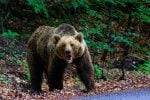
Mari El Republic lies in the forested Volga-Vyatka area of European Russia, dominated by mixed conifer-broadleaf forests (spruce, pine, birch, aspen, oak, linden), extensive wetlands, and a dense river-and-lake network tied to the Volga basin. This creates a classic "taiga-meets-temperate-woodland" wildlife experience: large ungulates and carnivores in deep forests, rich beaver-and-otter waterways, and strong forest bird diversity (grouse, owls, woodpeckers), alongside notable wetland and riverine species.
Iconic Species

Endemic & Rare Species
Notable Populations
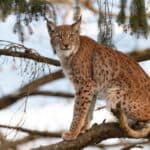
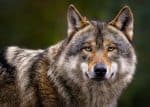
- Large, continuous mixed-forest habitats (e.g., around major protected areas such as Mari Chodra National Park and the Bolshaya Kokshaga Nature Reserve) support strong forest assemblages: moose-lynx-wolf trophic systems, capercaillie and black grouse, and high woodpecker/owl diversity.
- River-and-wetland networks connected to the Volga basin sustain regionally important populations of beaver and otter, with rich breeding waterfowl and wetland passerine communities in floodplains and oxbow complexes.
- The republic's remaining old-forest patches are particularly important for disturbance-sensitive breeders such as black stork and for lekking grouse tied to mature conifer stands.
Recent Changes
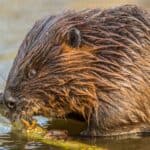
- Recovery and spread of Eurasian beaver populations across European Russia has increased beaver sign and wetland engineering in many Mari El waterways over recent decades.
- European mink has continued to decline in much of its range; where present in the Volga region it is increasingly restricted and pressured by competition from American mink (an established invasive).
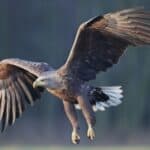
- White-tailed eagle has shown recovery/expansion trends in many parts of European Russia following reduced persecution and improved protection; local increases are most evident near large water bodies with abundant fish.
- Changes in river regulation, water levels, and shoreline development in the broader Volga basin have affected floodplain habitats-benefiting some generalists while reducing suitable conditions for sensitive species such as desman and sturgeons in places.
- Wild boar numbers in the Volga region have fluctuated in recent years, with disease outbreaks (e.g., African swine fever) causing declines and localized population instability.
Wildlife Viewing
Mari El Republic (Volga Region) centered on Yoshkar-Ola is a forest-and-river area of mixed conifer-broadleaf woods, bogs, meadows and Volga-basin rivers. Expect moose, wild boar, roe deer, fox, hare, beaver and otter, plus woodpeckers, owls, grouse, raptors and spring songbirds. Best: dawn walks, riverbank sits, canoeing and winter tracking. Protected areas may need permits or guides.
Best Seasons
Spring (late March-May)
Peak bird activity: songbird migration, drumming woodpeckers, displaying grouse, and vocal owls at dusk/dawn. Rivers run high and trails can be muddy; mosquitoes begin by late May. Best for birding and forest soundscapes (listen-and-spot).
Summer (June-August)
Longest daylight and best time for river-based wildlife: beaver at dusk, waterbirds, dragonflies, and amphibians. Prime for canoe/kayak floats and forest-edge mammals at sunrise. Insect pressure can be intense (especially near wetlands); plan early/late outings and bring repellent and head net.
Autumn (September-October)
Comfortable hiking temperatures, fewer insects, and excellent visibility as leaves thin. Moose/elk rut activity (late September-early October) can increase sightings (observe from a distance). Autumn bird movement continues; forests are rich in berries and mushrooms, which also draw wildlife-use quiet, low-impact routes.
Winter (November-March)
Best season for reading the forest: clear tracks of moose/elk, fox, hare, and sometimes wolf in remote areas. Great for wildlife photography in snow, plus bird feeder watching (tits, woodpeckers). Short days and cold require preparation; guided ski/snowshoe routes can help with safe access.
Top Wildlife Experiences
- Dawn birding on marked eco-trails in Mari Chodra National Park (forest edge + clearings): look for woodpeckers, owls, grouse, and spring migrants; bring binoculars and a local bird app/field guide.
- Dusk beaver-watching sit along quiet stretches of the Ilet River (Mari Chodra area): arrive 60-90 minutes before sunset, stay still, scan for ripples, tail slaps, and feeding activity.
- Canoe/kayak float on forest rivers (Volga-basin tributaries such as the Ilet and smaller streams): watch banks for beaver lodges, otter sign, herons, and raptors; keep noise low and pause often.
- Guided, permit-based nature visit to the Bolshaya Kokshaga State Nature Reserve (where allowed): focus on pristine taiga-like forest, animal tracks, and old-growth structure; ideal for serious naturalists and photographers.
- Spring "forest concert" evening walk near Yoshkar-Ola's nearby woodlands: listen for owls and display calls of forest birds; combine with a short dawn follow-up for peak activity.
- Autumn forest-edge mammal scan from quiet clearings (Mari Chodra and surrounding managed forests): use a small tripod/monopod and binoculars at sunrise for roe deer, boar, and occasional moose/elk movement.
- Winter tracking on skis or snowshoes in mixed forest (national park zones or local recreation forests): learn to identify tracks, browse marks, and bedding sites; finish with a warm-up bird-feeding station watch for close views of tits and woodpeckers.
Wildlife Watching Types
Guided Options
- Mari Chodra National Park ranger-led eco-trails and interpretive walks (ask about seasonal bird walks and riverbank routes).
- Bolshaya Kokshaga State Nature Reserve visitor program (access is typically controlled; inquire in advance about permits, allowed routes, and guided excursions).
- Local Yoshkar-Ola-based guides for birding and wildlife photography (small-group dawn/dusk outings; request English-speaking guide if needed).
- Canoe/kayak outfitters and guides operating on the Ilet River and nearby waterways (half-day to multi-day floats with low-impact wildlife viewing stops).
- Winter ski/snowshoe nature excursions led by local outdoor clubs (focused on tracking, safety, and finding fresh sign).
- Regional museum/university or birding community events (seasonal talks, guided bird walks, and participation in counts when available).
Ecosystems
Mari El Republic in Russia's Middle Volga is mainly lowland shaped by the Volga basin. Its ecosystems have large mixed forests (broadleaf-conifer), strong river and floodplain influence, and wide peatlands and marshy depressions. This forms a mix of temperate-to-boreal woodlands and freshwater wetlands, with more meadows and farm clearings in the south and near Yoshkar-Ola.
Biomes
The core terrestrial biome: mixed broadleaf-conifer forests with birch, aspen, lime (linden), oak in warmer sites, and spruce/pine in cooler or poorer soils; extensive secondary forests and forest mosaics after historical logging and agriculture.
Dominant across most of the republic, especially central and southern areas; roughly the majority of land cover.
Southern taiga influence expressed as conifer-rich stands (spruce, pine) and cooler, moist forest types in the north and in nutrient-poor or sandy substrates; associated with peatlands and darker, dense forest structure in places.
Notable in the northern/taiga-leaning portions and in specific soil/wetland complexes; a substantial minority of forested area.
Dense network of rivers, streams, oxbows, and lakes connected to the Volga drainage; includes floodplain channels and backwaters that support aquatic vegetation, fish communities, and riparian corridors.
Widespread as linear networks throughout; locally extensive in major river valleys and floodplains.
Peatlands, marshes, wet meadows, and swampy forest depressions (including boggy complexes) common in low-lying areas; important for water regulation and breeding habitat for wetland fauna.
Patchy but frequent; concentrated in poorly drained lowlands and along floodplains, forming a meaningful share of natural habitat.
Open grasslands occur mainly as meadow systems (including floodplain meadows) and as anthropogenic openings (hayfields, field margins) within the forest matrix rather than continuous steppe.
Limited and fragmented; more common in river valleys and in the more developed/agricultural south.
Habitats
Extensive mixed forest matrix across lowlands; includes mature stands and large areas of secondary regrowth after timber harvest and historical clearing.
Broadleaf-dominated patches (birch, aspen, lime/linden; locally oak in warmer sites), especially on more fertile soils and in successional forests.
Pine and spruce stands (including southern-taiga type communities) on cooler sites, sandy terraces, and in association with peatlands.
Forest-meadow edges and lighter, semi-open tree cover around settlements, river terraces, and managed landscapes.
Floodplain and upland meadows used for haymaking and grazing; also natural meadow glades within the forested landscape.
Volga-basin tributaries and river corridors with riparian vegetation, backwaters, and seasonal flood dynamics that structure habitat diversity.
Small lakes and oxbow lakes in riverine settings; support aquatic plants and provide nesting/feeding areas for waterbirds.
Farm and village ponds plus small natural waterbodies; important as amphibian breeding sites and for local biodiversity.
Marshy floodplains, wet meadows, and saturated depressions; high productivity and strong seasonal water-level variation.
Forested wetlands (often alder- or spruce-influenced in wet sites) in low-lying areas and along sluggish channels.
Reed/sedge-dominated marshes along lake margins and slow river reaches; key for birds and aquatic invertebrates.
Peat-forming bogs and boggy complexes in poorly drained basins; acidic, nutrient-poor conditions with specialized vegetation.
Croplands, hayfields, and managed meadows concentrated near populated areas and in more open southern parts; creates a forest-field mosaic.
Built environments around Yoshkar-Ola and other towns, with parks, riverside embankments, and disturbed habitats.
Settlement fringes with gardens, smallholdings, roadside verges, and mixed semi-natural patches that connect to surrounding forests.
Ecoregions
Conservation
Primary Threats
- Commercial timber harvesting in mixed forests (including sanitary/'salvage' cutting after windthrow or pest outbreaks) can simplify stand structure, reduce old/decaying wood, and fragment habitat important for forest specialists (e.g., cavity nesters, raptors) and riparian species along the Ilet-Kokshaga catchments.
- Local conversion of forest edges and floodplain habitats to agriculture, summer-house development, and settlement expansion-especially in accessible areas around Yoshkar-Ola and along main roads-reduces connectivity between intact forest blocks and river/wetland refugia.
- Road networks and associated linear clearings fragment forest, increase access for illegal take, and elevate wildlife-vehicle collisions. Volga-basin hydrotechnical infrastructure (reservoir influence, bank reinforcement) alters shoreline and tributary mouths important for spawning fish and wetland-dependent mammals.
- Water quality stressors include municipal/industrial effluents from urban centers (notably Yoshkar-Ola) and diffuse runoff from agriculture. These pressures manifest as eutrophication and habitat degradation in small rivers and oxbows that are critical for rare semi-aquatic species (e.g., desman) and for fish recruitment feeding into the Volga basin.
- Drainage/alteration of wetlands and floodplains (historical peatland drainage, channel modification, riparian clearing) reduces habitat for semi-aquatic fauna and dampens the natural water-retention function of forests and mires, increasing low-flow stress in summer and affecting tributaries to the Volga.
- Localized extraction of peat (legacy sites), sand, and gravel can disturb mires and river terraces, causing sedimentation, hydrological changes, and loss of wetland/riverine microhabitats used by amphibians, aquatic invertebrates, and fish.
- Warmer winters and more frequent extreme weather (windthrow, drought spells) increase forest vulnerability to pests and fires, and shift hydrology (earlier spring melt, lower summer baseflows). These changes can reduce suitable conditions for boreal-associated species and stress small rivers feeding the Volga system.
- While hunting is regulated, illegal take and pressure near accessible forests can impact elk, capercaillie/black grouse, and furbearers. Poaching risk rises where new forest roads open previously remote tracts.
- The American mink (Neogale vison) is a major competitor/predator pressure on the European mink in Volga-basin riparian habitats. Aquatic invasives in the broader Volga system can also alter food webs and affect native fish resources at reservoir-influenced reaches.
- High recreational use in scenic forest-and-lake areas (especially within/around Mari Chodra National Park)-including off-road driving, shoreline camping, and intensive 'quiet' use like berry/mushroom picking-can disturb nesting raptors, black stork sites, and sensitive wetland margins.
- Incremental conversion of marginal forest lands to crops and hayfields, plus intensification near settlements, increases nutrient runoff, reduces field-forest ecotone quality, and can drain or degrade small wetlands important as breeding sites and drought refuges.
- Expansion of Yoshkar-Ola and peri-urban development increases pressure on nearby forests through land take, recreation, waste, and infrastructure corridors, reducing the effectiveness of green belts and riparian buffers.
- Conflicts occur where wolves approach villages in low-prey years or where beavers flood forest roads, culverts, and small agricultural plots; responses can include lethal control or removal that undermines local population stability.
- Outbreaks such as African swine fever in wild boar can disrupt food webs (affecting large carnivores/scavengers) and drive management actions (population reduction) that increase disturbance and access in forest areas.
Did You Know?
Mari El lies where southern taiga meets broadleaf woodland. In the same places you can find taiga species (capercaillie, spruce species) and broadleaf animals (roe deer, many songbirds) because spruce-pine mixes with oak-linden forests.
Capercaillie courtship is so extreme that during the peak of the male's song sequence ("clicking" phase) it becomes temporarily less responsive to outside sounds-one reason traditional lekking grounds are very sensitive to disturbance.
In Mari El's small river valleys, beaver dams don't just create ponds-they can form stair-step "chains" of wetlands along tributaries, turning narrow forest streams into amphibian nurseries and late-summer water refuges for many species.
Moose in Mari El's river-and-lake landscapes often behave like semi-aquatic browsers in summer: they wade into shallow water to feed on aquatic plants, gaining minerals (notably sodium) that are harder to obtain from purely terrestrial browse.
In the Bolshaya Kokshaga basin, old mixed forest with much standing deadwood provide homes for cavity-nesting birds (woodpeckers, owls) and insects, so dead trees often mean high biodiversity, not neglect.
Mari El's forests host the moose (Alces alces) - the largest deer species on Earth; adult bulls can exceed ~500 kg, making it the biggest land mammal you're likely to encounter in the republic's mixed-forest zone.
Rivers and oxbows in the Volga basin portion of Mari El (notably the Ilet and the Bolshaya/Malaya Kokshaga systems) are engineered by the Eurasian beaver (Castor fiber), Europe's largest rodent (adults often 20-30+ kg).
The western capercaillie (Tetrao urogallus), a flagship bird of Mari El's conifer-mixed forests, is the world's largest grouse; males can reach ~4-6+ kg and are famous for traditional spring lek sites in mature pine/spruce stands.
Along the Volga shoreline and large waterbodies of Mari El, the white-tailed sea eagle (Haliaeetus albicilla) is the largest eagle in Europe (wingspan commonly ~2.0-2.4 m), a top-tier apex raptor of the region's fish-rich waters.
The Eurasian eagle-owl (Bubo bubo), recorded across forested Middle Volga landscapes including Mari El, is among the world's largest owls (wingspan up to ~1.6-1.9 m) and can take prey as large as hares and even young foxes.