N S W E
Wildlife Expeditions

Wildlife of
Neneckij avtonomnyj okrug

A vast Barents-Kara Arctic tundra where reindeer, polar bears, and immense migratory bird gatherings thrive across river deltas and windswept coasts.
7 Species
176,700 km² Land Area
Overview

About Neneckij avtonomnyj okrug

Nenets Autonomous Okrug is one of Europe’s most untouched Arctic places — wide, open tundra shaped by permafrost, strong coastal winds, and a long polar winter. Its nature is tied to large reindeer-herding lands, with wild tundra life across huge roadless areas. Visitors feel scale and solitude: big skies, long horizons, and animals suited to extremes. Main habitats are coastal tundra along the Barents and Kara seas, inland moss-lichen plains and shrub tundra, and big rivers with wide floodplains and deltas, especially the Pechora basin. These wetlands and deltas are important breeding and stopover sites for migratory birds — waterfowl, waders, and raptors — during the short bright summer. Offshore waters support rich food webs, bringing seals and, seasonally, polar bears near the ice edge. The mix of marine coasts and vast inland tundra, plus few roads, makes wildlife sightings common and undisturbed.

Physical Features

Geography

Nenets Autonomous Okrug in the Arctic has a cold sea-to-land climate, continuous permafrost and flat lowlands that form tundra habitats. Coastal tundra, beaches and shallow bays support seabirds and marine mammals. Inland wetlands, peatlands and lakes host breeding waterfowl. River valleys and deltas, especially Pechora, provide rich freshwater areas and routes for fish, predators and wild and semi-domesticated reindeer.

176,700 km² Land Area
Among Russia's larger federal subjects (roughly top third by land area) Size Rank
Russia Country
Federal_subject Type
Elevation Range

Sea level to ~423 m (Pai-Khoi Range high points), with most of the region being very low-lying tundra

Coastline

Coastline on the Barents Sea and Kara Sea (Pechora Sea sector), with extensive bays/estuaries and shallow nearshore shelves important for seabirds and marine mammals

Key Landscapes

Arctic coastal tundra along the Barents Sea and Kara Sea (including the Pechora Sea sector), with coastal lagoons, barrier spits, and salt-influenced wetlands Extensive lowland tundra plains with permafrost features (polygonal ground), peatlands, and thousands of shallow lakes/ponds-prime habitat for breeding geese, ducks, swans, and waders Major river systems and floodplains: lower Pechora River basin, with broad wetlands and riparian willow thickets that create localized 'hotspots' of productivity Large river deltas and estuaries (notably the Pechora Delta) that function as critical migratory bird staging areas and nursery habitat for fish Upland ridges that add habitat diversity and refugia: Timan Ridge and the Pai-Khoi Range (rocky uplands, scree, wind-exposed tundra) Arctic islands and offshore shallows (e.g., Kolguyev Island) supporting coastal nesting sites, moulting areas for waterfowl, and marine foraging zones
Parks & Reserves

Protected Areas

Nenets Autonomous Okrug's protected areas cover Arctic tundra and coastlines on the Barents and Kara Seas. They focus on large coastal wetlands and river deltas for migratory waterfowl, marine haul-outs and dens for Arctic mammals, and roadless tundra for wild and semi-domestic reindeer and wide-ranging predators. Protection is strict federal reserves plus regional sanctuaries, parks, and bird/wetland sites.

Protected Coverage

≈12-18% (order-of-magnitude estimate; coverage varies by how regional zakazniks, coastal buffers, and marine zones are counted)

National Parks & Preserves

Nenetsky State Nature Reserve (Ненецкий государственный природный заповедник)

≈3,100 km² (≈313,000 ha; includes coastal/wetland sectors)

Flagship strict-protection area safeguarding classic Arctic coastal tundra, barrier islands, and wetland complexes important for breeding and staging waterfowl. Notable for dense seasonal bird concentrations and relatively intact predator-prey dynamics (lemmings → raptors/foxes).

Tundra (Bewick's) swan Barnacle goose King eider Arctic fox Rough-legged buzzard

Vaigach Island protected area complex (Вайгач; sanctuary/zakaznik-type protection reported in regional/federal sources)

≈3,000-3,400 km² (island-scale; protected-zone boundaries vary by designation)

Remote island between the Barents and Kara seas with seabird colonies, coastal haul-out habitat, and migration stopovers; valued for limiting disturbance in a high-Arctic coastal setting.

Atlantic walrus Polar bear Ivory gull Thick-billed murre Ringed seal

Pechora River Delta wetland protection zones (Печорская дельта; multi-designation wetland complexes)

≈2,000-5,000 km² of key delta wetlands (extent depends on which zones are included)

One of the most important low-Arctic delta systems in European Russia for migratory birds, with vast floodplain marshes, shallow lagoons, and tundra lakes; critical for staging geese and swans and for raptor nesting on drier margins.

Greater white-fronted goose Bean goose Tundra (Bewick's) swan Peregrine falcon Whooper swan

Khaipudyr Bay coastal-marine protection zones (Хайпудырская губа; coastal/marine sanctuary-type protection reported)

≈1,000-3,000 km² (bay + adjacent coast; protected-zone boundaries vary)

Shallow bay and coastal tundra with high productivity, used by marine mammals and large numbers of sea ducks and other waterbirds; notable for spring/autumn migration viewing and sensitive marine mammal habitat.

Beluga Bearded seal Steller's eider Long-tailed duck Glaucous gull

State & Provincial Parks

Kanin-Timan Nature Park / regional protected landscape (Kanin-Timan; regional nature-park type area reported)

≈10,000-15,000 km² (very large regional landscape; figures vary by zoning)

Large, roadless tundra-ridge landscapes (Kanin Peninsula and Timan uplands) maintained in part by traditional land use (reindeer herding). Valuable for broad-scale habitat connectivity and nesting raptors in more rugged terrain.

Wild reindeer (tundra reindeer) Wolverine Gyrfalcon Golden eagle Arctic fox

Kolguev Island regional conservation areas (Kolguev Island; regional sanctuary/Important Bird Area-type protections reported)

≈3,000-5,000 km² (island-scale; protected portions vary)

Key breeding and staging site for Arctic geese and shorebirds on a remote Barents Sea island; notable for high-density nesting waterfowl and predator-prey interactions in lemming years.

Barnacle goose Greater white-fronted goose Red-throated diver Snowy owl Arctic fox

Nenetsky State Nature Reserve (Nenets Nature Reserve)

313,000 hectares (about 3,130 km²)

A large Arctic coastal tundra and delta protected area in the Nenets Autonomous Okrug, established to conserve the Pechora River delta and adjacent Barents Sea coastal ecosystems that are critical for migratory waterbirds and marine mammals.

Barnacle goose Greater white-fronted goose King eider Atlantic walrus Arctic fox

Wildlife Refuges

Pechora Delta key ornithological territories (KOT/IBA-style sites)

A network of sites; core hotspots often tens to hundreds of km² each

Managed/recognized bird areas overlapping formal and informal protection; prioritized for minimizing disturbance during peak staging (late spring and late summer) and protecting nesting islands and marsh edges.

Tundra (Bewick's) swan Greater white-fronted goose Barnacle goose Ruff Peregrine falcon

Khaipudyr Bay sea-duck concentration areas (coastal refugia)

Variable; typically hundreds to >1,000 km² depending on the managed buffer

Seasonal refuge for sea ducks and coastal waterbirds; best conservation value comes from limiting vessel/aircraft disturbance near feeding/roosting areas and marine-mammal concentrations.

Steller's eider King eider Long-tailed duck Ringed seal Beluga

Barents Sea coastal haul-out and denning sectors (site-based protection in sensitive coastal stretches)

Site-based sectors; typically small individual sites but high ecological value

A collection of particularly sensitive coastal segments used by marine mammals (haul-outs/ice-edge use) and occasionally polar bear maternity areas; conservation emphasis is on seasonal access restrictions and spill-risk reduction.

Atlantic walrus Polar bear Bearded seal Ringed seal Ivory gull

Wilderness Areas

  • Interior Kanin Peninsula tundra and lake districts (very low road density, extensive reindeer-herding landscapes)
  • Bolshezemelskaya Tundra (broad, roadless inland tundra plains and wetlands)
  • Timan Ridge uplands (rugged terrain pockets with raptor nesting and denning habitat)
  • Lower Pechora River and delta marsh-lagoon mosaics (large wetland wilderness with seasonal bird spectacles)
  • Vaigach Island (remote Arctic island wilderness with coastal cliffs and marine mammal habitat)
  • Kolguev Island (remote island tundra supporting major waterfowl breeding colonies)
Animals

Wildlife

Nenets Autonomous Okrug (NAO) is a high-Arctic and sub-Arctic tundra region on the Barents and Kara Sea coasts, with vast coastal plains, river deltas (notably the Pechora system), islands (e.g., Kolguev), and extensive reindeer-herding landscapes. Wildlife is defined by a short, productive summer pulse that supports huge migratory bird concentrations, plus iconic marine mammals along pack-ice and coastal waters. Terrestrial diversity is comparatively low in species number but high in Arctic specialists and in the sheer biomass of seasonal migrants (geese, waders, seabirds) and reindeer.
~40-55 species (including marine mammals; terrestrial mammal richness is lower in the far north, higher near forest-tundra margins) Mammals
~200-260 species recorded (with ~120-170 breeding, and many more as passage migrants/coastal visitors) Birds
~0-2 species (very limited; mainly at the southern/forest-tundra edge) Reptiles
~1-3 species (restricted to milder southern lowlands and river valleys) Amphibians
~40-80 species total (freshwater and coastal marine combined; diversity is concentrated in major rivers, deltas, and nearshore seas) Fish
Examples

Iconic Species

Polar Bear
Polar Bear A defining Barents/Kara Sea predator; most often encountered along the coast and sea-ice edge, with increasing use of coastal areas during low-ice periods.
Atlantic Walrus Large haul-outs and nearshore feeding areas make walrus one of the signature marine mammals of the Barents/Kara region (viewed from distance for safety and disturbance avoidance).
Wild Reindeer (Tundra Reindeer) The tundra landscape is strongly shaped by reindeer-both wild populations and the region's globally notable Nenets reindeer-herding tradition; large seasonal movements are a key wildlife experience.
Arctic Fox
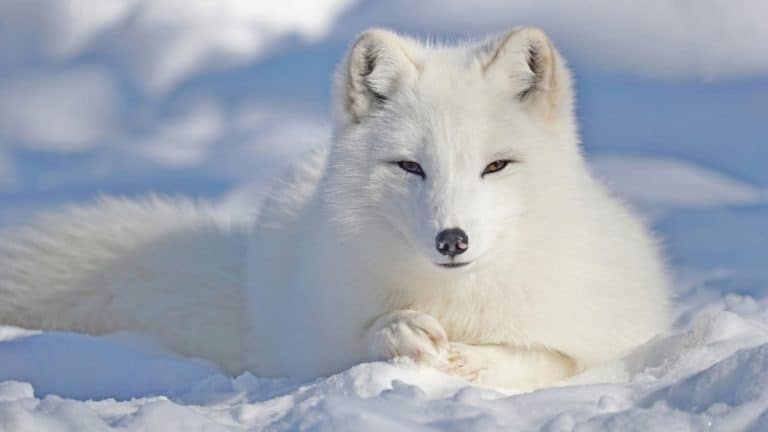
Arctic Fox An Arctic tundra specialist closely tied to lemming cycles; a classic species for visitors in open tundra and coastal areas.
Rough-legged Buzzard
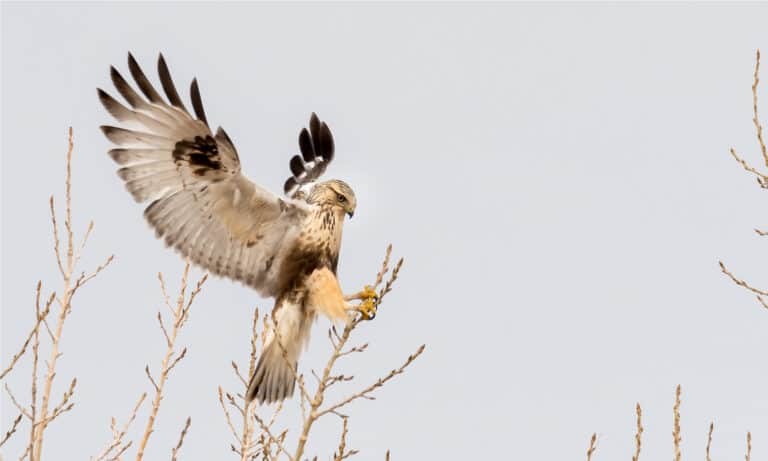
Rough-legged Buzzard A conspicuous tundra raptor that breeds in the region and tracks rodent abundance; often seen hovering over open plains in summer.
King Eider
King Eider A flagship Arctic sea duck of coastal waters; males are especially striking during migration and early season.
Barnacle Goose Mass movements and dense breeding/stopover concentrations occur in tundra lowlands and on islands; a hallmark of the NAO summer bird spectacle.
Greater White-fronted Goose One of the most abundant tundra geese in the region, forming large staging flocks in river deltas and wet tundra.
Beluga Whale Seasonal coastal and estuarine use (especially near river mouths and productive nearshore areas) makes beluga a sought-after marine sighting.
Ringed Seal A core ice-associated seal of the Barents/Kara seas and a key prey species for polar bears; commonly associated with ice and cold nearshore waters.

Endemic & Rare Species

Steller's Eider

Polysticta stelleri

IUCN: Vulnerable (globally); highly threatened/declining in parts of its Atlantic range

A rare Arctic sea duck that can occur along the Barents/Kara coasts; of special conservation concern due to declines and sensitivity to disturbance and coastal change.

Lesser White-fronted Goose

Anser erythropus

IUCN: Vulnerable; rare and highly conservation-dependent along migration routes

Passes through and can use tundra wetlands as staging habitat; one of the most conservation-important geese associated with West Siberian/Arctic flyways.

Red-breasted Goose

Branta ruficollis

IUCN: Vulnerable

A globally distinctive goose whose populations depend on secure breeding/staging habitats; appears as a scarce but high-profile migrant in Arctic Russia.

Ivory Gull

Pagophila eburnea

IUCN: Near Threatened (often treated as rare/declining regionally)

An ice-associated seabird strongly linked to pack-ice ecosystems; valued as an indicator of high-Arctic marine conditions.

Ross's Gull

Rhodostethia rosea

IUCN: Least Concern globally, but scarce and locally rare

A celebrated 'high Arctic' gull; sightings are uncommon and often tied to remote coastal/ice-edge conditions during migration.

Gyrfalcon

Falco rusticolus

IUCN: Least Concern globally; naturally low density and sensitive to disturbance

The largest falcon, breeding at low densities in tundra and forest-tundra; an iconic predator associated with ptarmigan-rich landscapes.

Wolverine

Gulo gulo

IUCN: Least Concern globally; rare/low density across Arctic tundra

A wide-ranging carnivore of remote tundra and taiga edges; rarely seen, but emblematic of intact northern ecosystems.

Atlantic Salmon

Salmo salar

IUCN: Least Concern globally; many river populations regionally reduced

The Pechora basin and other large rivers provide important Arctic salmon habitat; local abundance can reflect river health and fishing pressure.

Notable Populations

  • Internationally important migratory bird habitat in tundra wetlands and large river deltas (notably the Pechora system), supporting mass staging of geese, ducks, and waders along Arctic flyways.
  • Major coastal/nearshore Barents-Kara Sea marine mammal assemblages, including ice-associated seals and seasonally concentrated walrus haul-outs.
  • Kolguev Island and other tundra/island systems are widely recognized for dense breeding waterfowl and goose concentrations in productive summers.
  • Extensive reindeer landscapes: one of the world's most prominent regions for large-scale domestic reindeer herding, shaping habitat use and predator-prey dynamics across vast areas.

Recent Changes

  • Reduced sea ice duration and altered ice conditions are increasing the frequency of coastal polar bear presence and changing the timing/locations of marine mammal use (e.g., walrus haul-outs shifting and becoming more coastal).
  • Northward/greater tundra use by generalist species (notably Red Fox, and in places Moose and Brown Bear at the forest-tundra margins) is reported across the Arctic, increasing competition pressure on Arctic specialists like Arctic Fox.
  • Greater interannual variability in tundra breeding success for geese and waders is increasingly linked to weather extremes (late snowmelt, rain-on-snow/icing events) and predator-prey cycles.
  • Expanding occurrences of Pink Salmon in parts of the Barents/White Sea region (a range expansion from historical introductions) are increasingly noted across northern rivers/coasts and may affect local fish communities where established.
  • Wild reindeer and domestic herds in the wider Russian Arctic have experienced periodic declines and redistribution driven by climate variability (icing events), industrial disturbance, harvest pressure, and disease/parasite dynamics; local trends vary by herd and year.
Visit

Wildlife Viewing

Nenets Autonomous Okrug offers High Arctic wildlife on coastal tundra, river deltas and Barents/Kara Sea shores. Wide-open landscapes and reindeer herding areas have seasonal migratory birds. Look for tundra birds (geese, swans, waders, raptors), Arctic fox, hare, large reindeer herds, seals, sometimes whales and polar bears. Travel is hard; use guides.

Best Seasons

Late spring (May-early June)

Migration and arrival season. River corridors and tundra wetlands come alive with geese, swans, and early-nesting shorebirds. Expect lingering snow, break-up on rivers, and rapidly changing conditions-excellent for birding and dramatic landscapes, but access can be limited by thaw and flooding.

Summer (mid-June-August)

Peak wildlife variety and the easiest time for travel. Midnight sun, active breeding bird colonies and wetlands full of life (waders, divers/loons, raptors). Best window for boat-based delta exploration and coastal outings when seas are navigable. Insect season can be intense-bring head nets/repellent.

Early autumn (September-early October)

Migration in reverse: big movements of geese and other waterbirds, plus rich tundra colors and clearer air for photography. Cooler weather reduces insects. Stormier seas and shorter days begin to affect coastal plans; early snow is possible.

Winter (November-March)

Arctic winter travel for those seeking polar night/low-light landscapes, reindeer-herding culture, and tracking opportunities. Wildlife viewing shifts to hardy residents (fox, hare, ptarmigan, owls) and occasional coastal marine mammals where open water persists. Conditions are severe; trips require experienced outfitters and safety planning.

Shoulder season (April)

Late-winter/early-spring transition. Good for snow-based travel (snowmobiles/sleds) and tundra photography before melt. Bird activity begins to build, but timing varies. Weather remains unpredictable and cold.

Top Wildlife Experiences

  • Birding the Pechora River Delta by boat (summer): explore channels, sandbars, and wetlands for geese, swans, waders, divers/loons, and raptors; plan for long daylight and flexible routing based on water levels.
  • Coastal tundra wildlife day trips from Naryan-Mar (summer/early autumn): scan open tundra and river margins for Arctic fox, hare, raptors, and massed migrant flocks; pair with sunset/low-angle light photography in September.
  • Sea-mammal scouting along the Barents Sea coast (mid-summer-early autumn): boat/shore scanning for seals and occasional whale encounters when conditions allow; focus on respectful distance and weather windows.
  • Tundra "dawn-to-dusk" migration watch (late spring or early autumn): set up with spotting scopes on wetlands and river edges to observe sustained movements of geese and other waterbirds; ideal for photographers wanting flight shots.
  • Reindeer-herding landscape expedition (winter or late winter): travel with local Nenets-led logistics across reindeer territory to observe large herds, track wildlife, and experience tundra travel methods-best done as a cultural-and-wildlife combo with strict wildlife etiquette.
  • Shorebird and wetland photography on inland tundra lakes (mid-summer): target breeding behavior and display flights; prioritize low-impact fieldcraft and avoid approaching nests.
  • Ice-edge and coastal storm-watching (season-dependent): in years with favorable ice/open-water patterns, scan for seals and (rarely, far north) polar bear signs; requires local guidance, safe distance, and contingency days for weather.

Wildlife Watching Types

Migratory bird spectacles (spring and autumn flyways) Tundra birding hotspots: wetlands, lake systems, and river deltas Raptor watching over open tundra (seasonal) Marine mammal watching: seals; occasional whale encounters depending on sea state/ice Arctic mammal tracking and photography (fox, hare, ptarmigan; season-dependent) Reindeer herd viewing in herding landscapes (best with local hosts) Landscape-and-wildlife photography under midnight sun and autumn tundra colors

Guided Options

  • Nenets-led tundra travel and reindeer-herding landscape programs (multi-day): locally hosted expeditions that combine cultural context with wildlife viewing and safer tundra navigation.
  • Naryan-Mar-based birding and delta boat charters (summer): practical for visitors who want focused birding days with local captains/guides and flexible routes around water levels and weather.
  • Custom wildlife photo tours (summer-early autumn): itineraries built around long daylight, wetland bird behavior, and migration timing; often include boats/4x4s and field hides where appropriate.
  • Winter logistics packages (Nov-Mar): snowmobile/sled-supported trips with experienced operators for safe travel, wildlife tracking, and cold-weather operations.
  • Regional protected-area or research-linked excursion opportunities (where available): occasional guided visits or educational programs tied to migratory bird habitats-best arranged in advance through local nature organizations or tour operators.
Habitats

Ecosystems

Nenets Autonomous Okrug covers Arctic coastal lowlands and inland plains of European Russia, facing the Barents and Kara Seas. Its landscapes are mostly treeless tundra, from polar desert coasts to inland shrub tundra, with large peatlands, river deltas, and broad marine shelves with seasonal sea ice. These intact areas support reindeer herding, major migratory bird sites, and Arctic marine mammals.

Biomes

Tundra

The core biome: coastal and inland tundra with moss-lichen carpets, sedge meadows, dwarf birch/willow shrubs on warmer sites, widespread permafrost features (polygonal ground, frost heave) and wind-exposed ridges.

Dominant across most of the okrug (~70-85%), increasing northward and toward the coast

Boreal Forest (Taiga)

Taiga influence occurs mainly in the far southern/upper river basins as open larch/spruce-pine forest patches and forest-tundra ecotones, often on better-drained terraces and south-facing sites.

Limited; mostly southern margins and ecotone belts (~5-15%)

Wetland

Extensive peatlands, fens, bogs, wet tundra and thaw-lake basins; large deltaic wetlands (notably the Pechora River delta) provide highly productive breeding habitat for waterbirds and geese.

Widespread throughout lowlands; locally dominant in deltas and poorly drained plains (~10-25% as a landscape component, often interwoven with tundra)

Freshwater

Large rivers (Pechora and tributaries), braided channels, floodplains, thermokarst lakes/ponds, and numerous small tundra lakes; strong seasonal ice cover and spring flood pulses shape habitats.

Common across the territory but concentrated along major river corridors and lake-rich lowlands (~5-10% of surface area)

Marine

Arctic shelf seas (Barents and Kara) with seasonal sea ice, coastal lagoons and nearshore shallows; important for seals, walrus (regionally), seabirds, and fish migrations; highly seasonal productivity linked to ice edge and river plumes.

Along the entire northern coastline and offshore waters adjacent to the okrug; coastal marine influence is extensive

Habitats

Tundra

Vast treeless plains with lichen heaths and sedge-moss wet tundra; key reindeer pastures and major breeding grounds for geese, waders, and other migratory birds.

Shrubland

Dwarf birch and willow shrub tundra on relatively warmer, snow-accumulating sites and along riverbanks; provides cover and browse for herbivores and nesting structure for birds.

Bog

Peat-accumulating raised bogs and palsa/peat plateau features in permafrost zones; acidic pools and hummock-hollow microtopography.

Marsh

Sedge and grass marshes in floodplains and deltas, including brackish-influenced marshes near river mouths; critical staging and nesting habitat for waterfowl.

Wetland

Broad complexes of fens, wet meadows, thaw-lake margins and delta wetlands; strong seasonal hydrology and permafrost-controlled drainage.

River/Stream

Large Arctic rivers and distributary networks (Pechora system) with dynamic sandbars, islands, and spring ice-jam flooding; supports fish spawning/migration corridors.

Lake

Numerous shallow tundra lakes and thermokarst basins with emergent vegetation; important for moulting and staging waterbirds.

Estuary

Pechora River mouth and other coastal river mouths with mixing of fresh and marine waters, turbidity plumes, and high biological productivity seasonally.

Coastal

Low-lying Arctic coasts with lagoons, spits, coastal tundra, and erosion-prone bluffs in places; strong wind, ice, and storm-surge influence.

Beach

Sandy/gravelly barrier beaches and spits along the Barents/Kara coasts, often adjacent to lagoons and deltas; nesting/roosting sites for some shorebirds.

Rocky Shore

Localized rocky or coarse-shingle sections and headlands (more limited than soft-sediment shores), providing haul-out and roost structure where present.

Seabed/Benthic

Shallow continental shelf bottoms dominated by soft sediments, benthic invertebrate communities, and seasonally high organic deposition from blooms and river inputs.

Open Ocean

Nearshore to shelf waters influenced by sea-ice seasonality; pelagic feeding areas for seabirds and marine mammals, especially near the ice edge and frontal zones.

Deep Sea

Not a major habitat within the immediate coastal shelf setting; deeper basins are limited relative to shallow shelf areas in this region.

Coniferous Forest

Patchy taiga/forest-tundra stands (spruce, pine, larch where present) mainly in the south; often open-canopy with boggy understories and frequent wetlands.

Agricultural/Farmland

Very limited due to climate/permafrost; small localized hayfields or fodder plots near settlements, with most land use centered on pastoral reindeer herding.

Urban

Sparse settlement footprint (e.g., Naryan-Mar and smaller towns/industrial sites), with localized disturbance and infrastructure corridors across tundra.

Ecoregions

Nenets-Kola tundra (WWF) Northern European Russia taiga (WWF)
Protection

Conservation

Primary Threats

  • Rapid Arctic warming shortens sea ice, altering polar bear den sites and walrus haul-outs, and increases coastal erosion and storm damage to barrier spits and lagoons used by nesting geese and shorebirds. Thawing permafrost weakens tundra, riverbanks, and infrastructure; rain-on-snow crusts snow and blocks reindeer from lichens.
  • Oil and gas development (often called "mining")—seismic lines, well pads and quarries—fragments tundra, wetlands and river valleys. Main concern is growing footprint across migration corridors and calving/foraging areas and spill risk to peatlands and waterways that drain to the Pechora delta and coastal seas.
  • Big risks are oil and condensate spills and long-term pollution near fields, pipelines, and storage. In cold tundra these break down very slowly. Coasts and rivers get marine litter (plastics, old nets) that can trap seabirds and marine mammals; old waste can last decades.
  • Pipelines, roads, airstrips, ports, and power and communication lines cut tundra, increase access and hunting, and focus damage near rivers and coasts. In permafrost they change water flow, drying some wetlands and flooding others, harming waterfowl and shorebirds.
  • Industrial pads, gravel extraction, and settlements and industrial bases replace tundra and wetland small habitat areas in the Nenets Autonomous Okrug. Even small losses are harmful because key bird nesting and staging habitats in deltas, coastal marshes, and lowlands with many lakes are lost.
  • In short Arctic summers, ships, helicopters, low flights, field camps and growing tourism disturb coastal and delta areas, scaring nesting geese, swans and seabirds, increasing predator attacks and lowering breeding success, and pushing walrus from traditional resting sites to poorer places.
  • Subsistence harvest is culturally important, but localized overharvest and illegal take can impact vulnerable populations, particularly rare geese and swans during migration/staging in the Pechora delta and nearby coastal wetlands. Opportunistic/defensive killing can also affect polar bears when they approach settlements or camps, especially in low-ice years.
  • Coastal and estuarine fisheries in the Barents Sea region can alter food availability for seabirds and marine mammals and increase bycatch/entanglement risk, especially where gillnets and other static gear overlap with diving seabirds and seals. Pressure is most relevant near river mouths and coastal migration corridors.
  • Reindeer-herding landscapes can experience localized lichen depletion and trampling around migration bottlenecks, corrals, and areas where herds are forced to concentrate by industrial exclusion zones, ice conditions, or altered pasture phenology. Declines in lichen mats reduce winter forage resilience and can cascade into broader tundra vegetation change.
  • Warming and permafrost thaw raise concern for re-emergence or spread of pathogens affecting domestic reindeer (e.g., anthrax risk from thawing soils is a recognized Arctic issue) and can increase parasite loads. Disease outbreaks can trigger emergency movements and grazing concentration that further stresses pastures and may increase conflict with predators.
  • During low sea ice, polar bears more often meet people near coastal settlements, industrial sites, and waste areas, causing safety risks and sometimes being killed. Wolves and bears may hunt reindeer near herding routes, and conflicts worsen when herds are crowded by weather or roads.
  • Traditional invasive species pressure is lower, but new introductions via shipping, ports, and supply chains are rising: non-native plants along disturbed roads, possible rodents at coasts, and northward generalist predators (e.g., scavengers at dumps) that eat ground-nesting birds.
  • Hydrological alteration from road/berm construction and river crossing structures can modify drainage patterns in permafrost lowlands, changing wetland extent and water chemistry. Increasing frequency/intensity of tundra and peat fires in warm/dry years (an emerging Arctic trend) can also reset vegetation, reduce lichen availability, and alter nesting cover.
  • Urban footprint is small (sparse population, limited built-up areas), but growth or intensification around Naryan-Mar and industrial hubs can concentrate waste/attractants (drawing predators and bears), increase local pollution loads, and expand disturbance zones in nearby riverine habitats.
  • Large-scale agriculture is minimal due to climate/soils; the main 'agricultural' land-use pressure is the management intensity of domestic reindeer herding. Any expansion of supporting infrastructure (corrals, access tracks, camps) can add localized habitat degradation, especially in lake-rich tundra where recovery is slow.
  • Commercial logging is not a dominant driver in NAO's tundra-dominated landscapes; impacts are mostly limited to small-scale wood collection in forest-tundra patches and along river corridors, with localized disturbance rather than broad habitat conversion.
  • International wildlife trade pressure is generally lower than in many regions, but illegal trade can occur opportunistically (e.g., raptor specimens/eggs, furs, or marine mammal parts). The more significant issue is ensuring protected species (rare geese, raptors, marine mammals) are not taken or traded outside permitted subsistence and regulatory frameworks.
  • Small, isolated breeding groups of rare birds (and some marine mammal subpopulations using specific haul-outs) can be vulnerable to demographic shocks; habitat shifts and disturbance that reduce breeding success can indirectly increase genetic risks over time by lowering effective population size and connectivity across flyways.
Fun Facts

Did You Know?

On the Nenets tundra (including Kolguev), when lemmings are many, predators like Arctic foxes and snowy owls hunt them, giving ground-nesting birds a chance to breed; when lemmings crash, predators eat many goose eggs and chicks.

On the Nenets coast, summer can be so insect-rich that mosquitoes and biting flies become a major ecological force: reindeer often shift behaviorally toward windy beaches, riverbanks, or open headlands to escape swarms, reshaping grazing patterns across the tundra.

Retreating sea ice also changes walrus behavior. In ice-poor summers in the Pechora Sea, walruses crowd onto land haul-outs, and being scared can cause dangerous stampedes, a surprising land risk.

Reindeer grazing can create short, nutrient-rich "grazing lawns" on tundra. Those cropped patches can attract feeding geese and some waders, meaning a human pastoral system can locally boost food quality for wild birds rather than simply competing with them.

Even without trees, the Nenets tundra supports "cliff-and-bank" nesting specialists: steep riverbanks and coastal bluffs in the Pechora basin provide rare elevated nesting sites used by birds that avoid flat ground where fox predation is higher.

Kolguev Island (Nenets Autonomous Okrug) hosts one of the world's largest breeding concentrations of barnacle geese-tens of thousands of birds can be present in the nesting and moulting season, making it a global-scale goose "hotspot."

The Pechora River delta and adjacent coastal wetlands form one of the largest and most important tundra wetland complexes in European Russia, concentrating huge numbers of staging and moulting waterbirds (geese, swans, and ducks) during the short Arctic summer.

Atlantic walrus haul-outs on islands and capes in the Pechora Sea (including areas around Vaigach and nearby islands) can gather in the thousands, representing some of the biggest recurring walrus aggregations on the Russian Barents-Kara frontier.

Nenets Autonomous Okrug supports one of Europe's largest remaining large-scale migratory reindeer-herding landscapes: domestic reindeer herds move across vast tundra and coastal routes that are among the biggest continuous pastoral movements on the continent.

Thank you for reading! Have some feedback for us?