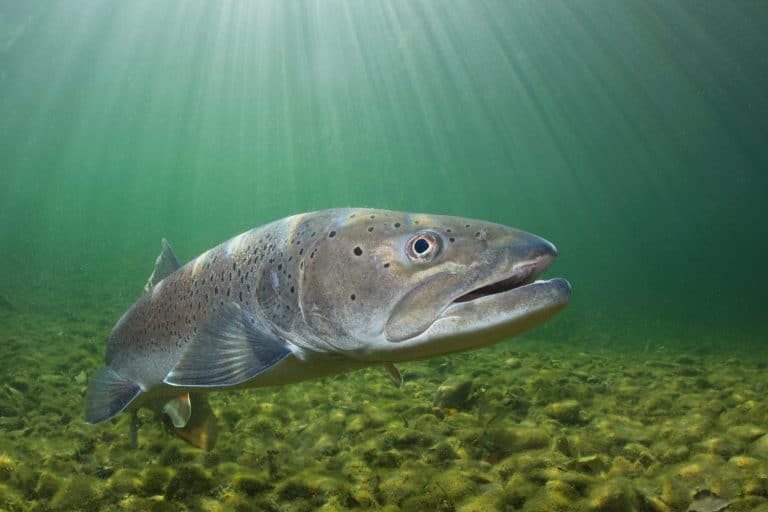
Taimen Fish
Cold-river king of the taiga

The Republic of Khakassia is a small part of southern Siberia where the Yenisei River basin and the Minusinsk Depression bring together steppe, forest-steppe, river wetlands, and dark conifer taiga. This sharp mix of habitats supports both Eurasian grassland and boreal species. You can move from open, wind‑swept grasslands to larch and pine forests and rocky mountain valleys in a single day.
Key areas are the dry steppes and forest-steppes of the lowlands, home to ground‑nesting birds, small mammals, and raptors; the taiga and subalpine belts on the edges of the Kuznetsk Alatau and Western Sayan, strongholds for large hoofed mammals and forest predators; and the Yenisei rivers, oxbows, and lakes that gather waterbirds during migration and breeding. Rivers act like natural wildlife highways linking these zones.
Khakassia is in the Yenisei basin and Minusinsk Depression, with a west–east lowland-to-mountain slope shaping wildlife. Dry basins support steppe, forest-steppe and wetlands. Ranges (Kuznetsk Alatau, Western Sayan) become conifer taiga, subalpine meadows, scree and alpine habitat for Siberian mountain and boreal animals. Yenisei–Abakan rivers and many lakes give movement routes, wintering sites and key waterbird and amphibian habitat.
~250 m in the Minusinsk Depression and major river valleys to ~2,900 m on high peaks/ridges of the surrounding mountain systems (Kuznetsk Alatau/Western Sayan), producing steppe-taiga-alpine habitat zonation
No ocean coastline; instead, extensive inland shorelines along the Yenisei and its reservoirs plus numerous lakes (notably Lake Shira, Bele, Itkul and other steppe lakes) that provide key aquatic and waterbird habitat.
Khakassia's protected areas are built around a large federal strict nature reserve with separate clusters that cover steppe and forest-steppe of the Minusinsk Depression, salt and freshwater lakes for migratory birds, and mountain-taiga foothills of the Western Sayan. Republic sanctuaries and monuments protect river valleys, high forests, and steppe sites, helping raptors, cranes, waterbirds, and taiga mammals (bear, sable, deer).
≈10-15% (rough estimate including the federal reserve plus regional sanctuaries and nature monuments; exact figures vary by what categories are counted)
A flagship steppe-lake protected area: shorelines, islands, reedbeds, and surrounding dry steppe support large concentrations of breeding and migrating waterbirds, plus raptors hunting over open country.
Freshwater lake and wetland complex with surrounding forest-steppe; important for nesting and staging waterfowl and for semi-aquatic mammals along tributaries and marshy margins.
Rocky ridges and dry steppe slopes overlooking the Yenisei basin; noted for steppe raptors and falcons, colonies of small mammals, and strong contrasts between steppe and cliff habitats.
A well-known steppe upland with rocky outcrops and open landscapes; good for viewing steppe birds, small mammals, and raptors using ridgelines and thermals.
High-elevation lake-and-alpine meadow system with cold-water habitats and surrounding subalpine/taiga mosaics; valued for intact headwaters and mountain biodiversity.
Large saline/steppe-lake setting used by migrating and breeding waterbirds; surrounding steppe and shore habitats support raptors and open-country wildlife (conservation values persist alongside recreation zoning).
Mountain-taiga sanctuary in the Western Sayan foothills protecting large, road-poor forest blocks and upper tributaries; important for taiga carnivores and ungulates and for maintaining habitat connectivity toward adjacent Sayan protected landscapes.
Remote river-basin and taiga-mountain habitats with good refuge value for wide-ranging mammals; notable for intact riparian corridors and low fragmentation in upper catchments.
Khakassia sits at a major ecological crossroads in southern Siberia (Minusinsk Depression and the Yenisei basin), where dry steppes and forest-steppe transition into Siberian taiga and the mountains of the Altai-Sayan system. This mix produces a "steppe-to-mountains" wildlife experience: raptors over open grasslands, cranes and waterfowl on lakes and river floodplains, and classic taiga mammals (bear, sable, moose) in conifer forests, with high-altitude specialists (ibex, snow leopard) in remote ranges.
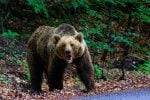

Khakassia holds many Siberian habitats in a small area: open steppe and saline lakes (Minusinsk Depression), forest-steppe valleys, and taiga and alpine slopes (Kuznetsk Alatau, West Sayan). It hosts roe deer, moose, brown bear, sable, lynx, raptors, waterbirds and owls. Many wildlife areas lie in or near protected lands like Khakassky State Nature Reserve; permits and guides are often needed.
Peak migration on lakes and river valleys: big movements of ducks, geese, swans, and early shorebirds; raptors returning to steppe hunting grounds. Forest-steppe greens up quickly, and animal tracks are easier to read on soft ground. Weather swings are common (warm sun, cold wind), and some tracks may be muddy.
Best for combining wildlife with hiking and lake-based birding. Breeding season for many waterbirds and songbirds; active mammals at dawn/dusk in taiga and mountain valleys. Long daylight hours for photography. Expect mosquitoes/gnats near wetlands and forest edges; mid-day wildlife can be quiet-plan early/late outings.
A standout season: crisp air, fewer insects, strong colors in forest-steppe and taiga. Good chances to observe ungulates (roe deer and red deer/maral activity) and raptor movement across open country. Lakes can concentrate birds during stopovers. Nights turn cold fast; higher elevations may see early snow.
Classic Siberian tracking season. Snow reveals routes of fox, hare, roe deer, and sometimes larger taiga mammals; owls and winter finches can be excellent. Frozen lakes and open steppe offer wide visibility for scanning. Daylight is short and temperatures can be severe-use local guides and proper gear for remote areas.
Khakassia spans a sharp north-south and elevation-driven gradient from the dry Minusinsk Depression (steppe and forest-steppe) to the forested foothills and the montane belts of the Kuznetsk Alatau and Western Sayan ranges. This creates a mosaic of grasslands, birch-aspen woodlands, dark conifer taiga, river corridors of the Yenisei-Abakan basin, and high-elevation subalpine/alpine communities, supporting diverse Siberian fauna and flora.
Dry to moderately dry steppes and meadow-steppes dominate the Minusinsk Depression and intermontane basins; grass-forb communities with feather grasses and drought-tolerant herbs are common, often interspersed with shrubs and patches of forest-steppe.
Widespread in lowlands and basins, especially central/southern parts; locally extensive but fragmented by agriculture and settlements.
Forest-steppe and light deciduous forests (birch, aspen) occupy transitional zones between open steppe and taiga, especially on foothills and moister slopes; includes mixed stands and riparian broadleaf pockets.
Patchy belt between steppe lowlands and higher taiga; common on foothills and along river terraces.
Taiga forests (notably dark conifers such as Siberian pine, fir, spruce, and larch in places) cover cooler, wetter uplands and mountain slopes; these forests provide core habitat for many Siberian forest species.
Large areas in mountainous terrain (Kuznetsk Alatau and Western Sayan slopes) and higher foothills.
Above the treeline in the Sayan and Kuznetsk Alatau highlands, subalpine shrublands and alpine meadows occur, grading into cold, windswept mountain tundra-like communities on ridgelines.
Restricted to highest elevations; discontinuous patches on upper slopes, saddles, and ridges.
Major rivers (Yenisei, Abakan and tributaries) and numerous lakes in steppe basins support fish, waterbirds, and riparian ecosystems; lake salinity varies (from freshwater to mineral-rich/saline basins).
Linear along river networks plus scattered lakes; ecologically important but limited in area.
Floodplain wetlands, oxbows, reedbeds, wet meadows, and peat-forming mires occur along river valleys and in poorly drained depressions; provide breeding and staging habitat for birds and regulate basin hydrology.
Patchy but recurrent along the Yenisei-Abakan floodplains and in low-lying basins/foothill hollows.
Minusinsk Depression grasslands (meadow-steppe and dry steppe), often with feather grasses and rich forb layers; frequently converted to cropland and pasture.
Broad category including steppe, hay meadows, and river-adjacent wet meadows; important for ground-nesting birds and grazing mammals.
Shrubby steppe patches and montane shrub belts (including subalpine thickets) on slopes, ravines, and post-fire or disturbed areas.
Birch-aspen forests and forest-steppe groves on foothills and terraces; common in transitional zones and after disturbance (e.g., fire/logging succession).
Montane taiga with dark conifers (Siberian pine, fir, spruce) and local larch; includes mature stands and mixed-age forests shaped by fire and relief.
Open, park-like forest-steppe and sparse tree cover on drier slopes and edges between steppe and closed forest.
Western Sayan and Kuznetsk Alatau massifs with strong elevational zonation (foothill forests → taiga → subalpine/alpine belts).
High-elevation meadows above/near treeline with diverse herbs; short growing season and strong exposure gradients.
Rock outcrops and steep river-valley and mountain-slope cliffs used by raptors and cliff-nesting birds; also host specialized rock vegetation.
Localized karst/rock cavities in mountainous areas (where carbonate rocks occur), supporting bats and cave invertebrates; distribution is limited and site-specific.
Yenisei and Abakan river corridors with riparian forests, gravel bars, backwaters, and floodplain meadows; key migration and dispersal routes.
Basin lakes (including notable steppe lakes such as Shira) with shore meadows/reedbeds; some lakes are mineral-rich or saline, supporting distinctive biota.
Small floodplain ponds, oxbows, and man-made reservoirs/stock ponds that provide amphibian and waterfowl habitat.
Floodplain wetlands, wet meadows, and reedbeds concentrated along major rivers and lowland depressions.
Reed and sedge marshes around lake margins and in slow-flowing backwaters; important for nesting waterbirds.
Peat-forming mires in cooler/wetter upland or poorly drained areas; localized compared with northern Siberia but ecologically significant.
Croplands and hayfields concentrated in the Minusinsk Depression and other lowland areas; major driver of steppe fragmentation.
Urban/industrial land around Abakan and other towns, with associated transportation corridors affecting nearby river and steppe habitats.
In Khakassia's Minusinsk Depression, you can quickly go from steppe areas with the corsac fox (Vulpes corsac) to nearby taiga hills with sable and moose.
Pallas's cats in Khakassia aren't "desert cats" - they're built for windy, open, snowbound landscapes; their low, compact bodies and ultra-insulating coat are tuned to cold steppe and rocky hillsides, not heat.
Several Khakassian steppe lakes (notably the Shira-Bele lake district) are naturally mineral/saline; that chemistry favors brine-loving invertebrates, which in turn can draw dense stopovers of migrating shorebirds and gulls to what looks like a "desert" lakeshore.
Siberian ibex (Capra sibirica) in Khakassia's mountain belts exploit south-facing slopes and wind-scoured ridges in winter-places where snow stays thin-so they can keep feeding when nearby valleys are locked under deep snow.
Because Khakassia sits on a major river basin (the Yenisei) plus a mosaic of steppe lakes, the region can host both fish-eaters (like cormorants/mergansers on large waters) and steppe hunters (like foxes and raptors) in unusually close proximity for Siberia.
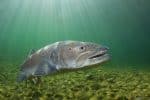
The Yenisei-Abakan river system in Khakassia is home to the Siberian taimen (Hucho taimen) - widely recognized as the world's largest salmonid, capable of exceeding 2 m in length in Siberian rivers.
Khakassia's taiga and river valleys support moose (Alces alces), the world's largest living deer species; adult bulls can top 500 kg and carry massive palmate antlers.
Khakassia is within the Altai-Sayan range of Pallas's cat (Otocolobus manul), a species often cited as having the longest and densest fur of any wild cat - an extreme cold-steppe adaptation.
Rocky forest edges and cliffy terrain in the Western Sayan/Kuznetsk Alatau of Khakassia are suitable for the Eurasian eagle-owl (Bubo bubo), among the world's largest owls (wingspans approaching ~1.9 m).
1 species documented in our encyclopedia
Thank you for reading! Have some feedback for us?
We appreciate your help in improving our content.
Our editorial team will review your suggestions and make any necessary updates.
There was an error submitting your feedback. Please try again.