Animal Habitats

Tundra

Cold, treeless regions with permafrost, found in arctic and alpine areas
788 Animals
1/33 Page
Overview

Understanding This Category

Tundra is a cold, largely treeless terrestrial habitat where low temperatures, short growing seasons, and often permanently frozen subsoil (permafrost) limit plant growth to low, ground-hugging vegetation. It occurs mainly at high latitudes and in other cold, wind-exposed environments where trees cannot establish.

Tundra has long, cold winters and short, cool summers. Low plants—mosses, lichens, sedges, grasses, and dwarf shrubs—hug the ground. A thawed active layer sits over permafrost, making wet ponds and peatlands beside dry ridges and patterned ground. Summer plants feed insects, birds, and grazers; tundra is very sensitive to warming.

Key Characteristics

Treeless or nearly treeless vegetation dominated by mosses, lichens, sedges, grasses, and dwarf shrubs
Very cold climate with long winters and short, cool growing seasons
Permafrost common (especially in Arctic tundra) with a shallow seasonally thawed active layer
Low precipitation overall but often waterlogged soils due to frozen subsoil limiting drainage
Freeze-thaw processes create patterned ground and frost-driven microtopography
Low primary productivity and slow decomposition; nutrients often limited or immobilized
Strong winds and exposure shape plant form and increase stress on organisms
Highly seasonal ecosystems with pronounced pulses of summer biological activity and winter dormancy/survival adaptations
Environment

Environmental Conditions

Climate

Temperature Range
-40°°C to 10°°C
Precipitation
Low; typically ~150-300 mm/year (mostly snow), with higher local totals up to ~400-600 mm/year in maritime/coastal tundra.

Conditions

Extreme seasonality: polar day (24-hour daylight) in summer and polar night (little to no daylight) in winter at high latitudes. Low sun angle, frequent cloud/fog in some regions; strong UV reflection from snow/ice in spring.

Commonly includes wetlands, bogs, fens, thaw ponds, kettle lakes, shallow tundra lakes, braided streams, and river deltas. Seasonal meltwater and poor drainage over permafrost create saturated ground and standing water; in coastal tundra, brackish lagoons/estuaries may occur.

Ecology

Ecological Community

Biodiversity Level

Medium to low: species richness is generally lower than in forests/temperate systems due to cold temperatures, short growing seasons, and nutrient-poor soils. However, tundra can show high seasonal abundance (e.g., insects, migratory birds) and strong functional diversity in cold-adapted plants and microbes, with distinct communities across wet/dry microhabitats and snow/soil gradients.

Flora

  • Mosses
  • Lichens
  • Sedges and grasses
  • Forbs (herbaceous flowering plants)
  • Dwarf shrubs (prostrate/low woody plants)
  • Cushion plants

Fauna

Ecosystem Services

  • Carbon storage and climate regulation via peat/soil organic matter accumulation (when decomposition is slow)
  • Albedo and energy-balance effects that influence regional climate
  • Freshwater storage and regulation (wetlands, ponds, seasonal meltwater flow)
  • Nutrient cycling, including nitrogen fixation by some microbes and lichen-associated communities
  • Habitat for migratory birds and nursery/foraging grounds during summer pulses
  • Support for subsistence and cultural values (e.g., reindeer/caribou-based livelihoods; traditional ecological knowledge)
  • Erosion control and soil stabilization by vegetation mats in wind-exposed landscapes
Conservation

Conservation Status

Moderate overall extent remaining but rapidly declining ecological integrity in many regions; tundra is relatively less converted than other biomes, yet is undergoing widespread climate-driven change (permafrost thaw, hydrology shifts, vegetation change) and increasing industrial/transport footprint in parts of the Arctic.

~5-10% historically lost to direct conversion/industrial footprint globally; a larger share is functionally degraded or shifting state due to warming and permafrost thaw (not easily captured as 'loss' by area alone). Lost
Declining Current Trend

Primary Threats

  • Fast Arctic warming drives permafrost thaw, altered snow/ice regimes, thermokarst, changed fire frequency, and shifts from moss/lichen systems toward shrub/grass dominance, impacting wildlife and carbon storage.
  • Roads, pipelines, airstrips, seismic lines, and settlements fragment habitat, disrupt migration (e.g., caribou/reindeer), and increase erosion/thermokarst risk.
  • Mineral extraction and associated waste, water use, and transport corridors cause local habitat loss, contamination risk, and long-term surface disturbance with slow recovery.
  • Long-range transported contaminants (POPs, mercury), local oil/gas spills, and black carbon deposition affect food webs, snow/ice melt rates, and human subsistence resources.
  • Vehicle traffic (off-road), tourism, and industrial activity compact soils, damage vegetation mats, and disturb breeding/nesting and denning sites.
  • Hydrological alterations from thaw-driven drainage/ponding, water withdrawals, and engineered stabilization can transform wet tundra, peatlands, and river deltas.
  • Expanding industrial development increases pressure on freshwater, forage, and sensitive areas; climate change can also reduce availability/quality of key forage (lichens) via icing events.
  • Warming and increased shipping/traffic facilitate northward expansion or introduction of competitors, pests, and novel pathogens, with limited ecosystem resistance.
  • Direct conversion is limited but occurs locally around settlements, industrial sites, gravel extraction, and coastal erosion; functional loss is increasing via climate-driven state change.
  • Generally regulated and often sustainable, but localized overharvest risk exists for some populations, and climate stress can reduce resilience to take.

Protection Efforts

  • Large protected areas and Indigenous/community conserved areas (ICCAs) to maintain intact landscapes and migration corridors
  • Strict controls on industrial development footprint (seasonal access limits, no-go zones, reduced road density, minimized gravel extraction)
  • Environmental impact assessment and spill prevention/response planning for oil, gas, and mining; decommissioning and site remediation
  • Co-management of wildlife (e.g., caribou/reindeer, waterfowl) including harvest regulation and protection of calving/nesting/denning areas
  • Limiting off-road vehicle use and managing tourism to prevent vegetation mat damage and wildlife disturbance
  • Invasive species prevention via biosecurity for shipping, ports, and field operations; early detection/rapid response
  • Fire management planning where tundra fire risk is increasing
  • Long-term monitoring of permafrost, hydrology, contaminants, and biodiversity; climate adaptation planning for communities and wildlife

Notable Protected Areas

Northeast Greenland National Park, Greenland Arctic National Wildlife Refuge, Alaska, USA Gates of the Arctic National Park and Preserve, Alaska, USA Wrangel Island Reserve, Russia Taimyr Nature Reserve, Russia Svalbard protected areas (including Nordaust-Svalbard and South Spitsbergen National Parks), Norway Denali National Park and Preserve (alpine tundra), Alaska, USA Lena Delta Nature Reserve, Russia

Restoration Potential

Low to moderate. Where damage is shallow (tracks, small pads), recovery can occur but is slow (often decades) due to short growing seasons and thin soils. Severe disturbance (thermokarst, erosion, contaminated sites, gravel pads) can persist for many decades to centuries; best outcomes come from preventing disturbance, recontouring/rehydrating affected areas, using local plant materials/biodegradable mats, and long-term site stewardship.

Climate Vulnerability

Very high. Tundra is among the most climate-sensitive terrestrial biomes; warming, altered precipitation/snow regimes, sea-ice loss effects on coastal climate, permafrost thaw, and increasing extreme events can trigger rapid, hard-to-reverse ecosystem change and major carbon feedbacks.

Human Impact

Human Interaction

Human Uses

  • Subsistence harvesting (caribou/reindeer, muskox, seals near coastal tundra, fish, birds, eggs, berries, edible plants)
  • Reindeer herding/pastoralism and seasonal grazing management
  • Scientific research and monitoring (climate, permafrost, ecology, astronomy in remote areas)
  • Military and strategic uses (radar stations, training grounds, airstrips)
  • Energy and mineral extraction support (temporary camps, ice roads, pipelines, exploration sites)
  • Traditional material gathering (skins/fur for clothing, bones/antler for tools, driftwood where available, moss/lichen historically for insulation/medicine)
  • Limited agriculture in subarctic fringe (greenhouses, small gardens) and community food programs
  • Transportation corridors where feasible (winter roads over frozen ground, coastal shipping, small aircraft)

Impacts

  • Climate change amplification in the Arctic: permafrost thaw, thermokarst, altered hydrology, increased wildfire in some regions, shrub expansion, and impacts to wildlife migration and forage
  • Infrastructure impacts: roads, airstrips, pipelines, and buildings cause permafrost degradation, erosion, habitat fragmentation, and altered drainage
  • Resource extraction: seismic surveys, drilling/mining footprints, dust, spills, noise, and increased access leading to additional disturbance
  • Overharvest or poorly managed harvest in localized areas; disruption of migratory herds by traffic/industrial activity
  • Pollution: legacy contaminants, microplastics, black carbon deposition darkening snow/ice, wastewater challenges in remote settlements
  • Invasive species and pathogens introduced via shipping, construction materials, and warming temperatures
  • Increased shipping and coastal development in Arctic regions raising spill risk, noise, and shoreline disturbance

Sustainable Practices

  • Co-management with Indigenous governments and local communities; uphold land rights and Free, Prior and Informed Consent (FPIC) for projects
  • Permafrost-sensitive engineering: elevated buildings, thermosiphons, insulated gravel pads, minimal ground disturbance, and careful drainage design
  • Limit fragmentation: avoid key wildlife corridors/calving grounds; seasonal restrictions on traffic; consolidate infrastructure; decommission and restore temporary roads and pads
  • Strong spill prevention/response: double-walled storage, secondary containment, rapid response plans, and bans/limits in highest-risk areas
  • Adaptive harvest management using both Indigenous knowledge and scientific monitoring; protect migratory routes and critical habitats
  • Low-impact tourism practices: strict waste removal, group size limits, designated trails/camps, wildlife distance rules, and local guiding benefits
  • Fire management and community preparedness where risk is increasing; reduce black carbon emissions (cleaner diesel, renewables, soot controls)
  • Restoration where feasible: recontouring, revegetation with native tundra plants, erosion control, and long-term monitoring
  • Protected areas and no-go zones for high-sensitivity permafrost, wetlands, bird nesting areas, and culturally important sites
Fun Facts

Did You Know?

"Cold desert" reality: many tundra areas get very little precipitation-often comparable to deserts-yet still look wet because frozen ground blocks drainage.

Permafrost is about soil, not just temperature: you can have very cold winters without permafrost, and permafrost can persist even where summers briefly thaw the surface.

The ground is alive with engineering: freeze-thaw cycles churn soil into patterns-stone circles, stripes, and polygons-like nature's geometric art.

A thin "active layer" runs the show: only the top layer thaws in summer, so roots stay shallow and plants spread sideways rather than growing tall.

Tiny plants can be ancient: some tundra shrubs and cushion plants grow extremely slowly and can be decades to centuries old while staying only centimeters tall.

It can feel buggy, not barren: short summers can bring intense bursts of insects (like mosquitoes and flies) as wetlands warm up-fuel for birds and fish.

Fire can happen in the tundra: despite the cold, dry periods and shrub expansion can allow wildfires, which can in turn deepen thaw and reshape ecosystems.

Think of tundra as a "time-limited garden": plants don't lack sunlight in summer-they lack time. They race to grow and reproduce before winter returns.

Permafrost is like a freezer under a thin countertop: the surface thaws briefly (the active layer), but below stays frozen, affecting drainage and roots.

Tundra plants are the "low-profile athletes" of ecosystems: hugging the ground reduces wind stress and helps them capture heat near the surface.

It's like a sponge on a slab of ice: water can pool on top because the frozen layer beneath prevents it from soaking deeper into the ground.

Tree line is an ecological speed limit: not a single factor, but a combination of cold, wind, short seasons, and soil constraints that keeps forests from crossing into tundra.

One of Earth's biggest biomes: the Arctic tundra forms a vast belt around the top of the planet and is among the largest terrestrial habitats by area.

Tree-line extreme: tundra exists where it's simply too cold, windy, or the soil is too shallow/frozen for trees to survive-making it Earth's classic "beyond-the-trees" landscape.

Permafrost powerhouse: some tundra regions have permafrost hundreds of meters thick, locking away huge amounts of frozen ground for thousands of years.

Seasonal daylight record: high-latitude tundra experiences the Midnight Sun (24-hour daylight in summer) and Polar Night (very limited daylight in winter), among the most dramatic day-length swings on Earth.

Rapid seasonal sprint: the tundra growing season is one of the shortest on land-plants must flower, set seed, and store energy in a brief summer window.

Tundra Animals

Showing 1-24 of 788

All Animals A-Z

The polar regions are the coldest places on Earth and differ the most from every other habitat on the planet. During the summer months, the days receive 24 hours of pure sunshine, but during the winter, the sun is barely seen at all. Animals that inhabit nature’s freezers have to be well adapted to living in the cold, and often have a thick layer of fat or blubber to help to keep them warm.

There are two main polar regions in the world, which are the Arctic and the Antarctic. The Arctic Circle and Arctic Tundra are found at the North Pole, and it covers nearly 5 million square miles of the top of the Northern Hemisphere. The Antarctic is the found at the South Pole, and although the animals are very different here, the polar regions are fairly similar places to live.

The Arctic is made up of ice floating on the ocean and the Antarctic is a rocky continent covered in ice. There is very little rainfall in the polar regions, mainly because it is so cold, that there is very little water in the air. The main difference between the North and the South Pole is that the Arctic is connected to Europe and Canada, meaning that there are more species of both animals and plants than in the Antarctic which is completely isolated from the rest of the world.

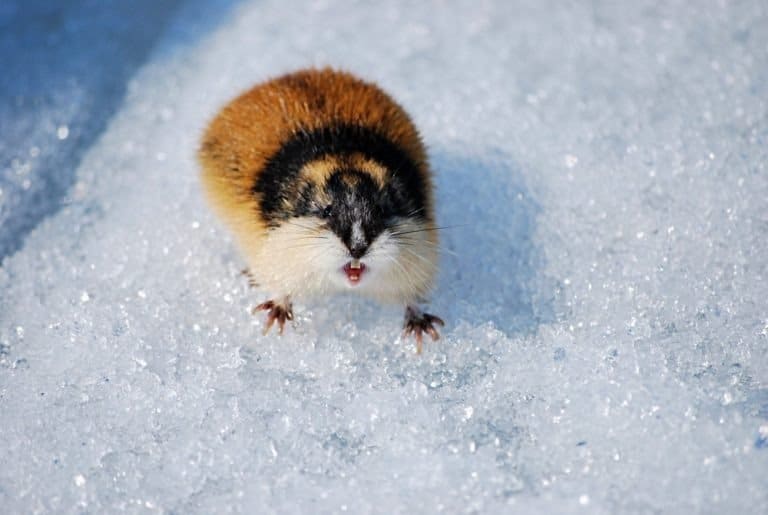
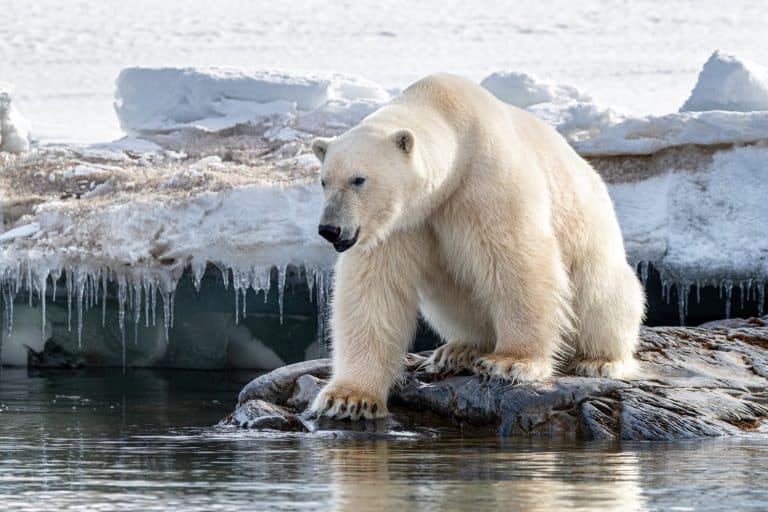
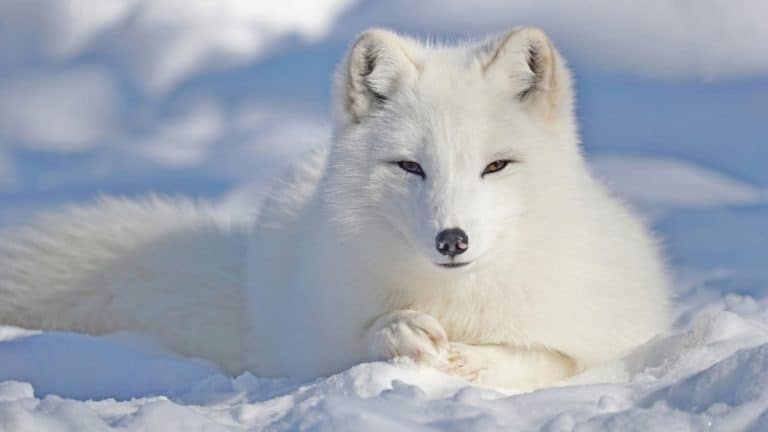
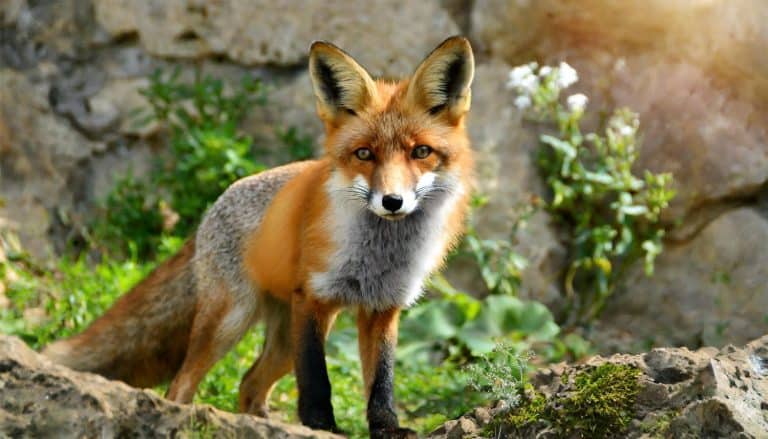
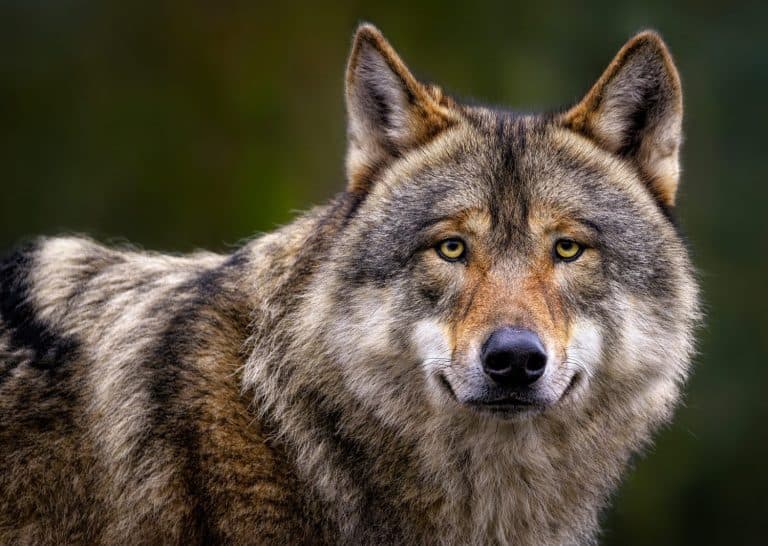
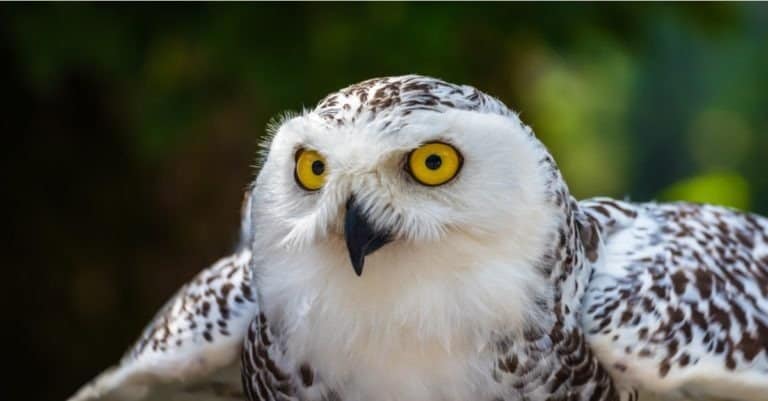
The warmer spring and summer months in the Arctic Circle encourages the growth of plants and grasses, which draws herbivorous grazing animals further north. Lemmings and Arctic hares can also be found in the tundra, often closely followed by foxes or large Arctic owls. Wolves are the top predators of the Arctic tundra, and polar bears dominate the frozen waters deeper in. Seals, killer whales, sea lions, walruses and narwhals can all be commonly spotted feeding on the fish in the Arctic Circle.

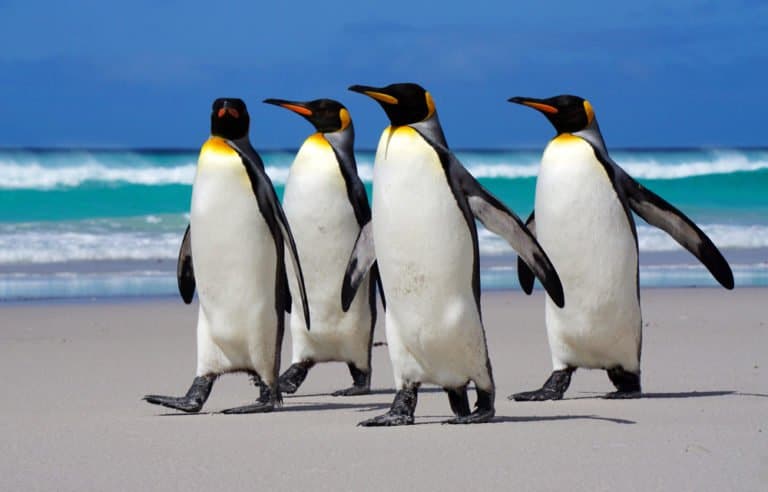
The animals in Antarctica live on a very carnivorous diet. There are no plants growing on the frozen Antarctic surface so animals must eat other animals in order to survive. Numerous species of fish, crustacean and mollusc inhabit the waters beneath the ice which means that there is plenty of food for carnivorous birds and mammals to eat. Penguins are the most common animal found in Antarctica as there are many species spread across the continent and even further north, that hunt the fish. Larger predators such as leopard seals and killer whales inhabit the water around the frozen islands and huge whales flock to the Antarctic in order to eat the food in the nutrient-rich waters.

Climate change and global warming have had the biggest impact on the polar regions, as the increasing temperature causes more and more ice to melt. In 1961, the Antarctic Treaty was signed which prevents Antarctica from being commercially exploited. Sadly, protecting the Arctic is a very different case as mining for oil and minerals, fishing and hunting takes place in many areas.

Thank you for reading! Have some feedback for us?